
Choose the recognition method
colour, spectral response, conductivity or alloy information require suitable sensors.


Improve Purity | Increase Recovery | Reduce Process Losses
We help identify and implement the right Binder+Co equipment solution to improve sorting accuracy, screening performance, material recovery, and overall process reliability.
Get a Binder+Co Equipment RecommendationSeparate valuable fractions using selected material characteristics.
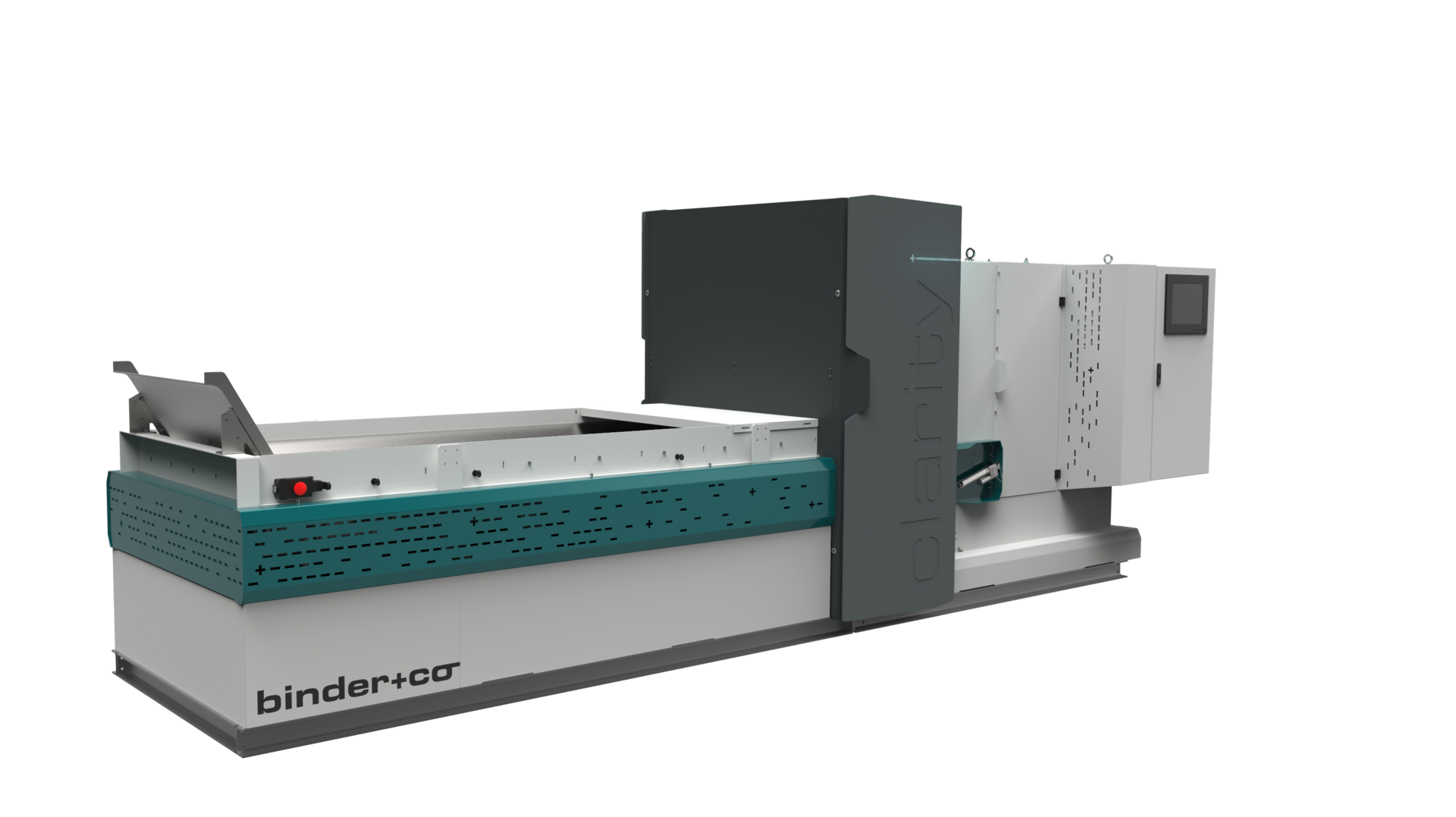
Separate valuable fractions using selected material characteristics.
Binder+Co CLARITY equipment combines appropriate sensing and material-ejection arrangements for recycling and sorting duties. Different sensors identify different characteristics, so the starting point is the target fraction and contaminant rather than the word optical alone.
Example: Recover a selected glass or metal fraction from a mixed recycling feed.
Also known as: CLARITY sorters, sensor-based sorters, optical sorting machines.
colour, spectral response, conductivity or alloy information require suitable sensors.
size distribution, surface condition and particle separation affect recognition.
trials help establish the practical sorting objective.
colour and contaminant separation need suitable sensing and presentation.
selected sensor combinations address material or alloy sorting.
review feed condition and the target recovered fractions.
Binder+Co demonstrates its glass-sorting application. This illustrates one CLARITY material duty; metal and construction-material sorting use application-specific sensing and setup.
Binder+Co shows AI-based sorting of construction and demolition material using surface and colour recognition. This is a distinct application from the glass-sorting demonstration.
Feed composition, particle-size range, surface condition, throughput, desired fractions, contaminants, and representative samples for sorting trials.

No. The detection method must distinguish the target from the valuable material under actual feed conditions. Review sample trials and any required sensor combination.
Feed composition, particle-size range, surface condition, throughput, desired fractions, contaminants, and representative samples for sorting trials.
Confirm the complete quoted equipment, operating conditions and selected options for your application.