
Intermittent impact
Pneumatic piston action helps dislodge clinging or compacted deposits.

Improve Powder Discharge | Reduce Material Hang-Ups | Simplify Maintenance
Is material bridging over the outlet, forming a central flow channel, or clinging to the hopper walls? Rate Technology Systems helps review your material, vessel geometry and operating conditions to select an appropriate Solimar solution. Explore disk fluidizers, pneumatic air knockers, external installation kits, sanitary mounting options and aeration controls for dry bulk handling applications.
Get a Material RecommendationSolimar · Canadian application support from RTS
Apply intermittent pneumatic impact where sticky or compacted material needs help releasing.
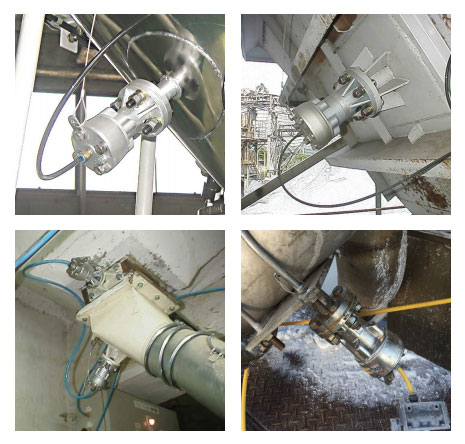
Your job: release material clinging to the vessel wall.
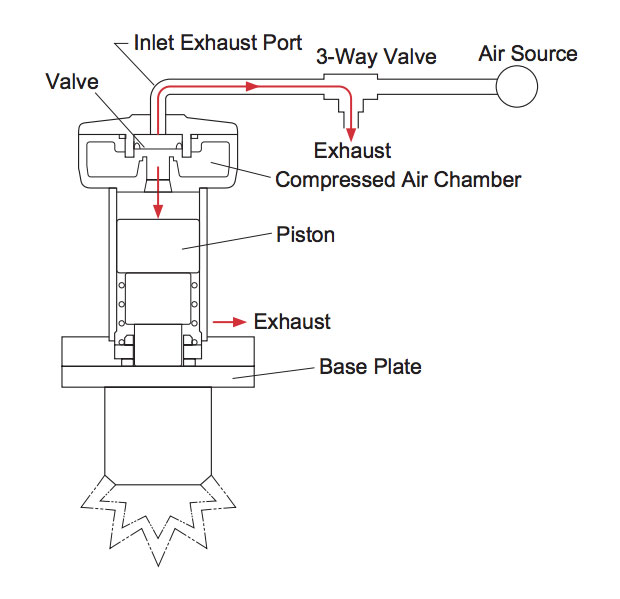
A Solimar air knocker uses a piston to strike a base plate and transmit an impact into the mounted equipment. Unlike a disk fluidizer, it acts on the vessel wall without introducing aeration air into the product. RTS reviews adhesion, wall construction and mounting before proposing a model.
Example: Address clinging material in a dust hopper where a timed impact may be more suitable than continuous vibration.
Also known as: Pneumatic knockers, air hammers, impact flow aids.
Pneumatic piston action helps dislodge clinging or compacted deposits.
Input air pressure is used to vary the impact within the model’s limits.
Relay piping can allow several knockers to operate from one control valve.
Charge the pneumatic operating chamber.
Use the valve cycle to drive the piston into the base plate.
Transmit the selected impact through the approved mounting.
Solimar lists dust hoppers and waste-treatment applications.
Review wall deposits and compacted material rather than assuming all powders need aeration.
Discuss dryers and other industrial applications identified in the selection manual.
Suitability depends on the specific material and installation. RTS reviews flow behaviour, geometry, operating conditions and the process requirements together.
Solimar introduces pneumatic impact operation and the air knocker’s role in releasing material. Model and mounting selection remain application-specific.
Start with the material and a hopper or vessel drawing. For air knockers, RTS also needs to understand the specific duty: release material clinging to the vessel wall.
Where does material cling, and how is it currently removed? What are the wall material, thickness, shape and supporting structure?
Send photographs and dimensions of the existing mounting and nearby equipment. RTS will coordinate a fit review before a replacement or new mounting arrangement is proposed.
Use the model-specific instructions for installation and maintenance. RTS can help confirm the selected assembly against the current application.
Keep dry powder moving toward the outlet
Aerate the material at the hopper wall to help reduce bridging, ratholing and retained product.
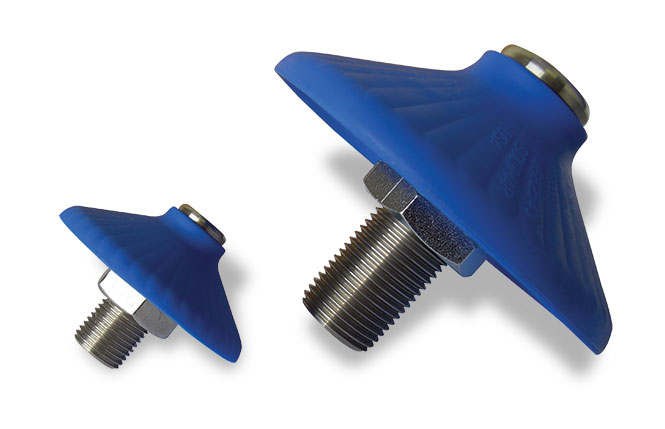
Release powder in smaller spaces
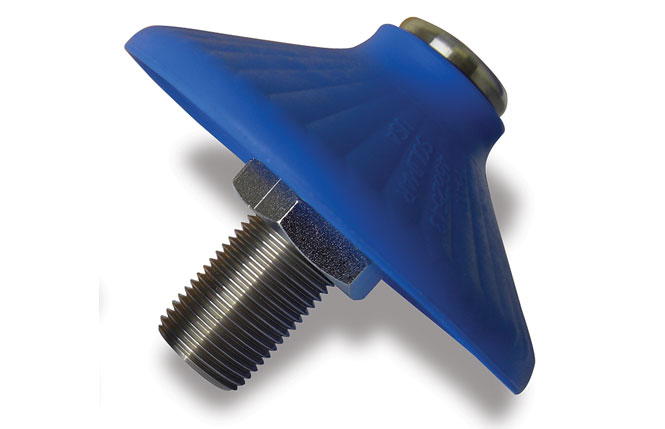
Bring disk aeration to tight curves, chutes and small hoppers where a standard disk may not fit.
Keep dry powder moving toward the outlet
Aerate the material at the hopper wall to help reduce bridging, ratholing and retained product.
Send a photo or drawing and tell us what happens during discharge. RTS can help narrow the options and coordinate the application review with Solimar.