
Control the increment volume
The selected arrangement captures 16 or 18 cc per cycle.


Improve Sample Accuracy | Automate Quality Control | Increase Process Confidence
We help identify and implement the right Sentry bulk solid sampling solution for powders, pellets, granules, seeds, flakes, grains, and other dry bulk materials. From gravity chutes and hoppers to screw conveyors, drag conveyors, and pneumatic conveying systems, Sentry samplers deliver representative samples that improve quality control and process reliability.
Get a Bulk Solids Sampling RecommendationCollect fixed-volume increments of powder, flakes, or granules.

Do you need measured increments in a contained sampling arrangement?
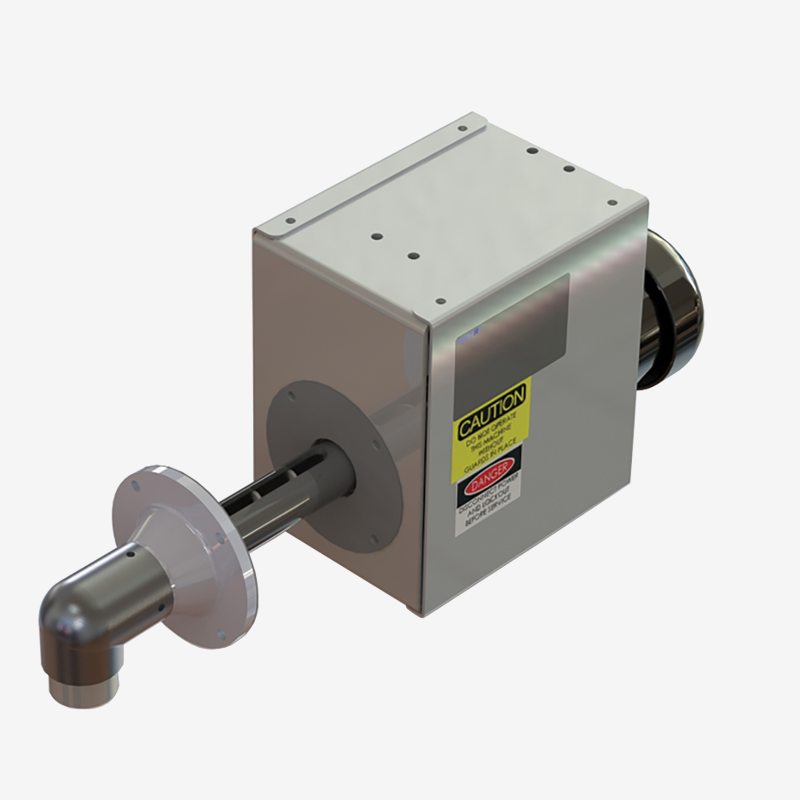
The Sentry ISOLOK SAK extends and retracts a plunger, trapping a measured quantity of material between its seals. The increment discharges by gravity into a closed container. This page covers the SAK bulk-solids model within the wider ISOLOK family.
Typical application
Build a composite sample from repeated increments of suitable salt, cement, fertilizer, or food product.
Also known as: ISOLOK automatic point sampler, fixed-volume sampler, plunger sampler.
The selected arrangement captures 16 or 18 cc per cycle.
The sealed plunger arrangement isolates the sample collection point from the process.
Use repeated increments at defined intervals, with collection and control arrangements selected for the duty.
Compressed air drives the plunger into the material stream.
Retraction traps material in the annular space between the plunger seals.
The measured sample drops by gravity into the closed collection container.
Suitable flowable powders, flakes, or granules. Review cleaning, seal compatibility, and sample discharge.
Discuss abrasion, dust, operating conditions, and the required maintenance access.
Check corrosion, particle size, moisture, and the application-specific seal arrangement.
Exact-model demonstration
Sentry’s SAK animation shows the plunger extending, capturing a fixed increment, and returning for discharge. Use it to discuss the mounting position and the collection arrangement.
Define the increment volume and the number of cycles needed for the collection period. Check the mounting location, seal compatibility, pressure, and temperature together. As a point sampler, the SAK also requires a location and sampling plan that address any segregation.
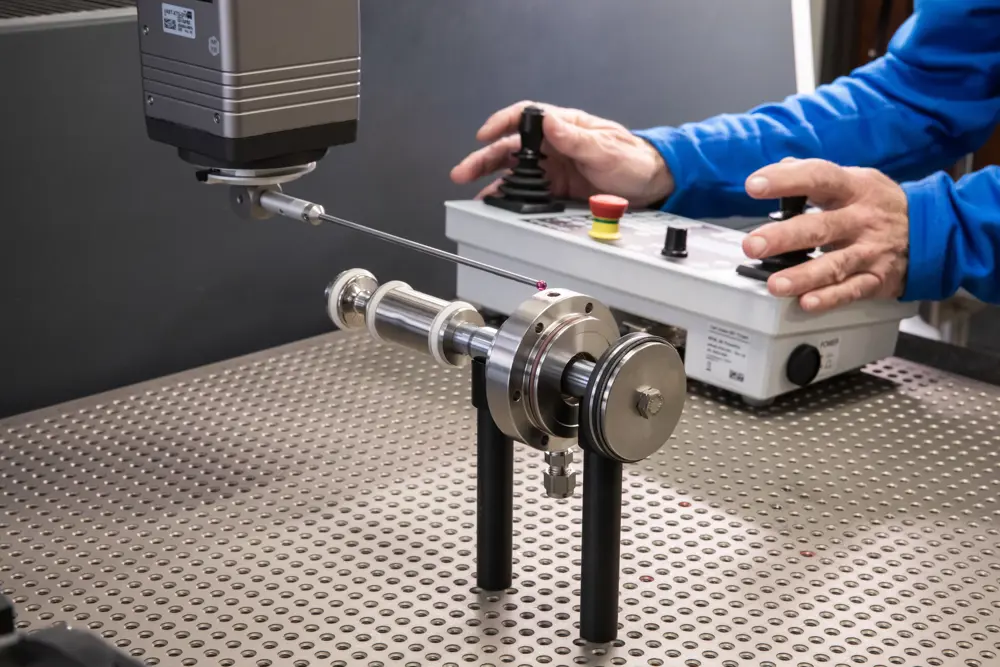
Document your material properties, process conditions, and required sample quantity with Sentry’s application worksheet.
Open Application Worksheet PDFSend a line sketch, material description, particle-size range, bulk density, flow rate, pressure or vacuum, temperature, and cleaning requirements. Include the sample quantity, collection interval, and laboratory test you need to support.
Review My Sampling RequirementsNo. The mass of an increment changes with bulk density and how the material fills the sampling space. Tell RTS your required test mass, density range, production variation, and collection period when planning the cycle frequency.
Base the plan on the lot or batch, how the material varies over time, the test method, and the required composite quantity. Share the production pattern and analysis requirements so RTS can review the interval and collection arrangement with Sentry.
Discuss sampler controls, the container location, and individual or composite collection. Confirm the controller and any indexing or collection equipment as part of the quotation; those accessories are not assumed to be included.
Use the literature to plan the discussion. Final materials, operating limits, controls, mounting, and installation drawings are confirmed for the selected application.
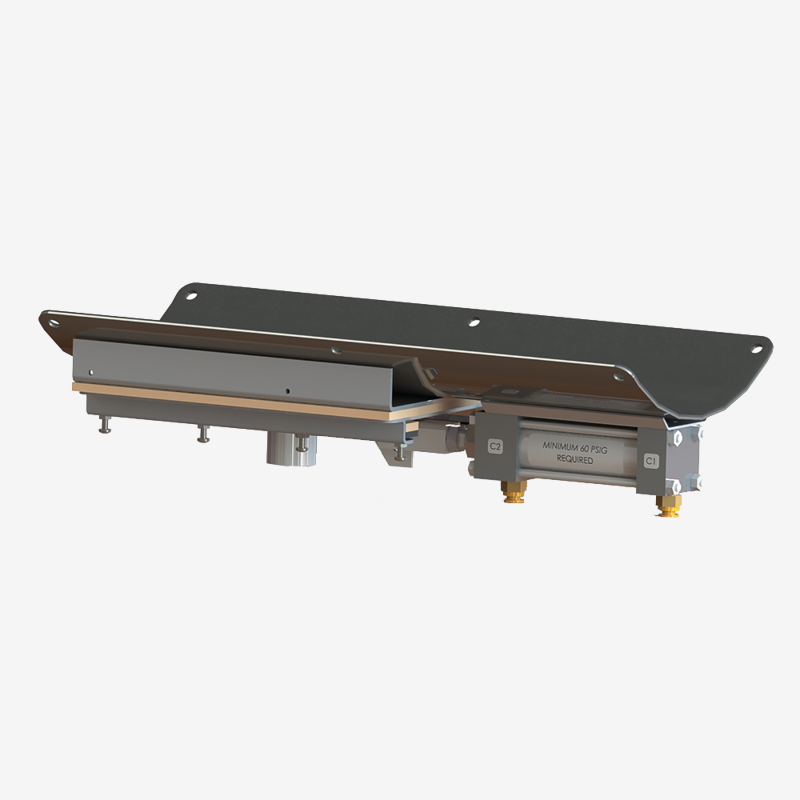
Conveyor point sampling
Take repeatable point samples from a conveyor or gravity chute.
Example: Collect routine quality-control increments from a well-mixed dry ingredient stream.
Also known as: Automatic point sampler, conveyor sampler, sliding-gate sampler.

Free-flowing strip sampling
Collect a strip sample across a free-flowing material stream.
Example: Review a flour, granular ingredient, grain, or seed stream where segregation could bias a point sample.
Also known as: Automatic strip sampler, retracting-tube sampler, pneumatic-line sampler.
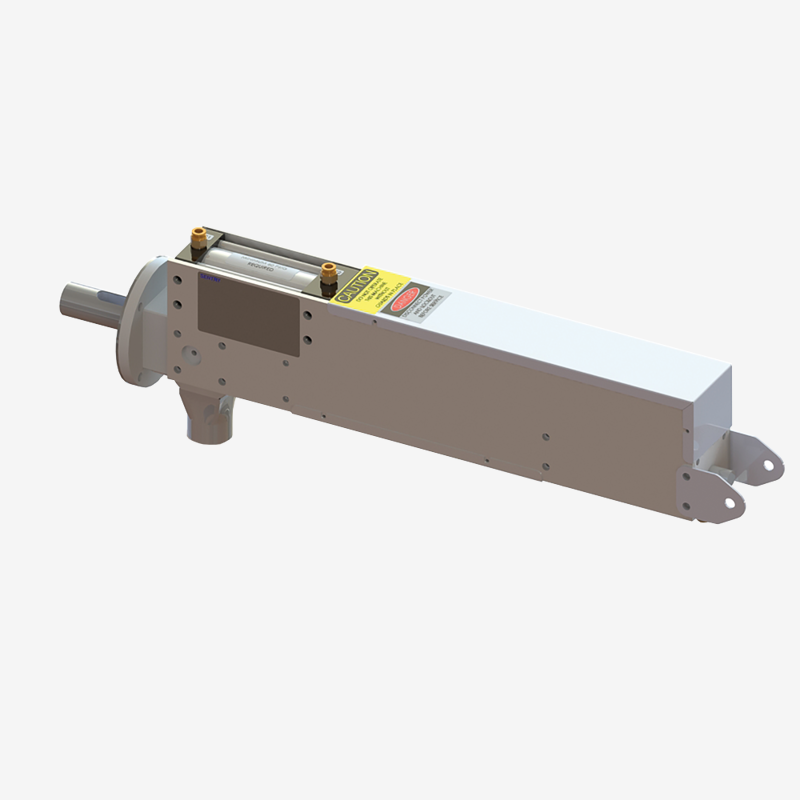
Gravity-flow point sampling
Automate point sampling from a gravity chute or hopper.
Example: Take scheduled increments from a well-mixed granular ingredient leaving a hopper.
Also known as: Automatic point sampler, rotating-chamber sampler, gravity-chute sampler.
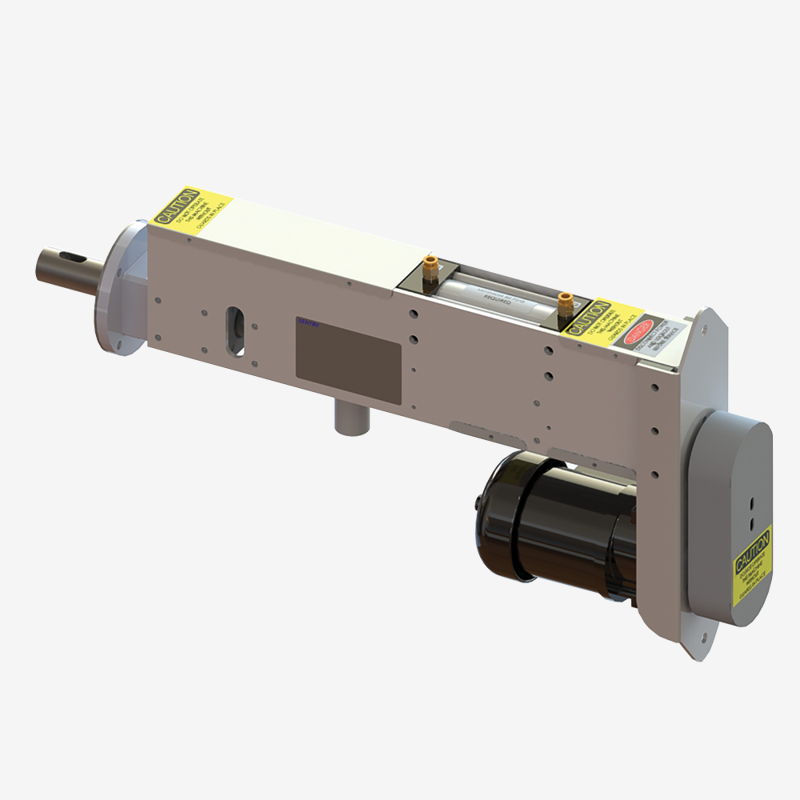
Retracting strip sampling with an auger
Take a strip sample and convey it out with an auger.
Example: Review a powder stream where gravity transfer through a sample tube is unreliable.
Also known as: Automatic strip sampler, retracting auger sampler, bulk-powder sampler.
Low-height strip sampling
Sample across a gravity stream with a rotating slotted tube.
Example: Review a gravity chute carrying powder, granules, or suitable kibble where material can segregate.
Also known as: Automatic strip sampler, slotted-tube sampler, D2 SSD sampler.
Fixed-volume point sampling
Collect fixed-volume increments of powder, flakes, or granules.
Example: Build a composite sample from repeated increments of suitable salt, cement, fertilizer, or food product.
Also known as: ISOLOK automatic point sampler, fixed-volume sampler, plunger sampler.