Vortex Global Gates, Diverters & Loading Spouts
Control, route and load dry bulk solids. RTS helps select equipment for gravity discharge, pneumatic lines and truck or rail loadout.
Request a Quote
Home Manufacturers Vortex Global
Are you shutting off flow, routing material, or loading out?
Start with the job and how the material reaches the equipment. A gravity-fed hopper and a pressurized conveying line ask different things of a gate or diverter.
Control flow from a bin, hopper or process line, or isolate equipment for maintenance.
Direct gravity-fed or air-conveyed product to the right line, bin or process.
Review the loading spout, vehicle position, available travel and dust collection together.
Start with the material and the duty
Tell RTS what is flowing, where the equipment sits and what goes wrong today. A leak at an inactive diverter leg calls for a different review than a gate binding under a full hopper or a loadout point that releases dust.
For replacements, send the model or serial number and a photo of the existing installation. For new projects, send an outline of the process and the upstream and downstream equipment.
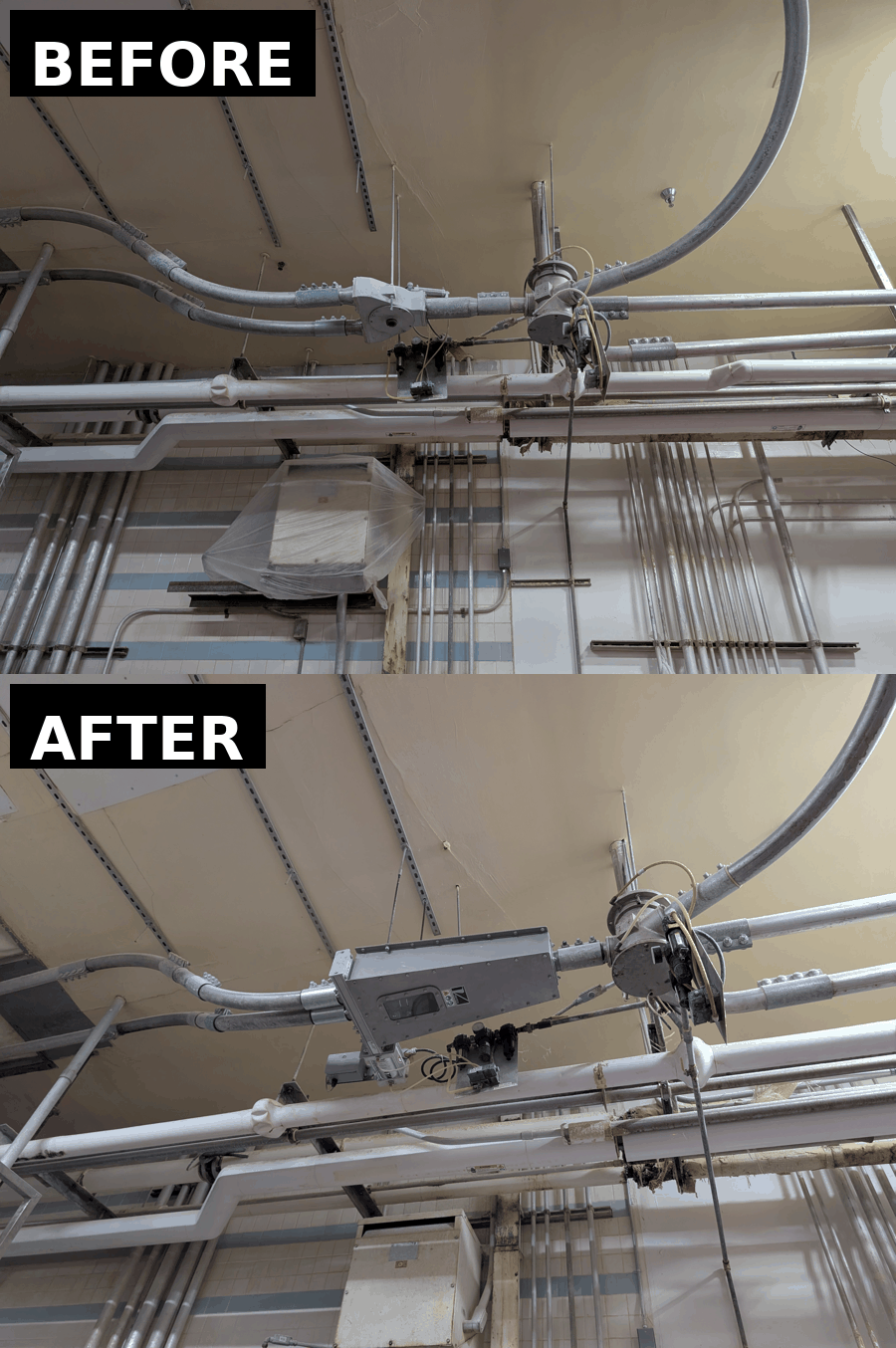
Vortex railcar loadout installation.
Choose the equipment for your job
Open a product for details. Use the RFQ if you want RTS to review your material, duty and installation before selecting equipment.
Shut off or control gravity-fed discharge.
Review the opening, material head and whether the gate must close through product.
Also known as: Gravity shutoff gates, hopper slide gates, slide gate valves.
Isolate a conveying line under pressure or vacuum.
Share operating pressure, vacuum, surges and line size so RTS can review the seal and construction.
Also known as: Pneumatic-line isolation gates, pressure or vacuum slide gates.
Route air-conveyed material to another line.
Review conveying phase, branch angle, line pressure and whether leakage to an inactive leg is a concern.
Also known as: Pneumatic diverter valves, conveying line diverters, two-way line diverters.
Direct gravity-fed material to alternate outlets.
Review outlet geometry, flow rate and what leakage between destinations would mean for your process.
Also known as: Gravity diverter valves, two-way gravity diverters, gravity flow splitters.
Control gravity discharge through a variable opening.
Review the opening size, material flow and how operators need to adjust or stop the discharge.
Also known as: Iris diaphragm valves, iris flow control valves.
Load trucks, railcars or stockpiles.
Review spout travel, positioning, hatch size and where displaced air will go during loading.
Also known as: Telescopic loading chutes, loading bellows, bulk loading spouts.
Route gravity flow through a pivoting internal chute.
Share material abrasiveness, outlet angles and maintenance access when reviewing the chute arrangement.
Also known as: Pivoting chute valves, swing-chute diverters.
Move fluidizable powders along a sloped channel.
Review material behaviour, available slope and the air supply before selecting an aerated conveyor.
Also known as: Air slide conveyors, air-gravity conveyors, fluidized conveying systems.
Fill a selected bin or pass material downstream.
Map the bin sequence, conveying line and how the system switches from fill to pass-through.
Also known as: Fill-and-pass diverter valves, bin fill/pass valves.
How the equipment fits into your process
Review the opening, material head and whether the gate must close through product during operation.
Record normal and peak pressure or vacuum. Mark each branch destination and the planned routing sequence.
Measure available headroom and the distance to the hatch or pile. Identify how vehicles are positioned and how dust is collected.
Vortex installations in the field
Bakery ingredient routing Vortex case study. Fertilizer and deicing salt loadout Vortex case study. Canadian application support
New equipment selection Review the material, flow path, duty and fit-up with RTS before selecting a gate, diverter or spout.
Replacement and retrofit Send the existing model or quote number, photos and available dimensions so we can review the replacement.
Parts and service Share the equipment nameplate and the part or issue you are dealing with. We can help identify what to review next.
Literature and application resources
Vortex product catalogue Browse the gates, diverters, iris valves and loading equipment in the RTS-hosted catalogue.
Open Product Catalogue Vortex application data sheet Collect material, process, valve and actuation details with your team using the original Word worksheet.
Download RFQ Worksheet Questions to help plan the right equipment
What information should I send first? Send the material, bulk density , approximate flow rate, opening size and a photo or sketch if available. Include pressure or vacuum conditions where applicable and state whether the gate must close through material.
What is the difference between a gate and a diverter? A gate opens, closes or regulates a single flow path. A diverter sends material to one of several destinations. For a diverter, note the number of destinations and whether the material moves by gravity or in an air stream.
What helps RTS review a replacement? Send the Vortex MFG number, serial number or original quote reference if you have it. Include the connection size, existing actuator and what you want to correct or improve.
READY TO DISCUSS YOUR APPLICATION?
Let’s review your flow control or loadout application
Download the worksheet to gather details with your team, or use the online form to send your application to RTS.
UEsDBBQABgAIAAAAIQAEMV1R/AEAAC4LAAATAAgCW0NvbnRlbnRfVHlwZXNdLnhtbCCiBAIooAACAAAAAAAAAAAAAAAAAAAAAAAAAAAAAAAAAAAAAAAAAAAA
AAAAAAAAAAAAAAAAAAAAAAAAAAAAAAAAAAAAAAAAAAAAAAAAAAAAAAAAAAAAAAAAAAAAAAAAAAAAAAAAAAAAAAAAAAAAAAAAAAAAAAAAAAAAAAAAAAAAAAAA
AAAAAAAAAAAAAAAAAAAAAAAAAAAAAAAAAAAAAAAAAAAAAAAAAAAAAAAAAAAAAAAAAAAAAAAAAAAAAAAAAAAAAAAAAAAAAAAAAAAAAAAAAAAAAAAAAAAAAAAA
AAAAAAAAAAAAAAAAAAAAAAAAAAAAAAAAAAAAAAAAAAAAAAAAAAAAAAAAAAAAAAAAAAAAAAAAAAAAAAAAAAAAAAAAAAAAAAAAAAAAAAAAAAAAAAAAAAAAAAAA
AAAAAAAAAAAAAAAAAAAAAAAAAAAAAAAAAAAAAAAAAAAAAAAAAAAAAAAAAAAAAAAAAAAAAAAAAAAAAAAAAAAAAAAAAAAAAAAAAAAAAAAAAAAAAAAAAAAAAAAA
AAAAAAAAAAAAAAAAAAAAAAAAAAAAAAAAAAAAAAAAAAAAAAAAAAAAAAAAAAAAAAAAAAAAAAAAAAAAAAAAAAAAAAAAAAAAAAAAAAAAAAAAAAAAAAAAAAAAAAAA
AAAAAAAAAAAAAAAAAAAAAAAAAAAAAAAAAAAAAADMVk2P0zAQvSPxHyJfUeMuB4RQ0z3wcYSVKBJX1560Bn/JM93d/nvsdBNKaRNpQ9i9RKpSv3kz896LF9f3
1hS3EFF7V7Grcs4KcNIr7TYV+7b6NHvLCiThlDDeQcX2gOx6+fLFYrUPgEU67bBiW6LwjnOUW7ACSx/ApTe1j1ZQ+hk3PAj5U2yAv57P33DpHYGjGWUMtlx8
SQSiVlDciEifhU11+J2Pitfek/MEWCY4Vrw/nMulKyZCMFoKSsT5rVMnRWe+rrUE5eXOplJlhgvRS0BMrVlTdtCvMjQ/T0LukLz9bg3XBPYm+oBXo6l0oBkP
ImnAlsMHqMXOUPHxPs3nsJIfATYnnWubJ9m8uMC7Gd7GeEQR92mKjlZibWA09TNTfIDu6SCCwZMOBnb3IJYynWz2i1sd+mbUL46e/TZz6jTSD/MIjXXIVmjX
Tuii2N3OriEmdf77NXXQgySQ9mYKux1wB8uDUxP5vUXuo5D21XicJ32OXgJkDytQsxQ7Jza/KAEEoiSACeKuRe5r/8/U6MQ7nS3ahBoklcMa4vjoPZNfGXiw
PqXvGvDmOZ5EAzNY8n+G9kU9tgviTxwLv3k8I4PcwfrrZHSOwAelcvTf0an1l0OOwAeJbEGoSWx6AO6r30W39PER95z2xpFPnwls3tx2l78AAAD//wMAUEsD
BBQABgAIAAAAIQAekRq38wAAAE4CAAALAAgCX3JlbHMvLnJlbHMgogQCKKAAAgAAAAAAAAAAAAAAAAAAAAAAAAAAAAAAAAAAAAAAAAAAAAAAAAAAAAAAAAAA
AAAAAAAAAAAAAAAAAAAAAAAAAAAAAAAAAAAAAAAAAAAAAAAAAAAAAAAAAAAAAAAAAAAAAAAAAAAAAAAAAAAAAAAAAAAAAAAAAAAAAAAAAAAAAAAAAAAAAAAA
AAAAAAAAAAAAAAAAAAAAAAAAAAAAAAAAAAAAAAAAAAAAAAAAAAAAAAAAAAAAAAAAAAAAAAAAAAAAAAAAAAAAAAAAAAAAAAAAAAAAAAAAAAAAAAAAAAAAAAAA
AAAAAAAAAAAAAAAAAAAAAAAAAAAAAAAAAAAAAAAAAAAAAAAAAAAAAAAAAAAAAAAAAAAAAAAAAAAAAAAAAAAAAAAAAAAAAAAAAAAAAAAAAAAAAAAAAAAAAAAA
AAAAAAAAAAAAAAAAAAAAAAAAAAAAAAAAAAAAAAAAAAAAAAAAAAAAAAAAAAAAAAAAAAAAAAAAAAAAAAAAAAAAAAAAAAAAAAAAAAAAAAAAAAAAAAAAAAAAAAAA
AAAAAAAAAAAAAAAAAAAAAAAAAAAAAAAAAAAAAAAAAAAAAAAAAAAAAAAAAAAAAAAAAAAAAAAAAAAAAAAAAAAAAAAAAAAAAAAAAAAAAAAAAAAAAAAAAAAAAAAA
AAAAAAAAAAAAAAAAAAAAAAAAjJLbSgNBDIbvBd9hyH032woi0tneSKF3IusDhJnsAXcOzKTavr2jILpQ217m9OfLT9abg5vUO6c8Bq9hWdWg2JtgR99reG23
iwdQWchbmoJnDUfOsGlub9YvPJGUoTyMMaui4rOGQSQ+ImYzsKNchci+VLqQHEkJU4+RzBv1jKu6vsf0VwOamabaWQ1pZ+9AtcdYNl/WDl03Gn4KZu/Yy4kV
yAdhb9kuYipsScZyjWop9SwabDDPJZ2RYqwKNuBpotX1RP9fi46FLAmhCYnP83x1nANaXg902aJ5x687HyFZLBZ9e/tDg7MvaD4BAAD//wMAUEsDBBQABgAI
AAAAIQAjiWOoagEAAOMGAAAcAAgBd29yZC9fcmVscy9kb2N1bWVudC54bWwucmVscyCiBAEooAABAAAAAAAAAAAAAAAAAAAAAAAAAAAAAAAAAAAAAAAAAAAA
AAAAAAAAAAAAAAAAAAAAAAAAAAAAAAAAAAAAAAAAAAAAAAAAAAAAAAAAAAAAAAAAAAAAAAAAAAAAAAAAAAAAAAAAAAAAAAAAAAAAAAAAAAAAAAAAAAAAAAAA
AAAAAAAAAAAAAAAAAAAAAAAAAAAAAAAAAAAAAAAAAAAAAAAAAAAAAAAAAAAAAAAAAAAAAAAAAAAAAAAAAAAAAAAAAAAAAAAAAAAAAAAAAAAAAAAAAAAAAAAA
AAAAAAAAAAAAAAAAAAAAAAAAAAAAAAAAAAAAAAAAAAAAAAAAAAAAAAAAAKyVy07DMBBF90j8Q+Q9cVOgPNS0G4TULRSJrRtPHiK2I3sK5O8ZWuKmUJmNN5Fm
rMw9urnjzJefqk3ewbrG6Jxl6YQloAsjG13l7GX9eHHLEodCS9EaDTnrwbHl4vxs/gStQHrJ1U3nEpqiXc5qxO6ec1fUoIRLTQeaTkpjlUAqbcU7UbyJCvh0
MplxO57BFkczk5XMmV1J0l/3HSn/P9uUZVPAgym2CjSekOA1CAmWJgpbAdLMXZ2lBMn4af3LmPoO+5YM9Pr7OiR/E1MetNQGxwBDJ4SQTWMyIEUDDg7sSr57
Bj9DVAa9VRuwFPEDh28FnYhpRLF1aNQrJc/HIU257/IGQQUtmcWkKY3BX9nwraAlWUyKqjXOCdsPO3ywZjjh8me9Q1DXMZk+YPMMiJSW0eKOmiGQjK7TeLdX
aTSuxaYdrY9vhSiuYkK4P14MnRDCXUyE72COb/F97XeFH/2aFl8AAAD//wMAUEsDBBQABgAIAAAAIQARjvQYDyoAAMK+AQARAAAAd29yZC9kb2N1bWVudC54
bWzsXVl32ziWfp9z5j/wqF47ZWqX3G3X0ebE01nctjtV1S9zKImOOEWLaorykqc+/VP7l8y9WCiAIkiQphQ5QR4iiyIB8OIu310A/OWXp3vfenDDtRcsz2r1
n+2a5S5nwdxbfjmr/f324k2vZq0jZzl3/GDpntWe3XXtl/P//q+/PJ7Og9nm3l1GFjSxXJ8+wK+LKFqdnpysZwv33ln/HKzcJfx4F4T3TgRfwy8n9074x2b1
Zhbcr5zIm3q+Fz2fNGy7U2PNBGe1Tbg8ZU28ufdmYbAO7iJ85DS4u/NmLvvgT4Q6/dInx2zIpMeT0PVhDMFyvfBWa97afdnW4BUXvJGHrJd4uPf5fY8rnd7m
ofMI83Hv02E/BuF8FQYzd72Gq2P6Y9xi3c7qmxEQm4if0BmC3Ccfyb3jLeNmkDsS8x9P3s8weSe07xNsavsiQItz4KVpMH/Gz5X1eAq8OL8+q9l2o24PWq0a
v3QFE23bk0m9MWzHF8funbPxI/ylC7fbY9Lc6iokrd1Ez74Lzz84/lntnesgWzdqJ/hbSG8JL4JltIZbnPXM885qt969u7Y+uo/WdXDvwNs9ni4Gy3XKL6SV
9Vfeer2H7Z6whuGTjYEMpOrOGi2xs8fT6Hz095vbTx8m19blx4tP1x8Gt5efPuJoIjom8sYw1Ji29XGz16oTYlU9OJkSMARnyihjRnF8tEBOJbIickdByWO3
k2aYWNEPQTxskWO5ePDOo6mPD8MHfQ7++BXG8wgWqd5ugE2C355XoGDmTw62Q269XM7pPW+6jfQ7hqBqwLSR+wNULUQPoNb0XXxi/fWsRvTLeuXMoHXS0Szw
A9A0ziYKaFe+exeVfXYaRFFwX/bp0PuyKN21B1pr7r4r2zd9/HO5x1HxTH2R/FP/fRD8wVuz4R/jB3HO34beHCfrC3yOAh/uRg5otci9icvNXqdL5yd5dzPl
cqvbFTrk/UQhdBGrRA2mv6Um6KI1adpEd0ZMeUbhO1ecrEaXa+j4jhlhwxlj8Bnnb3w7GIXE3kg+dmO+QbRbrUm9j22QNxEMYq/VGLQ7ZJzcGDHp5EZvtj6r
DULP8SnJtuIKMsfs2wiNI5Ebeg3GRt4ZRZe1hi+WNCIvaBle/ny0WYPcuKF1OT7NMmOpc8YoojGsKXtJ+RVRMaheGwaHQPWUaYxV6K7d8MGtnVvJYe6p+2mY
ZkwpNhImvOr5QLy+fLY+OvduiRctwlg4/fKcI6sRGBMRGZqCIkE34iZyQtSO3pxp7iUM7qwWPUWXY8q99H4uShGXOaI64EEtmRsN7N54EIsXJbRa5prDeh0U
E7SO0niFuJS1gPzAJeZbiWEZfr/z56OFE8Ibsb9uiSWeul8A/ONL3d2NncjBv3AC4D6iLYRpcJfO1HfnRNZmjj/7tJw8ebFdY5omcmHelqtNRNmbNwpzz7pV
ANnBoN0dNlKBbEIHlXl5sIJReAtDUwg9Yu3byW+3RPrjm4Wh7kULoA4mDe+l9ZjiySlfuysndCIXhSseAuN04rB12t1xu8BcLIOrMAjuCGMUVRH/+de/k4rI
DOXcUOWsJuMUNCcpVDms5LjLuSg03IJNiAdD7RcRAtSyMR7Vt+ZlNJuEI/iARJNaRyMWm9QRBQD4Flz5VGfElBpHw8hIA0u3NGTMZe3LxO4MR1o6rZgGi43F
Hi1LkRHFCl1DMoq0q5zbCq3JUdgRMwjuRn6PlDiUVORaijozJJpBO7WnIrvOh/NUQNGI3pzCR4OoTxMNkJaPNqEBGW48hRBIykuym3FC9+qO8dFIHmPlbASh
EkhgOLMoCwwLr1xtXEBhuz6qBrNvWiSjE5TXYKL5ZKA/LvPEtTQmfp/AQjJzETkR6LlXFtoft1i3XuTvRHL42+dRSWNcZSCpysmWuCmhPtKQK8kGCMiVyMdH
4A2KXhUah4SIgQJaGifBQwK7sACQvnopTikkgX7otXj7SsimBccT1N4DJO+3Ou1O34R84tx1BYEuRZSvQpBO+fAosKEZCil5SGWb73eC9mS1FJKTC+RJHQoH
KGlmjODfpBkjdrtGIhoSqJFRSi6oSUlTCMFbbl2qi/C8ApMlUDbdZgE2IJkNk7Ag7FckCATTbxIWJmGhF5oXvRBBKeV4rt+7TT8y60WKbKj1gv/RpcIPIuR7
rKrpt9H0kZ6obVL4cqRmqKQvlxcPYK6fvoNXUFFy48vFQBqPBhcU6Q6m7PwmCl03sgbzOdSyrOXKC1DbZYdB5bHgYBTxpKIBAFLTFyMn9mYUNCkYplBJSML5
lyaIk2s3IsB+IQEkQa3x6f4xsJY0FwZmUVCkqMYrLkGgGA3MMjDLwCxGgZxCzldQF8KriKvOmBU0Yd8b5hnBqrM/WVDtErl/sv7hrb4L1EMWRcWoZ3Tzj0zE
85J0h0E8oXYRbDwPBu0YtPODRdy5M4T5ZMHl+cEjOUdEFY1wQnEvRJk+zk2J8OjOFu0cIqhklmqVXgSG8aNbNwy9KAifZRAFM7edRlzgvbtoB9b8CxXG2E4m
YjExGiCXsBIv27tRpCU1Sji2E2Egi4EsBrJoG8nvt3TCQBYaWOVWbLtwp4MmK2HrFDmGQiXNP3iA5moBuw3JgOKV5qLIWuA4KkPeKxPlmLjMYVCOMBMG5hiY
Y2COgTlxrcMRxKu0Z6NYhYXCK8yNzLCtdiQKje2u3ejV9jRS1WIQK+ufVCgiAAacUDZcDmVpDkP/HYrROTq/cJ6U+EUYjgb1CvasU0OTHo+BrR6FeAy8AAUq
1Dhk16dMC5eEKqOEGhGKeGjGchvLbSy3hg6h8mkCFPJ+Z3uhivZsFNPrZS0335Z0G4w/RE7lGAp1hf1TvnWRZbGpVkAf2O8SdsWDPMvOVnMc0yCuyAoc7Yk1
FeOVh5mIkfFImrjjDNnEMA6V8NelIEQRUyuUExr02/1GvDcbWyOVuFhx3W5xXIR0YlhrT9Ol0CQauEueEgO+DPgy4EtbSA34+vHAVx+NV8LyKSyZyQ7hHv35
+w5jyckEDh7wldEVqTpVWzwrgWiFIU+dbP4cYx7yYpmAx6SHDpMeEmbC4ByDcwzO0VakBuf8eDgHzFgS6CiiTHa3M+hvTyugtlo+00f/kIW9RJlSR6jeRnFi
txu9Vg3Fg/vt2amSIkBDCAbwGE9RdFOkO8RW8ckL/xNMT64v/paVUhs27M5EsTe+hr4oOjQZ8SVgdVpAqS7vYQxvk4mtCgWTCrKJ2XBney5APA8GWRlkZZCV
hqackvS6QVY/ILIS9ntGSMVOkUKe2TnXplAIqaD9mjRa/cno+4E51+6d9eHirfWTdWL9bRNErvWThHQS6ILTnUK7+CShQtGYohSnwJLhvnLbxlC9UQRnFUCc
RZoFbk2vS6JzIMfN0quT6vK2vvAgBXNSTZqw+67WKtNi71A+cxaP9keGPNyFwTT1PicKeJjiqkN1qKxlM9vnboP6OCtMfaZtvCLOlVkrnsbBR0SVfUqvUphy
i5TBQhCcHFsEVaykmNZXWC5eh8zQg6Vlw+Q9fcmjiTHvWzkqyatR/yGM19gxekb5PiXB2LE4I2yMR/Zq/9Qz7oxJzQMa+5RepaLNt2PKzXVBDOC8bJJrECe3
1QZAPcLVG8kjoNkv5AmWltDNTtCcjsx2cZ6HIDkYDUl54OfOmAYDe9Idpo2J/aI/JvRiuQLgfcKr8telVn4w7o77XRKg0PL8FnBcty8e2f3s+n7wiNaY9wXE
Pr9cWo8LJ7JmwWYJtbfWo+f7VrSAU58t2IrjwV1bU9da+XB8vBQ+EIaHBr3bsEctehJ3lYObq/rcJ0nS/XjLW1p4ErY3c39JjgpnWuO1BbIr+kg2zDmgOGba
9lXSp8czgZtkv6LH06qxUGoqS9jTWOybOrrZMi3KDxyX/dIjjV9OdaQ+YYqXN6XUsqmutyYnwiq4+GTiLaek2ljTYubuxdp03CMn5NtbYZdVMGXiUBJWjOnV
ak0bmljok+zsVCf7iSSMLt9jJN/oJoAAHW5r0mxdbEsuhBUOhdGBqElAMHjBA6eY1J+mZIjy9WFwO7m+HLyX9Dz2g20x4AMfLIo09X+Fjh9B+SPKoMe2OZso
QBNOboflCvSGN10SO5ZOdiN3DINw7oZrcn+AE08mYe0tv/guNrr+elYjine9AgvPepoFfhCe1bZd+e5dfJp90WenQRQF92V7DkUAU7RrMATe3H1Xtm/6+Ody
j8OkwkSK5J/672GLON6aXZ/wkiJxwt+G3hwn6wt8jgIf7obpb7R51bB0uVVvsZN65Mv9Jj95CVrmDcpnVlx02vgwNE/wNGXri3p93CXxG7xIi5QGdufCnhDQ
GTGEE4XvXHFWmlAcRDFlfAfL4TE2njEuJq8BXUpcinSa0RslvZQ6wu64MxqkCjq7HUlHDK8ypCVJHtwsk4B1QMTl/ANsnhx6jm+9c5Zz35WxKBVaMnq8OxXR
yPsV8+aY9KbTiMzpi2gkz+K1oAyZL8jeODvftlXYnPXWX0dreFTYng9eXlLYjPQaQFg0CPntKxGQRkBPJnrVODbmHsTng0G7O9Q6Rx2NTFESvBjUEtHIh9HF
xoUsQBreS+vKiU+FvlyScS6OKJNghsJ5xExQWrTusJKT7yrsblGMFhpHye30tjgEkQbManmDrjZWsv0nxkpQsByXU31W0lhxfpTQjzAdRZoFIqSHdK6CRwDg
WqkzYbfg0cKd/UGCpCA8fJyo2HbjucVGWTIYJI5Hy4jO8AWGwROSc+19dQfgthCrN3fvnI0fexMMwJLbXXRmCL7gyHjbChiau7uxEzkkeMneggYyyYyJNBL4
hGGRYjTSMbWjd5PRX4effiMTGz+gGNDLJi22seI7vqzJ8oZ1T/3mqyUWNoiFYa9CyzPflnUFMXM4Oy4pv/EwBJnk01PNyL53Qa2GSrHkpStf6+LT9YcfXFQP
wpYJ+Y3Fo5pZVpjWrZS+DZ3lxndCI6cQKiRmtjKDWs0MGjl1WYxMmRb6nuVUCroBnsndqktG/9cSEzJC6ccn22RvT+i2THwSEOkHN/ziQq8EmsIRspETRmw2
uUt0bKHLQRSF3nQTuWs16dGhS3frWGh4H27dpGnXh3HRBHHrmt263WuSEPPrcetuIm/2x7OWvSntUZaEgNQAHKWXVpoUxn7k2o/StFWw2TeDdINp6Ky9B1dL
uA5iNfPyDCMhWnOUclctlYww5gpjtQQ/LgmVEAWP7RcPxAL8OB8FYRigrCfbrJZ+Sv9R1a2J6pBIZvHwqwTUS1sko2CMguGhdMlbVLssh81ECTnd1+Oy/Eqr
dvzp+mS2saCgKxnUTq1hkU93om1QDyMO8gnaUhD5MLNsslhGRmEA83BZ9BSJA9aCZhGUPV8uV5uIljRpJ536rU670yde7B4KYHQ04u3kt9uS6ajq5kozWVVd
h+VTWYIQa83YttK3WI0MAp3//OvfWVjDDIXjSA78UKcYqqRRZTcDewBhSgQDuKWYkPpjb35Wq/MY62FDu02+//BLQrtU0+uHcnOLVtAKvhwXaCKfPQZr5Sj8
XgpGubxX4zgoHL0rCNh7M9+1bqASRQ/2yCdF8QZeEfCRh2ygj1nMDsYEyvqvjWWNuG8JFOH6x1DlFVDlSKHP7gFUJk6hs6pDYa1v3fuVGzrRJtS01fKpSvj4
K7LT2+Hu1UZPRvXeRd2EJ47GozJLWMzGaVsKYERJtbzudcWPjtRG8zjBTngCy8JSNpwZ9LoXEFzg8JC6p+o98tntWY4/QQnyPHPgQMKP6O5jFpW6/fCF943Q
tDXp1Dvx0lxWD5e4KKz0ZL/sDmdKYx1ShwIKpq8pPM0Co+JjyI43v9/cTj5IEU0+bEZMcU2zWcQuLpf+URexN5tNVpssrVZvtvk2TNLlVredu4h9ZDc6PbLG
Om8Re6fbY7mZOE4YllzETl4DRFOrODJ1hOpF7FAIObDHXOmQeFuj3emxwzdAN0C3ioUOyVye5NhKq9o/46ZOJBKWIr+oDUlRKI/wiqeXAqaHF4+P8sJgGgXa
ijpSMrUvIpU60srMDNORewlNIrmZ/jtAhF0jl7kl+I/sKuxlWoDviXjR/6peJW9ylPH2P1pxAZMufYXbgu5FLpWSk5uQpIxGUWls1RSGioANXUMlJ8UYFFcb
Kvl2YqjYJSTYy7OEO+idDUWYjmK1NgqEcQ3bQ84zUYZskmXClB5NycofU5F9VlvBUiXYr9KtnZtlsKSKbddLqJotE1opBuF7zW5vl8GSv27+uXFSIufxWDCc
YET11NQ2E98mBr7MkyLp4d0YXjETolDauSHvQ7LlMYjqtTuLnOUXs3J9u+nLIxXMKraCqUbp6lTemh0mvlfTmhIiS0TmU0N8anfA7tuDiwnG0ZBke4lbcU1O
+X+CiYx2TUA6GMwvXsF8eWcRF0A+olbwPhBXCJ4Ni5yV6kwR45QmI71n+d335ArdbmBH/KzBHNKO5cUNX40nJPBPtbNoNPhxrybb28QrIhmxv3TlrXYrjIyf
VMUWfHLUq6JYkBFkI8hSWGunlF9M3xRzWdW6IsvQ2/XGoBfvZlMRmyuGcgMRi/kGFjEkoUdqqraOEHObqp0taKY2TbsJ0PBI8px8tD9ympNjICFct5eJ0gwA
HYAzcsNDZj0gOD2ECUTmMFQ5cqrsRlMPIEyJ8Ca3EZN4wWajnmIRDmnPYhhO/5DMrJS2xewtYXv5CBONwAvbIlCj+kt3i8BXX/01CpYP7rOzTJzmJxEcgkNz
WA1EPlgpTJntfRzfc+ITQ7b9UraLnC+gxEjcN/mTF28DXu+1Wu1Wj2397Aez+PQcGOB7+OrOaWvkeMJF4MNO6zjueTDD5Y+8g2Zv0Ljo9iH01rxoXQxaw9Fo
0m5Puv1ho9VptobYBhIAzzjcNrJeBI9wTNKVP3s3D0nIbB4Gq3HwuHzvrQl5fPi8jFx2ttEGTk8aLYIAzk10lpYH13+mgxNum3tr6OUZj7c7q11BfnYNi1wQ
qQEh8Pn4EulP9eBnZ7bZ3AuPsQuZD8EWuQ9e9Cw8xa/Qt5dfDsgBJGazPo9giiJ3SV5aUUKxz1q/Qas+6cd1niRmOtjK9B5KKEbtTmson7R5Ez0D9GYce7Xl
FJxKOs3rRcy3sNTYCZHS4kFa8PUOjtY8q13AP5vvcB9SGsNWWDLrZKpDmJp4RuhMIdcrZqZQcYuGUhVPFLrodfuN2P85QDT7xRHdcy5iJ1RorGsnAimXyJ0I
LWfRhKCxMspR4eTpOXcN5K3YueNvRNkwhJ9INmbfjoOyNCsvIg278shDNm6eWZwuMK1xaI7coTETlDZBR+rm8VU0Owvf0KsSbcVkWLc7ZNuT3WQ+u0/fn9Ld
l6eQP5UYobDe7SALZ0aZIKHfbrJNzKNzQMth4K+ta/efG9guPvXkyGQZwcTuNrOpLwKvkXQ7AV7CSiEVJH7REkS5S/3BUNddkdK3Pgc+uILy/q/UGT1mAoH8
c9HJrzLKozoIooo6EsfpkEWQCXm+kiySPSsf3XsnDRmnDqE7aLY7FwhJlYpD5Bb59uS49sK6cpf6g8kmEhzl/Js0QQJXIPjujOxxix2dq5jgkQsbU915M/BB
giVRF16ooy1Y0zLJ1esK5duTJM9+S+kN6fzD/9zXpH4n82H5Ob+9Rod4KNISSXqk8c0KYiPMi+aWKXXjtYndGY5IK1pMJd9O3pBdwhHKTKWKvgoJQzI0rJES
1uTz4RKPHQlB3zpXEVTRnVJF3AS+uwwgYpZMCsbDEtxAmV0yXelcApT2/qiXquXybUu0YSoOeIZgvkpvaNDnsNUKuQMCjiWCnsYY6VGM3CaVPJCbySteIFd+
MIlMSPz+1cyy0nTH6Y0r2OCeqPfL5Zxr+ptHLwLuXhuxPWy9twYXGbGtsshIg+CKxSLfTmwhOPnmEXGYdeuG997S8S04yNaIqhFVtJOZmNBYWHQXINSUcN5l
eC46YPIvSdeEY2wGtRUnCmyBe56rzWH7Kx5kfpROJK8MtLLJuyVj/iYNnJAkTUzEgmeLpaw/i+5QzC+k/KXrO/l+slfX42npfP+4AYHMYcOeNDsXrXavN2y3
G812u9UHf7zbH8RbgW2zuOQN9p3vr9ftk3rD/lyjDjDm++NLman7RuvzeCQ8Rb9nP9Kwrc8D6SF2JfOxT9HCDYWe6PdiBQIxwEbPc9JqwjRgi4Ibf4Tp9fSM
uvwqOwupVJ79lNC4iDgp/XvwImDhFZmG06SLz2u6pC2aCK3j1PDneAK595etScuMXIHfNLLA4ui0AgJlz2Y58s1PUfuwOpDqWAo0NEUje2m9vOtvkod8YrhS
JLHidncMG95pz5U5i2Z9VhuEnuNTbEEVV8VU0Z6NYqpeoTATDi/X7kLFbhPfNRW6tnv1QZfszieYWfUiZPl2XVRYFFyDTUUKxnWEEjLEDBMtvaITKIDD5E9J
fNh/aT1ov99sD+zOeNixm61OozPot/s9+6IxhBOHepNWfJLNgfEhSbq1BPTFLmQiNnrP085TT5SsqhJS8lj3hGxwy2pP40sacA+YkgEJ+rEVAA0mAYaInxdx
V8JnTCTtpHAtV51CulNGmlXzNOhs3icdyBFiWFrhIVIUdAV8RSGUNhMuSFn59qopm6rP5C6v8+ZeXm2qO8IiXi6BUopY/+8Qx5eypAKzlMu+sX1ypVBTomBY
YUTyUDfVClpg+4izbxr0OWwYP3dAMRrnWkRgDAFmbPVoPnOWh+ByUEiWrqoHk0A1CS2amYPOJWqW1xyn3yzrY2DE0+yqhEhULOeQ9KkRz0RxgGRxS+sEhcEE
2cyyl7s7FhVTi6peNfrk2pm+/u5ApmUie+cQwQOMkLlxklyhVZFK1iQEg4jwQcG85Kdd3sHQd1w04eqOd0bcpxdE77tD2Pq/12kOhrAKq243+81JHc6/6I+H
vWF/2P1W3tlbZy04Wfgt0y8bb9aRcD/5mvnAMIgWwgPk64s8sXwEQd0DhS8WW+rXHsZPdTCy5I0rAcG5lG/XdTA0fGGS4Px2I9TiEZ6E5XTZq234R7B0T8FA
NE4ajUwrcUgQa7wqlp4wXlWVxVEaDo7CzT8CrwpktH5iNepGSI1vZXyr0cJBwMTE9fZ5BcUdxyCk9gmUfRgRNSJqRPR4RFQKRFDwD//jkir8oKkG2f3KL/rT
Xprb6HAPOj4Kjxz4xldhRXwV10uW5lIXQb0g7SVrEz84kYuJfwu3QHFmkZqacfYrPbTBG2Lt7AQ5Un/fhjuabRuW7HZoQAIybHK2OLEFUX80ro/7dTiwcDRo
NfoY4xg17XG/DzvbDDr0YETkBLmRvW9BNHLCKSw8vIlc1xeCD9LlzKjFwJc2IiJfMx9o2i3ozvGWPmx+JHQpX89uot55n96G/EOJ6Imq/KpIABKmEfhNEVXh
6yZppC2WtUpWTKYpCbZPEnfdhZBGkXx5RWRJDyQcbSadKWSYzJ3NlhR6Wt4OSY7isinQ1tPNvWyhkFDJeXr6IPsqkN207mF7MevE+tVZL6w57LGWpdUVQlRo
CzKNqRLr6OXbswOAe5WW3YxpFd0pM6mwZjEIwsrXKZaPfJhQnAnF7WF5cXmG/EZevqQfEwVHUMPYaimqQfeQy4VIIPmnGtJe8wWfNpHRUIx7ScWWOTkr3nOW
ZrcAqxGViZ+E+zkY/iFLsIAK253AaNAB/0/4I4X2DJWxUSrqLQulCvpd6Q7GLmQq0ixQ5xxRqUq7IRfZrdakTmqpd8vvK1e4Y9VIKtKz50n0nbAuB33ZQeg6
e35fxdZMql5xvg9sYFVDqWjCFQTAsmaTOTCZA5M5OJ7MQSbO/gaaCcbzbZQTdAxl3crOBWjH0V41ylJRj2GiEiYqcbxRCQnzw5e0FKMGiP/GoevUESbi2UJ+
Q858kIitcGgETbKeT1TaCxUIaxsBfHT+z423whh18gHyqwJBDabBg3sydP3g0fqcfJDrpZ2eHP9B3g43gb+Hk26n1atldSz1Jc0++nrkyaTHt8/geb3XaI7I
wlZ0j8hUCLsAcKeNuqDp0Wx4B+7D89s5/VR6Pb0hXAQCT5JzZ/KLX3HiySRKBBXmo1jn/C2gWQXHJPrha8ClHT4IIeMdPsjwaOpaKhlg5bE410w1qwgyJcnW
YmQpaQbh5AdhvFqrEL/TLT849wpAZS9ThSxHGj5Uh3ENHHQoVcPlmkdBJWhxbMWbPYgEMkNJYxtDlTSqfBNFm0g6cTsBRSfAxt78rNZooU3QM/0vCfYKgCvb
ysfGSWUyixmg6JzAqoS9pKjuBbaVHDIW21bSxSuyrcJ4jW01RyqBtgK4fY0Qw6juNNVtqHLkVDlS29resa1gaDGogh9TH/G2tN9O6gGCsrkUE6TyykbiLrMW
SMvMT6YfRawmogH2MAe71Bjvkpn6hOUR9sqbwbZDD6frhbNy8RgQC0HJ/z5BqtT+36hhw8EeM6grm+OpDgBW6h3b/hP5v2YFp+sVHI5K7lk50eKsdv8nn/4Y
0ht9+vHkQgwEuoCjlv5wrf8LcG0inNEJ98PZqyFO0cMpNmB9CZ25B6EbMpjgj7MaLMwO4GjO5dKdRfSMkhD+IpMqDDkevzj2NZRwd2sWfeon6YVY7yu23f+p
M10H/iZy/3zvhF+85RvfvYtOm3bj50Z7FfGLUbA6/bmFFx69ebQ4bXRt+Hvhel8WEXyBv7++8ZZz9+m00a7D7mSNlv3n+3XwhvfyZhGE3lcshPffhK4P58g8
uKfoM8t3PeA5M7PkPYR+ePM0eELWip6mT3Gpa4KHBwN70h1iwTYxKgLuY78QL5O0cj64unp/ORrcXn76aN38dXI7enfy8dPt5EZCa1tsKvZ68kBGTwYEf5Mp
oziWcBQ8RMVsd4vpxAApZ7fqjX57nDFq9j40PEhfcVfIUBqwZxQepRCxrggZqJSJjwFxzwej278ToqTQ4fGUY3gp1tPBoVM8egvz1GTb6UvaJfHiwsykKBJh
spguuAude/cK4fnjWa3d6JMyBpC6JpwGh70v4MieGW5V3AO+h5tCZ3VWc8Jgs5zj94fBcgY8CEKFB+Hi/fzCCo71wgtPZ7VOp0OafYZmiGMCzDWcAzWBLAG+
DInHreEcVp88sv4Kz+Cza9Y3/i2epUtCVihQZZ+dBlEUsIObz2pFew5RPMt1jfxDXl1gJKRDyYiayBV7xfwC4+gsAoejsW5Jdi6+mYoQEY+M982NEgnjYFGi
rZXiMorC9p9//VsSMxBfmLAYEJtmkEhEq+VNSX6sgezHifyMTWXpJqqUGe35dAgKS5gVjlR2YA6aaYziCydzEcud0M98OAyPwQdtCf6ApqFv1B4XYXCPEoTa
jdbLomDvXEXrybVarOaC8Cu/Rg086ihs/Xdorc0qMuH7r3AZNCtpnsIGZxMF9C3g5yGgIDdc4zspVWELm2aqkLRTQBXmP5ulCvOfzlCF+Q+DcvDm7jt4uxQD
oPv453KPA4MkyD/13wfBH7w1uz4hk0jvi5nnbejNcbK+wOco8OFumNx6v8/2epEuN/sdoQn+pHzqakIYpOgYNI4Ki+Vdt+hEkcIjo4BnKJfNnxwmF7y6M18y
5eU+ok8iDzMJl2LVSofPmiE8fX6L6D+4swazaEOOOZTUMhVTpDFLS5KHdpKTSMgXvZl6L2QtkMRMTTlvCxaQ4VulL0KNycI0gvMF3pNIQ+KX3YWnjOUSa0YT
C0+bw169125d9LuNUas5aff7495wbPe77cloaNuxK3vghacDTzxmAr9RSOeto8vIRWA299bwZs9UPU98cNBCb4ZMAMTBozPiS5kPvnOW81noLP8Qntxey3wU
qr685eMisTJ2ezHzYewj+ez2Wu6jax/0YmLI9Fr2o8/zcAPbt4l0ehdfg0dB0OZhsBpDie97IDW5EPMl/AEJBKrpyjG82AL8LfiSIUxcEnzxS1RpHOEyUPEV
gHLwFeU47VXI9R2owkCAhFW4QWAEVhUCkEI/9t/VzWWy0C3VWST+WZy8gKeoTBE3i3V3HDUA8dAO5bHs4e1jv0aRbbr4dP0h1wmqfFzApXS6BYY8wJyX8Nqy
R7X16RDqU6WPMUHK0ZkCVdzzM0OxbcHz0mLK73eCDis5+c41361lu2oL0TKNnaWZItmqyrj3FXgSSP7o/CfJSRBsboqDIfoWa+k5INSWaooIaw9RVmw0Y8zN
t7xVFEu+an/k+ABBkuwGF9A5Upx3OSVOQBG7aHBBiYiwwQUGF6A9+RaIOh8XsOiPNgTYE67JcGAlWyzYcCxI0sebRdQcQId0d2zkB2vXul2EG4vv6pZ0qY+V
kBpUTIV8GvNdkLTnv2euS9nblJ7LqC6dk8rSoLgtVTKZkqOkoL4wL8XoXzJDTF1mLUT1rU58EhRC3jQWI5lOkGb0bjL66/DTb5nZauYTF+k9zXAUeV5ZEpAZ
bNkrqyWMUhmNWYwCCm2eufR3rxT4Dtb5GmEj2TV5byAjbGqrpjRrBTgp25WqRikIKRMJM0lRIPiSUagrZ7lT8t9ovOXKFMQPqOox+YM98U9yJ7dmSKlEvS9V
U3jyLNaTQgNYqi+UwrDb9ToUIJHUroA1xHECDc4H4/ElFmgO3luXHzFZoa5MzK8bKEG37ZzXU6L69Fp5ukKxot1sFqLrdkANVmUppRnIteSAdujO+hXoXqRZ
nJd3sFbcW1vRwrXu+UbXUKr84D7Dxm7eMgrIT1NvebL2/OAXidOF4SDHsVNRyw8m3ZdK6gOWFoUPKXW8gFIqX6yTfHZ9WAiPcJST8fFUOmoM0sXkNSliFQ6E
ln/YKYSA0i0SEPODWVy9A6N5D1/dOf0pu0biYjxo2+PBpN9rdlqjERRH9MbNBhyoDedk93oj4mmjbB+4RuIqhC2yN6FYBxBfoi+sqJb47Mw20rbc7ELmQ29D
58GLnlFmWIUFv0JnrGzdgI4wwWzFlQfwt6puQN6y+pqqulJ1A1rMGZ2PFgHGDZylBUsK7n+WhA0YQhwq/UptAFHaXKcrdf/r1VGXa8txQ1LMZQWh9eBN2ZfN
GpQUqChnvQbW3CqwOxB8WVWhOH3nZErXngNOuKQalbwpuSiNcfpLjcv3G0CgmuCl9KkkWiCK/e66qiJoAESERp6ra7Kcm4Ma7JAMqQozVDPLqpiCUh4r6taZ
Ujsqz+leG8eJS92q8qWS8q1omK5SP8f2RzmHh2bh7yBOVA1nGp1a8MDIl4qmwshLOjUVfMHK01F7u8BTmn5ugYT4hHw7WRDALhFYJ7mCBa0eD7DwXqWhVO3N
/rpwIu5wrzYhrKslqxXQ/wY36MH9ZWeTSUD9OAj4kF5Sy6WQ/N0r2t2Ouytd3/V2my/0dgdw5NSw3hx1urApW3MATm/vYjIZjG1YpXnRueAFyof2dsewcjmM
tunZCwwWAAswZzT150yH9oMLy8CV7aX9mtnczWITWZ/u7pQtKm7IbPQqDGbg5FtvIdQjvKx0ObOBD7BGIYLk3nLmJhvZ+QkaAsk3fryWHy/E0vaqf0jUOhlY
2HWNZXUrO4RcT2Zr50nTrg+HNUE7w74C8OidF66j994SltR0eYE1iWZLldc6UZyD6m2Mk947y2dr7q4jb0mCEbv7laeukyBL0eOSz7HwPNWsaZ64YHa0cxm5
NFO6Y3nwEfZR3B22Voofl69eLlebiCqDu7uxEzlELzDgQP6WfRQEz5NRvXdRJ9zDmKNKMuigxMzFFFwEBJy/lxnT9MmrpI0C0GVWASAZKtrcSIOJc0srzVDS
QjmGKmlU2Y2ZHUCYJO9ou1AAchKgWMh2in00Dal+U78BO0WPELwlU7iyzSYuUqcD+yz3RSP8CkztZ/SDIPe4hk2GfHcOHpFlvYu3HfKfdzykNAPK6VMNmFIo
xTy7Se27lqH8VrVw1dBHx6DmFr7xKUs3qgWd+l1IsSvpRZpUYqdcw/gDhLKFUhjL+sz2/kJBNQHSqs/zeWm8zkjqUQRI/18AAAAA//+UUsFuwjAM/RWU+0Rp
08IqglQBm3bYVMEXhCSlkUpTJWEVfP3sBJi0XbZLEz/b7/k5JaqXZLpaTsfShu+wWo7lMIHQabljJEmyPCuqityh2iJYrJMN3T7AjWr4ufO/y2uEtjSdbRMS
mGuQGUvdS+TTxxZ6nuZpgjMAELP2xfTeQQF3QmtGKqt5N/ng1poRJduqdz/h0O+ukP3kHSOLSOiua+T5htAnisA53E9Udkr42kLpf2zvoemHv1ZxqexONcqq
Xigg9JdBMSLjgsjElloyYt/kbcLGGP+3hudoaTju0eXIyCxNaRL2Afd8Ee/CSJCb3WvfOZryZmAkpTkW35aeFaH1YLw3p0eyUw04yudFoA1eGKFZimGcFLgp
xfB49jA42I9SwnS4aTdwAfqPF5VGvFqNj93pXtXai5YR1I7/XFx7eI6DkZdwgZbzSfV+9QUAAP//AwBQSwMEFAAGAAgAAAAhAPIaVpulBgAAeCIAABAAAAB3
b3JkL2hlYWRlcjEueG1s7FpbU9s4FH7fmf0PHr9DbiQQT0MnkHCZAZqlobv7qNhK4q1teWQlAX79fkeSnQsBQigt7bSdJrIsnfv5zpHSDx9v48iZcpmFImm5
ld2y6/DEF0GYjFruTf9k58B1MsWSgEUi4S33jmfux8M///gw88aBdLA7ybwpXoyVSr1SKfPHPGbZrkh5gpdDIWOm8ChHpZjJr5N0xxdxylQ4CKNQ3ZWq5XLD
tWREy53IxLMkduLQlyITQ0VbPDEchj63X/kOuQlfs7Mj/EnME6U5liSPIINIsnGYZjm1eFtqUHGcE5k+pcQ0jvJ1s3QTboFkM7gijozYMyGDVAqfZxlmO+Zl
QbFSfoq3NSCRKHZsIsIyz1ySmIVJQYYCY8X/hfN24byS4V0iUnNFYItDhJEaRParJ+3gb2fmzVouYhGv71JQZxMl3JJ9fZ4EZkG9WZ0vCW5ZseIIjBDTer1I
sXjKopZLNos47cjuW+6eHqTMB3nNyReRQEDNWUV8qLbdOxBKiXjb3TIcjbdmHSZZGPCzbXmb7V+2217S/lw0/yC6EOJrTq2MP+Qls65w+KkMA3LWCN/HIsJq
uL9aaei1K9ONamXddKV5sEA5J6gkaAHcgms4udzdq1a62td6qgdvl8udRrV+UKNgoMm+nqs26516w4SntFLKM77olf1yPVckX+HrePPtet9GsVYD1E0gF1E6
veRyxDGvQ1NygKxUJoCn7SgcJfkrH6DFZc7LUqeYfkytDh+ySaQeKtyjqQXVUiNp+lndRYUkZ5whdYwg//lrhbD7dLZa3RPRk0IMjWftnMUuGCX1wiQKE+4E
Yab6kMLVo6NidFGMyE9k99TjtwqaO/4tylKlWmvWscu/a7mN6kEDYwIDLBoOua+6ZilSvNIs0zpS3nXIla4zoE+zOhAwnxMGiC3XSViMzO+FvppI7lQgEs98
bInESOzMxqHiO7NQjXeMLVLPv5qeSpaOQ/9EYivZjiFg5zMXwv+a2VLGHgDimoK4Au4GUhNxPGbJiLezFJpBI+P5p/m/luuCKh2mmDOR4RYKpMaWcB9GHv5Z
sTB6NbVk2gt17BNpuML6Ef59kR/z3YYWIyGN2x6a3SmmpBSzMdIiy72xTKVEj0vyDaIwPQkj1DXm0diRHo8HHHEnzwPtUOZl0r+GgxGYGCvJlT+m4RDb7Hxp
4YXmMSdLHDOkoTOYXYogr4+0/3YoY/pGxXWQObAPUkbHP6OMeiqdwC/fncpMnXLULxpAaggKrzKPTS8yEhlL8yU0nQjSVqsSAbdabrNeresNC29iZJR0ohBd
1gGVASsUGbabBHqzYmFkxmAQJeCTK2qHeNTMbdpRrC4+Y1xgDY29AoIwRr7iM9WfykL1WsDWBQbAtwLY2Zi6Do3WfsSZpIqx2DLgkZzXcjtN+msQ9JVQbipU
83ivVtedjob8l+L7OhSHOQz4yxORqAyys8wPkfRtGTL0qOju22gjFp59RL95CVfNvIH+zO6xUpuk1jAKZ/fHRG1hjkxPvMj4licR+O784dDDv27aF+f9f53O
p+Oby+5Vn4RSWrSNo0P3GdBw2+jI20vivEExX9ejXL/LCKgcPIwAM7caARQJFAJPNTG/ot4IegSOzuEl9d4gHZ53BgV+fiZ2rsTumlTYxENPYNPxXh0tudVY
9571o0aje4TCUEDBd8Gm541BEfl22PQ8f3LGyaWzv+yFhXhBDS8vWO8bg+dmAlaXQmRFOHu0+mGhvFvZKVed6+6XvSUpDdTgkyo+fQHn6TPPQ7Lr2lNhbX+/
3S1q7sanwtretzgVorZqkU1IPgWTL60Ej531yE55kbbMtaHWH2lf2yHlNRB9wuuOuj9Pf1RdUx3NHEy/2h/l0bmk3huk1vNCETB9+XTd7/7jdNr9ttPu9S7O
j9v9809XzuezbvdHdlDfKHqWM/199Fbzvrpq7i5wYznvq83cs3FjFVuMm6Wbnh4b8asJzqX2tmfbo8BLhEU80aWAl5l71xT3XlxOuXtIwjhL0L1SYGpHlUpj
P28nrk1qvE8Vh1GAOxyqMXbU13fYAz7CnbnBdl2Giir0npXBdbCSfbo6WOs3p9c+7WrHFQt1/VhWkMrsz+/AjKdMMsXX+vCRDu1NMm5+20o/ZSDO9HH7eagg
NK/82knGk2Cte95zij2WWmL4GxGpCX9nFawAukcQ8ermkkDx829UNL+6rTm3/kbFjS9aX4bvj7QeS6hIZ73ijIcHOhPTl/kd/mWnTUpNe3Oy8dES/2/k8H8A
AAD//wMAUEsDBBQABgAIAAAAIQCYqD1BagEAALMDAAARAAAAd29yZC9lbmRub3Rlcy54bWykk9tugzAMhu8n7R1Q7mnopB2KCr2p+gA7PEAWQolG7CgJsL79
DAW6VVNVbTeB2PHn37Gz3nyaOmqV8xohY8tFwiIFEgsN+4y9ve7iJxb5IKAQNYLK2EF5tslvb9ZdqqAADMpHhACftuStQrAp515Wygi/QKuAnCU6IwJt3Z4b
4T4aG0s0VgT9rmsdDvwuSR7YiMGMNQ7SEREbLR16LEMfkmJZaqnGzxThrsl7jNyibIyCMGTkTtWkAcFX2vqJZv5KoxKrCdJeKqI19XSus9dkK5zoqB+mPsru
0BXWoVTek3V7dM7EZXIp93iBPWKOuEbCz5yTEiM0zJh+Os76PzdvQc3jx9y8R50KobvIT7MUdWk4WAJ5ZYUTAR0jky4yFi+Hc5a2NKvFc8ZoZlaPu9V9f2Iw
bVUpmjp88/Rk1y8zjudrPthotcP/OMW/iZAIQUMzzMjLuaDkP3p+JV/QRmqn15Z/AQAA//8DAFBLAwQUAAYACAAAACEA+D27U28HAAAnRQAAEAAAAHdvcmQv
Zm9vdGVyMS54bWzsXF9z2jgQf7+Z+w4eP909BBsCJHCFTkqSS2baGxp67dy9CVuAr7blkQSEfvpbyTKxEozB4EJakpk4Fvqz0u5vd7XS8ubtY+AbM0yZR8KO
Wa3YpoFDh7heOO6Yf3+6Pbs0DcZR6CKfhLhjLjAz33Z//eXNvD3i1IDWIWvP4IMJ51HbspgzwQFiFRLhED4cERogDq90bAWIfp1GZw4JIsS9oed7fGHVbLtp
qm5Ix5zSsK26OAs8hxJGRlw0aZPRyHOweiQt6Cbjxi2viTMNcMjliBbFPtBAQjbxIpb0FhTtDaY4STqZrZvELPCTevNok9FciubAisCPyZ4T6kaUOJgxKL2O
P1z2WLXXja0WUHSxbLEJCfqYCSUB8sJlN0IwnvF/ybwKMM+Kx7ZEV08TgbXoghjxoa8efar++WLM23OQRrtxDvIIVRYRjOA+ItNSNe5DN67TsGura7yDsUCs
ZX0SQeUZ8jumWDYfixbsW8eUTVmEHOhdDuQQn4BMoSkn8VA+HvGibYeEcxIUbU298aTw0F7IPBffFR07bv65WHNLsjS9/EP/PVqQqZhNzMmR94jdJS/fE/I1
GcqGH/FB3MlSIP6knis4OYZnj/hQG8Sj1rqQdZ8X2yuLq+cXtXhIrRMoPl9dvK52TF5CFejBeRs0qPsAYmTf1GvVGylNsqgP8mTb727s1sWVkDtR+EmW1VqN
60YzxgBVU6V3OM33arOVrEZSw5ES7aj6joJKw66vQoqY6iBCYbK8ak7cSbMnCx11CZNi6Mhvuw4d+a3XoCOvseBdev5sIlSJ1A6OjxEVs07rAXgdeT7ojiet
MLvyvfFyUR2wKpgmfFKcERpnG5F4uMYjNPX5Swnqi6KUrEQx6+eeS+Y9EnIq8SDpV3D4z1lOaEkaUBO3o7fQhkEFxBzP65hX1ENglObtyRUojdS7w5IXqXSH
8d8ek0+5QMko5/InRhH7lpRW60lJTwwnCYzLgAOSGHiqyUjFf3wEgqR0E7/B+IBCNMbChZDaSeoooFtMItZXCpmr8VlvbYJPtWSafPITPhPxOeEzgSSsyHfF
J4z30poJST9O0D5gDaNA5tHSKvY+beWDRhQzTGfY7DrgvaY0jqFNR1M58MLl7DbwQi5qzWrsL2/lhdTql4l1U+zmq70Q6ZGBqDz319Pm9gjVWdY24NIWv7EV
+wEcDp37P7nDoSs0tTRpJTHgCx9DLem39MHy/zUNhrGbB+rkeJwo4aPcB5EvPRPY3Rp9ER9wpxRbXwj9atyHjNOpwyvZKgS6yMCz2Eqd8JzeDai9aVqj7WU3
8KrB6ck9gVfS3iAXqjuBsQTaBSR7ExSOX3gh5U5lqBhQ0pSsqwhij6APjaspnxAK4dsCOkXGYX46nZLvYgg/7qRVhAUuUYyF56zCIGlbv5MCKZFcadtDF0O0
1BgWBNv5QQx4vrwDnwvExzd0yfOHP8ENGKCF9EqwGim4vWrLN+CEwg7AeE+cIm70wUxePgxOKHw6hMkPrO812KXjrWDc/BCw2oZUYcF+++CFv2ueYhnxuOLL
CTSuDsLpUTcg+hWs9uqZPGAO5xZw38HQ5yQUdP7hhTwjPYTLfmD9te1J4ikQUByEB3YVttRpq1F27bGIMNgfa8pOwxi8bByt7zVqzVZPuO9bReurcNKoolQl
Rus3gWb25Zk8ZK13S/Jb/wDRep37+4zW7+rFlBdlSimBfWzPyyM002X4OEXiWqPRJ77nLMQJHhT8YVxUapWqUcj41naJwf80KN2L6d0Rcmuv3RzjhZlS8dEd
IB8zdYZNsy0iQGn14dNOu+ZXK/j5hAsXYu+B4vq13Wou7yfu09qsRUXhc9TCoqtuQLJvqUtpsgyWVRrGY7FBuYSCGHQ/TgnHRnwyXQxixcPD+ZI6b2d7gJu0
Xhcg3skHzB+8FJDtaF+++43PwiD73jc/yyN0CTIrNmfvkAM5LMWgJqWu0NWofHk9QU2Pzf0QUNsmKJFhtsq5xaThbRsqBZyqtgafF2FVxbr0BvD4ZrE6AGT8
Q5k2OcGVkuOrr1g35NnwkxGGOJiGteSK1TaYS2mGlToyDbSiFyF2JlIohsGEYjcbPkIaNr3orKv/jdOt4su+cqAkv0qsDn+ebbXTPefdAJuHmVPk1NaZv8+9
rCezTsWmBpJT1QbtFE0Vx6LylnTRPDAB/s+EcvyooX8Tz2CvCmsvMTqYTIZzcA+5eijE3Lj14GZ5H3LG29p8haLOdxYuGs1Vd7KfZ3o24rQFLVKUmXpxUkkq
uxMkuZRcz63Caze9egMskbA86kpKpDnAdxhBZrviLxoyaaLQMEHhMkkOziI7Zv28pjJYeFaVyybkDqsTQ9XdjkotJJCEQEbyelnKVckNaaVclT14JUWpEOro
37bVI0FAQis50XlK/zSMwYJxHFi38OUWzLr9AMc7GpBTikum8z7x80DrKmbUeE7igVe4Uj2za8Y14siAe+VwWia/j8MYTDBek2CrnEDxiL82Yl2e9cuU6kxM
3RIIpEpMJTIonlIbw9ecdP8HAAD//wMAUEsDBBQABgAIAAAAIQAArg24aQEAALkDAAASAAAAd29yZC9mb290bm90ZXMueG1spJLJbsMgEIbvlfoOFncHp1KX
WLFzifIAXR6AYhyjAoMA283bd7w2jaIoSi/YzPLNP8ysN99aRY1wXoLJyHKRkEgYDoU0+4x8vO/iFxL5wEzBFBiRkYPwZJPf363btAQIBoLwETKMTxt0VyHY
lFLPK6GZX4AVBp0lOM0CXt2eaua+ahtz0JYF+SmVDAf6kCRPZMRARmpn0hERa8kdeChDl5JCWUouxs+U4a6pO2RugddamNBXpE4o1ADGV9L6iaZvpWGL1QRp
LjXRaDXFtfaaaoVjLQ5Eq0F2C66wDrjwHq3bwTkTl8ml2uMDdog54xoJf2tOSjSTZsZ063Ey/3l4CxweHWrTDvXbCL5FfrRMUZuGg0WSF5Y5FsARNMkiI/Gy
D7R4xW0tXjOCS7N63q0eu4jetBUlq1U48nRo1x0zjuZr2tvwtP3/tMdnZXAwQZq6X5O3U0nJfxSdJV9Sh4InqT7/AQAA//8DAFBLAwQUAAYACAAAACEAWGCz
G7oAAAAiAQAAGwAAAHdvcmQvX3JlbHMvaGVhZGVyMS54bWwucmVsc4SPywrCMBBF94L/EGZv07oQkaZuRHAr9QOGZJpGmwdJFPv3BtwoCC7nXu45TLt/2ok9
KCbjnYCmqoGRk14ZpwVc+uNqCyxldAon70jATAn23XLRnmnCXEZpNCGxQnFJwJhz2HGe5EgWU+UDudIMPlrM5YyaB5Q31MTXdb3h8ZMB3ReTnZSAeFINsH4O
xfyf7YfBSDp4ebfk8g8FN7a4CxCjpizAkjL4DpvqGkgD71r+9Vn3AgAA//8DAFBLAwQUAAYACAAAACEAlrWt4pYGAABQGwAAFQAAAHdvcmQvdGhlbWUvdGhl
bWUxLnhtbOxZT2/bNhS/D9h3IHRvYyd2Ggd1itixmy1NG8Ruhx5piZbYUKJA0kl9G9rjgAHDumGHFdhth2FbgRbYpfs02TpsHdCvsEdSksVYXpI22IqtPiQS
+eP7/x4fqavX7scMHRIhKU/aXv1yzUMk8XlAk7Dt3R72L615SCqcBJjxhLS9KZHetY3337uK11VEYoJgfSLXcduLlErXl5akD8NYXuYpSWBuzEWMFbyKcCkQ
+AjoxmxpuVZbXYoxTTyU4BjI3hqPqU/QUJP0NnLiPQaviZJ6wGdioEkTZ4XBBgd1jZBT2WUCHWLW9oBPwI+G5L7yEMNSwUTbq5mft7RxdQmvZ4uYWrC2tK5v
ftm6bEFwsGx4inBUMK33G60rWwV9A2BqHtfr9bq9ekHPALDvg6ZWljLNRn+t3slplkD2cZ52t9asNVx8if7KnMytTqfTbGWyWKIGZB8bc/i12mpjc9nBG5DF
N+fwjc5mt7vq4A3I4lfn8P0rrdWGizegiNHkYA6tHdrvZ9QLyJiz7Ur4GsDXahl8hoJoKKJLsxjzRC2KtRjf46IPAA1kWNEEqWlKxtiHKO7ieCQo1gzwOsGl
GTvky7khzQtJX9BUtb0PUwwZMaP36vn3r54/RccPnh0/+On44cPjBz9aQs6qbZyE5VUvv/3sz8cfoz+efvPy0RfVeFnG//rDJ7/8/Hk1ENJnJs6LL5/89uzJ
i68+/f27RxXwTYFHZfiQxkSim+QI7fMYFDNWcSUnI3G+FcMI0/KKzSSUOMGaSwX9nooc9M0pZpl3HDk6xLXgHQHlowp4fXLPEXgQiYmiFZx3otgB7nLOOlxU
WmFH8yqZeThJwmrmYlLG7WN8WMW7ixPHv71JCnUzD0tH8W5EHDH3GE4UDklCFNJz/ICQCu3uUurYdZf6gks+VuguRR1MK00ypCMnmmaLtmkMfplW6Qz+dmyz
ewd1OKvSeoscukjICswqhB8S5pjxOp4oHFeRHOKYlQ1+A6uoSsjBVPhlXE8q8HRIGEe9gEhZteaWAH1LTt/BULEq3b7LprGLFIoeVNG8gTkvI7f4QTfCcVqF
HdAkKmM/kAcQohjtcVUF3+Vuhuh38ANOFrr7DiWOu0+vBrdp6Ig0CxA9MxHal1CqnQoc0+TvyjGjUI9tDFxcOYYC+OLrxxWR9bYW4k3Yk6oyYftE+V2EO1l0
u1wE9O2vuVt4kuwRCPP5jeddyX1Xcr3/fMldlM9nLbSz2gplV/cNtik2LXK8sEMeU8YGasrIDWmaZAn7RNCHQb3OnA5JcWJKI3jM6rqDCwU2a5Dg6iOqokGE
U2iw654mEsqMdChRyiUc7MxwJW2NhyZd2WNhUx8YbD2QWO3ywA6v6OH8XFCQMbtNaA6fOaMVTeCszFauZERB7ddhVtdCnZlb3YhmSp3DrVAZfDivGgwW1oQG
BEHbAlZehfO5Zg0HE8xIoO1u997cLcYLF+kiGeGAZD7Ses/7qG6clMeKuQmA2KnwkT7knWK1EreWJvsG3M7ipDK7xgJ2uffexEt5BM+8pPP2RDqypJycLEFH
ba/VXG56yMdp2xvDmRYe4xS8LnXPh1kIF0O+EjbsT01mk+Uzb7ZyxdwkqMM1hbX7nMJOHUiFVFtYRjY0zFQWAizRnKz8y00w60UpYCP9NaRYWYNg+NekADu6
riXjMfFV2dmlEW07+5qVUj5RRAyi4AiN2ETsY3C/DlXQJ6ASriZMRdAvcI+mrW2m3OKcJV359srg7DhmaYSzcqtTNM9kCzd5XMhg3krigW6Vshvlzq+KSfkL
UqUcxv8zVfR+AjcFK4H2gA/XuAIjna9tjwsVcahCaUT9voDGwdQOiBa4i4VpCCq4TDb/BTnU/23OWRomreHAp/ZpiASF/UhFgpA9KEsm+k4hVs/2LkuSZYRM
RJXElakVe0QOCRvqGriq93YPRRDqpppkZcDgTsaf+55l0CjUTU4535waUuy9Ngf+6c7HJjMo5dZh09Dk9i9ErNhV7XqzPN97y4roiVmb1cizApiVtoJWlvav
KcI5t1pbseY0Xm7mwoEX5zWGwaIhSuG+B+k/sP9R4TP7ZUJvqEO+D7UVwYcGTQzCBqL6km08kC6QdnAEjZMdtMGkSVnTZq2Ttlq+WV9wp1vwPWFsLdlZ/H1O
YxfNmcvOycWLNHZmYcfWdmyhqcGzJ1MUhsb5QcY4xnzSKn914qN74OgtuN+fMCVNMME3JYGh9RyYPIDktxzN0o2/AAAA//8DAFBLAwQKAAAAAAAAACEASNKj
TXxrAAB8awAAFgAAAHdvcmQvbWVkaWEvaW1hZ2UxLmpwZWf/2P/gABBKRklGAAEBAQB4AHgAAP/hBRpFeGlmAABJSSoACAAAABgA/gAEAAEAAAAAAAAAAAED
AAEAAAD8AgAAAQEDAAEAAACvAQAAAgEDAAQAAAAuAQAAAwEDAAEAAAAFAAAABgEDAAEAAAACAAAAEQEEAGwAAAA2AQAAFQEDAAEAAAAEAAAAFgEEAAEAAAAE
AAAAFwEEAGwAAADmAgAAGgEFAAEAAACWBAAAGwEFAAEAAACeBAAAHAEDAAEAAAABAAAAKAEDAAEAAAACAAAAPQEDAAEAAAABAAAAPgEFAAIAAACmBAAAPwEF
AAYAAAC2BAAAUgEDAAEAAAACAAAAAQMFAAEAAADmBAAAAgMCABIAAADuBAAAIAMCABIAAAAABQAAEFEBAAEAAAABDAAAEVEEAAEAAAByEgAAElEEAAEAAABy
EgAAAAAAAAgACAAIAAgACAAAADgPAAADHQAACisAABQ5AAAwRwAArVUAADFgAABmZQAAa2oAAExvAAAxdAAAHnkAAOiAAACdigAA1ZIAAC2bAACNowAA1qsA
AHy0AAB1vQAAjMUAAJHNAABx1QAAXN0AAC/lAAAe7QAACPUAAOD8AADfBAEAtAwBAH4UAQBPHAEAJCQBABksAQAcNAEA9zsBANNDAQC+SwEApFMBAINbAQBF
YwEANGsBABBzAQACewEAvYIBAKGKAQB/kgEAVpoBABeiAQDoqQEAprEBAGu5AQAwwQEA28gBAJHQAQBD2AEA2d8BAG7nAQAO7wEAn/YBAB/+AQCVBQIAMw0C
ANEUAgBCHAIA1yMCAFIrAgDOMgIASToCAKRBAgAqSQIAilACAPdXAgBTXwIAmWYCAOptAgBGdQIAhXwCAOiDAgDEjAIA658CANaxAgDpwwIAttUCAFHjAgAA
8gIAsAADAJMPAwA9HQMA2isDANs6AwBYSQMA6VcDALtiAwBUaAMA2W0DAEhzAwCfeAMASn4DAMWFAwBEnQMAH7ADAPTCAwDi1QMAMukDAEvwAwAW8QMAMA8A
AMsNAAAHDgAACg4AABwOAAB9DgAAhAoAADUFAAAFBQAA4QQAAOUEAADtBAAAygcAALUJAAA4CAAAWAgAAGAIAABJCAAApggAAPkIAAAXCAAABQgAAOAHAADr
BwAA0wcAAO8HAADqBwAA2AcAAP8HAADVBwAAygcAANEHAADVBwAA9QcAAAMIAADbBwAA3AcAAOsHAADmBwAA3wcAAMIHAADvBwAA3AcAAPIHAAC7BwAA5AcA
AN4HAADXBwAAwQcAANEHAAC+BwAAxQcAAMUHAACrBwAAtgcAALIHAACWBwAAlQcAAKAHAACRBwAAgAcAAHYHAACeBwAAngcAAHEHAACVBwAAewcAAHwHAAB7
BwAAWwcAAIYHAABgBwAAbQcAAFwHAABGBwAAUQcAAFwHAAA/BwAAYwcAANwIAAAnEwAA6xEAABMSAADNEQAAmw0AAK8OAACwDgAA4w4AAKoNAACdDgAAAQ8A
AH0OAACRDgAA0goAAJkFAACFBQAAbwUAAFcFAACrBQAAewcAAH8XAADbEgAA1RIAAO4SAABQEwAAGQcAAMsAAACbAAAAeAAAAAEAAAB4AAAAAQAAAA+HAACg
hgEAD4wAAKCGAQBS/QAAoIYBAECBAACghgEAeX0AAKCGAQCL6QAAoIYBAOU8AACghgEAzBkAAKCGAQCghgEAjrEAAHNSR0IgSUVDNjE5NjYtMi4xAFZPUlRF
WEJBTk5FUldISVRFAP/iDFhJQ0NfUFJPRklMRQABAQAADEhMaW5vAhAAAG1udHJSR0IgWFlaIAfOAAIACQAGADEAAGFjc3BNU0ZUAAAAAElFQyBzUkdCAAAA
AAAAAAAAAAAAAAD21gABAAAAANMtSFAgIAAAAAAAAAAAAAAAAAAAAAAAAAAAAAAAAAAAAAAAAAAAAAAAAAAAAAAAAAAAAAAAEWNwcnQAAAFQAAAAM2Rlc2MA
AAGEAAAAbHd0cHQAAAHwAAAAFGJrcHQAAAIEAAAAFHJYWVoAAAIYAAAAFGdYWVoAAAIsAAAAFGJYWVoAAAJAAAAAFGRtbmQAAAJUAAAAcGRtZGQAAALEAAAA
iHZ1ZWQAAANMAAAAhnZpZXcAAAPUAAAAJGx1bWkAAAP4AAAAFG1lYXMAAAQMAAAAJHRlY2gAAAQwAAAADHJUUkMAAAQ8AAAIDGdUUkMAAAQ8AAAIDGJUUkMA
AAQ8AAAIDHRleHQAAAAAQ29weXJpZ2h0IChjKSAxOTk4IEhld2xldHQtUGFja2FyZCBDb21wYW55AABkZXNjAAAAAAAAABJzUkdCIElFQzYxOTY2LTIuMQAA
AAAAAAAAAAAAEnNSR0IgSUVDNjE5NjYtMi4xAAAAAAAAAAAAAAAAAAAAAAAAAAAAAAAAAAAAAAAAAAAAAAAAAAAAAAAAAAAAAAAAAABYWVogAAAAAAAA81EA
AQAAAAEWzFhZWiAAAAAAAAAAAAAAAAAAAAAAWFlaIAAAAAAAAG+iAAA49QAAA5BYWVogAAAAAAAAYpkAALeFAAAY2lhZWiAAAAAAAAAkoAAAD4QAALbPZGVz
YwAAAAAAAAAWSUVDIGh0dHA6Ly93d3cuaWVjLmNoAAAAAAAAAAAAAAAWSUVDIGh0dHA6Ly93d3cuaWVjLmNoAAAAAAAAAAAAAAAAAAAAAAAAAAAAAAAAAAAA
AAAAAAAAAAAAAAAAAAAAAAAAAGRlc2MAAAAAAAAALklFQyA2MTk2Ni0yLjEgRGVmYXVsdCBSR0IgY29sb3VyIHNwYWNlIC0gc1JHQgAAAAAAAAAAAAAALklF
QyA2MTk2Ni0yLjEgRGVmYXVsdCBSR0IgY29sb3VyIHNwYWNlIC0gc1JHQgAAAAAAAAAAAAAAAAAAAAAAAAAAAABkZXNjAAAAAAAAACxSZWZlcmVuY2UgVmll
d2luZyBDb25kaXRpb24gaW4gSUVDNjE5NjYtMi4xAAAAAAAAAAAAAAAsUmVmZXJlbmNlIFZpZXdpbmcgQ29uZGl0aW9uIGluIElFQzYxOTY2LTIuMQAAAAAA
AAAAAAAAAAAAAAAAAAAAAAAAAAAAdmlldwAAAAAAE6T+ABRfLgAQzxQAA+3MAAQTCwADXJ4AAAABWFlaIAAAAAAATAlWAFAAAABXH+dtZWFzAAAAAAAAAAEA
AAAAAAAAAAAAAAAAAAAAAAACjwAAAAJzaWcgAAAAAENSVCBjdXJ2AAAAAAAABAAAAAAFAAoADwAUABkAHgAjACgALQAyADcAOwBAAEUASgBPAFQAWQBeAGMA
aABtAHIAdwB8AIEAhgCLAJAAlQCaAJ8ApACpAK4AsgC3ALwAwQDGAMsA0ADVANsA4ADlAOsA8AD2APsBAQEHAQ0BEwEZAR8BJQErATIBOAE+AUUBTAFSAVkB
YAFnAW4BdQF8AYMBiwGSAZoBoQGpAbEBuQHBAckB0QHZAeEB6QHyAfoCAwIMAhQCHQImAi8COAJBAksCVAJdAmcCcQJ6AoQCjgKYAqICrAK2AsECywLVAuAC
6wL1AwADCwMWAyEDLQM4A0MDTwNaA2YDcgN+A4oDlgOiA64DugPHA9MD4APsA/kEBgQTBCAELQQ7BEgEVQRjBHEEfgSMBJoEqAS2BMQE0wThBPAE/gUNBRwF
KwU6BUkFWAVnBXcFhgWWBaYFtQXFBdUF5QX2BgYGFgYnBjcGSAZZBmoGewaMBp0GrwbABtEG4wb1BwcHGQcrBz0HTwdhB3QHhgeZB6wHvwfSB+UH+AgLCB8I
MghGCFoIbgiCCJYIqgi+CNII5wj7CRAJJQk6CU8JZAl5CY8JpAm6Cc8J5Qn7ChEKJwo9ClQKagqBCpgKrgrFCtwK8wsLCyILOQtRC2kLgAuYC7ALyAvhC/kM
EgwqDEMMXAx1DI4MpwzADNkM8w0NDSYNQA1aDXQNjg2pDcMN3g34DhMOLg5JDmQOfw6bDrYO0g7uDwkPJQ9BD14Peg+WD7MPzw/sEAkQJhBDEGEQfhCbELkQ
1xD1ERMRMRFPEW0RjBGqEckR6BIHEiYSRRJkEoQSoxLDEuMTAxMjE0MTYxODE6QTxRPlFAYUJxRJFGoUixStFM4U8BUSFTQVVhV4FZsVvRXgFgMWJhZJFmwW
jxayFtYW+hcdF0EXZReJF64X0hf3GBsYQBhlGIoYrxjVGPoZIBlFGWsZkRm3Gd0aBBoqGlEadxqeGsUa7BsUGzsbYxuKG7Ib2hwCHCocUhx7HKMczBz1HR4d
Rx1wHZkdwx3sHhYeQB5qHpQevh7pHxMfPh9pH5Qfvx/qIBUgQSBsIJggxCDwIRwhSCF1IaEhziH7IiciVSKCIq8i3SMKIzgjZiOUI8Ij8CQfJE0kfCSrJNol
CSU4JWgllyXHJfcmJyZXJocmtyboJxgnSSd6J6sn3CgNKD8ocSiiKNQpBik4KWspnSnQKgIqNSpoKpsqzysCKzYraSudK9EsBSw5LG4soizXLQwtQS12Last
4S4WLkwugi63Lu4vJC9aL5Evxy/+MDUwbDCkMNsxEjFKMYIxujHyMioyYzKbMtQzDTNGM38zuDPxNCs0ZTSeNNg1EzVNNYc1wjX9Njc2cjauNuk3JDdgN5w3
1zgUOFA4jDjIOQU5Qjl/Obw5+To2OnQ6sjrvOy07azuqO+g8JzxlPKQ84z0iPWE9oT3gPiA+YD6gPuA/IT9hP6I/4kAjQGRApkDnQSlBakGsQe5CMEJyQrVC
90M6Q31DwEQDREdEikTORRJFVUWaRd5GIkZnRqtG8Ec1R3tHwEgFSEtIkUjXSR1JY0mpSfBKN0p9SsRLDEtTS5pL4kwqTHJMuk0CTUpNk03cTiVObk63TwBP
SU+TT91QJ1BxULtRBlFQUZtR5lIxUnxSx1MTU19TqlP2VEJUj1TbVShVdVXCVg9WXFapVvdXRFeSV+BYL1h9WMtZGllpWbhaB1pWWqZa9VtFW5Vb5Vw1XIZc
1l0nXXhdyV4aXmxevV8PX2Ffs2AFYFdgqmD8YU9homH1YklinGLwY0Njl2PrZEBklGTpZT1lkmXnZj1mkmboZz1nk2fpaD9olmjsaUNpmmnxakhqn2r3a09r
p2v/bFdsr20IbWBtuW4SbmtuxG8eb3hv0XArcIZw4HE6cZVx8HJLcqZzAXNdc7h0FHRwdMx1KHWFdeF2Pnabdvh3VnezeBF4bnjMeSp5iXnnekZ6pXsEe2N7
wnwhfIF84X1BfaF+AX5ifsJ/I3+Ef+WAR4CogQqBa4HNgjCCkoL0g1eDuoQdhICE44VHhauGDoZyhteHO4efiASIaYjOiTOJmYn+imSKyoswi5aL/IxjjMqN
MY2Yjf+OZo7OjzaPnpAGkG6Q1pE/kaiSEZJ6kuOTTZO2lCCUipT0lV+VyZY0lp+XCpd1l+CYTJi4mSSZkJn8mmia1ZtCm6+cHJyJnPedZJ3SnkCerp8dn4uf
+qBpoNihR6G2oiailqMGo3aj5qRWpMelOKWpphqmi6b9p26n4KhSqMSpN6mpqhyqj6sCq3Wr6axcrNCtRK24ri2uoa8Wr4uwALB1sOqxYLHWskuywrM4s660
JbSctRO1irYBtnm28Ldot+C4WbjRuUq5wro7urW7LrunvCG8m70VvY++Cr6Evv+/er/1wHDA7MFnwePCX8Lbw1jD1MRRxM7FS8XIxkbGw8dBx7/IPci8yTrJ
uco4yrfLNsu2zDXMtc01zbXONs62zzfPuNA50LrRPNG+0j/SwdNE08bUSdTL1U7V0dZV1tjXXNfg2GTY6Nls2fHadtr724DcBdyK3RDdlt4c3qLfKd+v4Dbg
veFE4cziU+Lb42Pj6+Rz5PzlhOYN5pbnH+ep6DLovOlG6dDqW+rl63Dr++yG7RHtnO4o7rTvQO/M8Fjw5fFy8f/yjPMZ86f0NPTC9VD13vZt9vv3ivgZ+Kj5
OPnH+lf65/t3/Af8mP0p/br+S/7c/23////bAEMACAYGBwYFCAcHBwkJCAoMFA0MCwsMGRITDxQdGh8eHRocHCAkLicgIiwjHBwoNyksMDE0NDQfJzk9ODI8
LjM0Mv/bAEMBCQkJDAsMGA0NGDIhHCEyMjIyMjIyMjIyMjIyMjIyMjIyMjIyMjIyMjIyMjIyMjIyMjIyMjIyMjIyMjIyMjIyMv/AABEIAa8C/AMBIgACEQED
EQH/xAAfAAABBQEBAQEBAQAAAAAAAAAAAQIDBAUGBwgJCgv/xAC1EAACAQMDAgQDBQUEBAAAAX0BAgMABBEFEiExQQYTUWEHInEUMoGRoQgjQrHBFVLR8CQz
YnKCCQoWFxgZGiUmJygpKjQ1Njc4OTpDREVGR0hJSlNUVVZXWFlaY2RlZmdoaWpzdHV2d3h5eoOEhYaHiImKkpOUlZaXmJmaoqOkpaanqKmqsrO0tba3uLm6
wsPExcbHyMnK0tPU1dbX2Nna4eLj5OXm5+jp6vHy8/T19vf4+fr/xAAfAQADAQEBAQEBAQEBAAAAAAAAAQIDBAUGBwgJCgv/xAC1EQACAQIEBAMEBwUEBAAB
AncAAQIDEQQFITEGEkFRB2FxEyIygQgUQpGhscEJIzNS8BVictEKFiQ04SXxFxgZGiYnKCkqNTY3ODk6Q0RFRkdISUpTVFVWV1hZWmNkZWZnaGlqc3R1dnd4
eXqCg4SFhoeIiYqSk5SVlpeYmZqio6Slpqeoqaqys7S1tre4ubrCw8TFxsfIycrS09TV1tfY2dri4+Tl5ufo6ery8/T19vf4+fr/2gAMAwEAAhEDEQA/AO91
K6a2udkaR7cd1qn/AGlN/ci/74qbWP8Aj9/Cs/FSkrAWv7Sm/uRf98Uf2lN/ci/74qrikxTsgLf9pTf3Iv8Avij+0pv7sX/fFVMUYosgLf8AaU392L/vik/t
Kf8AuRf98VVxSYosgLf9pT/3Iv8Avij+0p/7kX/fFVKKLIC3/ac/9yL/AL4o/tOf+5F/3xVSjFFkBa/tOf8AuRf98Uf2nP8A3Iv++KqYoxRZAWv7Tn/uxf8A
fFH9pz/3Yv8AviqlFFkBb/tSf+7F/wB8Un9qT/3Yv++KqYoxRZAW/wC1J/7sX/fFH9qXH92L/viqeKSiyAuf2rcf3Iv++KP7VuP7sX/fFU6TFFkBc/tW4/ux
f98Uf2tcf3Yv++KpUUWQFz+1rj+7F/3xR/a1z/dh/wC+KpYpKLIC7/a9z/dh/wC+KT+17n+7F/3xVPFJiiyAu/2vc/3Yv++KT+2Ln+7D/wB8VSxSUWQF7+2L
n+7D/wB8Un9s3X92H/viqOKSiyAv/wBs3X92H/vik/tm6/uw/wDfFUMUlFkBf/tq6/uw/wDfFH9tXX92H/viqGKTFFkBf/tu6/uw/wDfFJ/bd3/dh/74qhSE
UWQGh/bl3/dh/wC+KT+3Lv8Auw/98VnUmKLIDR/t27/uw/8AfFJ/bt5/dh/74rOpMUWQGl/b15/dh/790h168/uw/wDfFZtIRRZAaX9v3n92H/vik/t+9/uw
/wDfus3FJRZAaf8AwkF7/dh/790n/CQ3v92H/v3WYRSUWQGn/wAJDe/3Yf8Av3Sf8JFe/wB2H/v3WXSYosgNQ+Ir7+7B/wB+6T/hI77+7B/37rLpCKLIDV/4
SO+9IP8Av3Sf8JJfekH/AH7rJpDRZAa3/CSX/pB/37pP+Elv/SD/AL91k0hFFkBrHxNf+kH/AH7pP+Em1D0g/wC/dZNNIosgNf8A4SfUPSD/AL90n/CT6h6Q
f9+6yKQiiyA1/wDhKNQ9IP8Av3R/wlGo+kH/AH7rGNJRZAbP/CU6j6Qf9+6Q+KtR9IP+/dYxFJRZAbP/AAleo+kH/fukPivUvSD/AL91ikUlFkBtf8JZqXpB
/wB+6T/hLNS9IP8Av3WJSGiyA2z4t1P0t/8Av3Sf8Jbqfpb/APfusSmmiyA3P+Eu1P0t/wDv3Sf8Jfqfpb/9+6wzTTRZAbv/AAmGqf8ATv8A9+6Q+MNU9Lf/
AL91hGkosgN3/hMdU9Lf/v3SHxjqvpb/APfusGkNFkBvf8Jlqv8A07/9+6T/AITPVfS3/wC/VYBpCKLIDfPjTVv+nf8A79Un/Caat/07/wDfqsCm0WQHQf8A
Ca6t/wBO/wD36pD411f/AKd/+/Vc+aSiyA6D/hNtX/6d/wDv1/8AXpP+E31f/p3/AO/X/wBeueNNNFkB0R8b6v8A9O//AH6/+vSf8JxrH/Tv/wB+v/r1ztIa
LIDoj451j/p2/wC/X/16T/hOtY/6dv8Av1/9eucNNosgOk/4TvWf+nb/AL9f/XrR8P8AjPVrrxJpdvJ9n8uW8iRsR4OC4BriTWr4W/5G7Rf+v+D/ANGLRZAf
TdFFFMAooooAKKKKAPONYH+mfhWfitHVx/pn4VQxSjsA3FISF6kD6mn4rxL4k6/ey+JZLKOZ4obcABVbGT60wPad6f31/Ojen99fzr5i/tG9/wCfqX/vo0f2
je/8/Uv/AH0aAPpzen99fzo3p/fX86+Y/wC0b3/n6l/76NH9o3v/AD9S/wDfRoA+nPMT++v50b0/vr+dfMf9o3v/AD9S/wDfRo/tG9/5+pf++jQB9N70/vr+
dG9P76/nXzJ/aN5/z9S/99Gj+0bz/n6l/wC+jQB9N70/vr+dJvX+8v518zf2jej/AJepf++jS/2rf/8AP5N/32aAPpjen94fnRvT+8v518z/ANqX/wDz+Tf9
9mj+1L//AJ/Jv++zQB9L7k/vD86N6/3h+dfNH9qX/wDz+Tf99mj+1L//AJ/Jv++zQB9Lb0/vD86Ny/3h+dfNP9qX/wDz+Tf99mj+1L//AJ+5v++zQB9K7l/v
D86Tcv8AeH5181/2pf8A/P3N/wB9mj+1L/8A5+5v++zQB9J71/vD86Ny/wB4fnXzZ/al/wD8/c3/AH2ad/a+o/8AP7P/AN9mgD6Q3L/eH50m5f7w/OvnD+19
R/5/Z/8Avs0f2vqP/P7P/wB9mgD6P3L/AHh+dJuX+8Pzr5x/tfUf+f2f/vs0f2vqP/P7P/32aAPo3cv94fnSbl/vD86+c/7X1H/n9n/77NH9r6j/AM/s/wD3
2aAPovcv94fnSbl/vD86+df7X1H/AJ/Z/wDvs0n9rah/z+z/APfZoA+ity/3h+dG5f7w/OvnX+1tQ/5/Z/8Avs07+2dT/wCf64/77NAH0OSv94fnSbl/vD86
+ef7Z1P/AJ/rj/vs0f2zqX/P9cf99mgD6FJX+8PzpNy+o/Ovnv8AtnUv+f6f/vs0f2zqX/P9P/32aAPoMlf7w/OkyvqPzr59/tnUv+f6f/vs0f2zqX/P9P8A
99mgD6ByvqPzpMj1H518/f2xqX/P9P8A99mj+2NS/wCf6f8A77NAH0BuX1H50mR6ivAP7Y1L/n+n/wC+zThreqAcX9x/38NAHvmR6imkj1FeC/23qn/P/cf9
/DR/beqf8/8Acf8Afw0Ae85HqKTI9RXg/wDbWp/8/wDcf9/DR/bWp/8AP/cf99mgD3fI9RSZHqK8I/trU/8An/uP++zR/bWp/wDP9cf99mgD3YkeopuR6ivC
/wC2dT/5/rj/AL7NH9s6l/z/AFx/32aAPcyR6ikyPUV4b/bOpf8AP9P/AN9mnDXdUAwL6f8A77NAHt5x603I9a8T/t7VP+f6f/vs0f27qn/P9P8A99mgD2s4
9aTI9a8U/t3VP+f6f/vs0f27qn/P9P8A99mgD2k49aTI9a8X/tzVP+f6b/vs0f25qf8Az+zf99mgD2fI9aQ49a8Z/tzU/wDn9m/77NJ/bep/8/s3/fZoA9ly
PWkOPWvG/wC29T/5/Zv++zThr2qKMC9m/wC+jQB7CcetNOPWvIf7f1T/AJ/Zf++jR/b+qf8AP7L/AN9GgD13j1pOPWvIv7e1T/n9l/76NH9vap/z+y/99UAe
tnFJx615L/bup/8AP5L/AN9Uf27qf/P5L/30aAPWeKacV5R/bup/8/kv/fRpP7c1P/n8l/76NAHq9Ia880RPEniG+W001riaQ8nDYCj1Jr2jRfA8Phyy+2eI
tVa5fH+p/hB9B60m0gOYNJV3Ubi3uLtntrdYIhwFXv71TNMBpFNp9NNADTTTTzTaAG02o7q7t7KIyXEiovv3rktR8XyOWjsk2r2kPWgDryR6im7l9R+deYSX
tzK5d5nJPfNN+0z/APPV/wA6APUCR6j86QsvqPzrzD7TN/z1f86PtM3/AD1f86APTcg9xSGuS8F2z6r4ps7SS4kWMks2D1A5xXYyqFkZR0BIoAirU8L/API3
aL/1/wAH/oxazDWp4X/5G7Rf+v8Ag/8ARi0AfTVFFFABRRRQAUUUUAed6t/x9/hVCtDVf+Pv8Ko4pR2AbXz38Qv+R0vvqP5V9C4r57+IisvjS+JBAJGMjrxT
A5aiiigAooooAKKKKACiiigAooooAKKKKACiiigAooooAKKKKACiiigAooooAKKKKACiiigAooooAKKKKACiiigAooooAKKKKACiiigAooooAKKKKACiiigA
ooooAKKKKACiiigAooooAKKKKACiiigAooooAKKKKACiiigAooooAKKKKACuu8F+AdS8X3SmNGhsVOJLgjgfT1Nbfw/+F134ilS/1NWttOX5gCvMvt7CvYb7
WNN8MWC6bpEMatGNoROAn1qW+iAbBBongDSEs7KFPPx1x87n1JrjNT1W61W4Mtw5Poo6Corq6mvJ2mnkLu3c1ARQlYBhpKdSGqAYaQ041FNNHbxNJK4RF5JN
ACmue1jxPBYFobfEs44PoKytc8VPOWt7ElY+hkB5auWJLEknJPegCxeX9xfTGSeRmJ7Z4FVqKKACiiigAooooA634a/8jvZ/7r/+g11M3+vk/wB4/wA65b4a
/wDI72f+6/8AKuqn/wBdJ/vH+dLqBEa1PC//ACN2i/8AX/B/6MWsytTwv/yN2i/9f8H/AKMWmB9MUUUUAFFFFABRRRQB57qg/wBK/CqOKv6mP9K/CqWKUdgG
4qKXTNIvhjUdLtbk/wB94lLD8etT4oxTauBmnwh4PJz/AGJF+VJ/wh/g/wD6AkX5VpYopcoGb/wh/g7/AKAkX5Uf8If4O/6AkX5VpUUcoGb/AMIf4O/6AkX5
Uf8ACIeDv+gJF+VaWKTFHKBnf8Ih4O/6AkX5Uf8ACIeDv+gJF+VaOKTFHKBnf8Ih4O/6AkX5Uf8ACIeDv+gJF+VaNGKXKBnf8Ij4O/6AkX5Uf8Ij4O/6AkX5
VoYpMUcoFD/hEfB3/QEi/Kk/4RLwd/0BIvyrQpMU+UCh/wAIl4O/6AkX5Uf8Il4N/wCgJF+VX8UmKXKBQ/4RPwd/0BIvyo/4RPwb/wBASL8qvUYp8oFH/hE/
Bv8A0BIvyo/4RTwb/wBASL8qu4pKOUCl/wAIp4N/6AkX5Uf8Ip4N/wCgJF+VXMUlHKBTPhTwaRj+xI/yqpc+A/BN0pH9mvCT3R2H9a16TFHKByU/wd8L3QJt
tTurY9gcEfrXN6x8FNSt0Mmk30N6oGdhYBq9QpVd0OVYg+1FmB82aloWq6RIUv7C4gxxueMhT+PSs6vqeadbuIw30Md1CeqSrmuF8SfC/SdWDT6I40+4xkwP
yjn2Pai/cDxKir+r6LqGh3htdQtnhkHI3DqPUVQpgFFFFABRRRQAUUUUAFFFFABRRRQAUUUUAFFFFABRRRQAUUUUAFFFFABRRRQAUUUUAFFFFABRRRQAUUUU
AFFFFABRRVzTNLvNYvo7OxgeaeQ4CqKAKscbyyLHGjO7HCqoySa9r+HnwmiEMWseIY+T80dq4wB7sP6VueB/hrp/hO1Gqa2Y5r4DcNw+WL6epq3r3iia/cwW
pMVuOODy1Q3fRAXdf8TrCpsNM2qgG0unAA9BXFszMxZiST1JpxpDVJWAYaSnUhpgMNJTjWVrGt22kQkyENKR8sYPJoAsX19Bp9u008iqAMgE8n6V5zrOvXGr
S4JKQD7qA9frVbUtUudTuDLO5Iz8q9lFUqACiiigAooooAKKKKACiiigDrfhr/yO9n/uv/Kurm/10n+8f51ynw1/5Hez/wB1/wCVdZN/r5P94/zpdQIa1fDH
/I3aL/1/Qf8AoxayzWp4X/5G3Rv+v6D/ANGLTA+l6KKKACiiigAooooA8/1L/j6/CqdXdR/4+fwqpilHYBtFLiuI8X/ES28MX62SWpuZiu5sNgL7UwO1xRiv
Jx8aB30k/hJTx8aIs86Q/wCEgoA9VxRivLB8aLfvo8v4Sj/CnD402nfR5/wlH+FAHqGKMV5iPjRYnro9wP8AtqP8KcPjNp566VcD/toP8KAPS8UV5sPjJphP
Om3A/wCBj/Crdt8W9BmcLLHPDnuRnFAHfUmKxLDxj4f1EhYNTt956IzgMfwrcBDAEHIPIIoATFJTqMUANxSYp2KTFADaKdSYoAbikxTsUUAMoxTsUmKAG4pK
dSYoAbikp2KMUAMxSYp+KSgBuKaRT8UlAGdrWkWevae9pfwrJlcJIRloz6g9q8C8QaFc+H9UktJxlQT5b9nX1r6NIrlvHHhxNd0SRo4wbuEbom7+4oA8Gopz
o0cjI4IZTgg9jTaACiiigAooooAKKKKACiiigAooooAKKKKACiiigAooooAKKKKACiiigAooooAKKKKACiiigAooooAKKK7PwR8O9S8XXKylWg09T887LwfY
etDdgMTw54Z1LxPqUdnYQltxAeQj5UHqTX0V4c8MaN8PtHDsI5L4r+8mA+Zz6D2q1DHovgfS1s9OgjEu3BCn5mOOrVyV/f3Go3BmuHLHsOwqPiAs61rk+rzn
JZIAfljz0rIIp5ppqwG02nmmmgBppDSsQASTgDqa47xD4uSJWtdOcM54MqnIH0oAva/4lh0xDDCRJckcY5C/WvO7q6mvJ2mnkLux5JNRu7SOXdizMcknvTaA
CiiigAooooAKKKKACiiigAooooA634a/8jvZ/wC6/wDKutm/10n+8f51yXw1/wCR3s/91/5V1s3+vk/3j/Ol1AirU8Mf8jbo3/X9B/6MWsw1qeGP+Rt0b/r+
g/8ARi0wPpWiiigAooooAKKKKAOC1Ef6T+FU8Vd1Af6R+FVMUo7ANxXzp8RyT43v8nOCP5V9G4r5x+I3/I8X/wBR/KmBytFFFABRRRQAUUUUAFFFFACglTkE
g+1dZ4e+IOs6EUiMv2i1BG6OTkgex7VyVFAH014e8R2HiSwW5s3+b+ONvvKfetfFfNfhLxDN4d1yG6RyIWYLMg/iWvpK3nS5to54zlJFDKfY0AOxSU/FJigB
mKMU7FJQA2kxT8UmKAGYop1JigBpFJinUYoAZSYpxFJQA2kxT8U3FADaQin0mKAGUhGRT6bQB4R8QdGOleJZZFXEFx+8T+tcnXsvxV003WhQ3ij5rZzk+xx/
hXjVABRRRQAUUUUAFFFFABRRRQAUUUUAFFFFABRRRQAUUUUAFFFFABRRRQAUUUUAFFFFABRRRQAUAEnAGTTo43lkWONSzscBQMk17j8PfhPDaxw6x4gRWfAk
it26Jx/FSbsBzfgD4U3WutHqOrgwaeDxGeHk/wABXr19q1l4fsU0zSo1UxrtUKOEFV9a8Skq1pYfJGo2lwP5VyjEkkk5Pc1Nm9WAs00k8rSyMWdjkk1ERTjS
VYDabTjSEUANNRySJEheRwqjqSajvr2DT7V7i4cKij8/avMte8TXOsO0akx2ueE9frQBoeI/Fj3Za1sSVg6M/dv/AK1clRRQAUUUUAFFFFABRRRQAUUUUAFF
FFABRRRQB1vw1/5Hez/3X/lXXTf66T/eP865H4a/8jvZ/wC6/wDKuvm/10n+8f50uoEJrU8Mf8jbo3/X9B/6MWsytTwx/wAjbo3/AF/Qf+jFpgfSlFFFABRR
RQAUUUUAcJf/APHx+FVMVcvv9f8AhVbFKOwDMV84/Ef/AJHnUPqP5V9IYr5v+JH/ACPOofUfypgcpRRRQAUUUUAFFFFABRRRQAUUUUAFfRvw9ujd+CtPZjkx
p5f5V85V9DfDKMJ4ItD/AHiTQB12KTFPxSUANpMU7FGKAGYpKfSYoAZijFOxSUANpMU7FJQA2kIp+KbigBuKSn00igBpFJTqQigBpFJTqQigDF8V2n2zwvqM
OMkwtt+uK+czwcV9Q3EYlt5I26MpBr5n1CH7PqFxDjGyQigCtRRRQAUUUUAFFFFABRRRQAUUUUAFFFFABRRRQAUUUUAFFFFABRRRQAUUUUAFFFFABV3S9Kvd
Zvo7OxgaWaQ4AArQ8L+FNT8VakttYwMyAgyynhUX1zX0XoHhrRPh/ph8kbrhx88jcs59vQVLdgMfwT8O9N8G2Y1HVCk2oEfMxwVQegHrVrWvEEt+xhgJS3Hp
1aqmp6rPqc26VsIPuqOgrONCXVgNpDTjSVQDKQ040hoAYazNX1q00eDzLh8sfuovU1V8ReJbfRoWjRg90R8qDt7mvLr2+n1C6e4uHLyN1oAt6xrd1rFwZJmw
g+6i9BWZRRQAUUUUAFFFFABRRRQAUUUUAFFFFABRRRQAUUUUAdb8Nf8Akd7P/df+VdhN/rpP94/zrj/hr/yPFn/uv/6DXYTf66T/AHj/ADpdQIjWn4Z/5GzR
v+v6D/0YtZprT8Mf8jZo3/X9B/6GKYH0nRRRQAUUUUAFFFFAHDXo/f8A4VWxVq8H778Kr4pR2Abivm74kf8AI9ah9R/KvpPFfNnxJ/5HrUPqP5UwOTooooAK
KKKACiiigAooooAKKKKACvor4aD/AIoay/GvnWvov4af8iNY/jQB1lGKdSYoAbikp1FADMUmKfikoAbSEU4ikoAbikp2KQigBuKSnUmKAG4pKdSEUANIptPp
CKAG4ptPxSUAMYfKa+bPEShfEeoqOgnb+dfSjDg182eJCD4l1Ejobh/50AZdFFFABRRRQAUUUUAFFFFABRRRQAUUUUAFFFFABRRRQAUUUUAFFFFABRRSgEkA
DJNACV2/gf4caj4snSeRWt9NB+aY9T7Ct74e/Cm41Z49U1tGgs1IeOIjmTHr6CvXtQ1m20y2FjpyKNg2jaMBalvogI4k0nwbpi6fpsCK6jpjk+5Nc1d3k97M
ZZ3LE9uwpkjtI5ZySx6k1GaaVgGmmmnmm0wG0hpxqOR0ijZ5GCqoySe1AAa43xP4wSyD2dgQ8/Id+yfSs/xR4z89ZLLTj8hyry+vsK4Ykk5JyaAJJppbiVpJ
nZ3bqzHNR0UUAFFFFABRRRQAUUUUAFFFFABRRRQAUUUUAFFFFABRRRQB1vw1/wCR4s/91/8A0Guxm/10n+8f51x3w1/5Hiz/AN1//Qa7Kb/XSf7x/nS6gRGt
Pwz/AMjZo3/X9B/6GtZlafhn/kbNG/6/oP8A0MUwPpKiiigAooooAKKKKAOIvP8AXfhVfFWrv/XfhUGKUdgGV82fEr/ke9Q+q/yr6VxXzV8S/wDkfNQ+q/yp
gclRRRQAUUUUAFFFFABRRRQAUUUUAFfRvwzH/FC2P4185V9HfDIf8ULY/jQB1mKTFPpMUANpMU7FJigBtJin0mKAG4pKdSEUANxSU6kIoAaRTcU+kxQA3FNx
TyKSgBuKbT8UlADCKQinUmKAIpWCROzcAAmvmTVZfP1W6lBzvlY/rX0Z4huPsnh6/uM48uBmz+FfNLHcxJ7mgBKKKKACiiigAooooAKKKKACiiigAooooAKK
KKACiiigAooooAKKK0NG0S/17UEstPt2llc9hwPc0AVLa2mu7mO3t42klkYKiqMkk17t4C+E9vpcSar4hRZLkDcsDYKp9fU1seC/h5pngyzW/wBRZJ9QIyXY
cIfRavarrU185SMlIR0APWou3sBY1fX/ADVNtZfJEONwGM+wrnTknJ5NOpDVJWAaaaaeabTAbTTTzWbq+sWmj2rTXMgBx8qZ5Y+1AE95eQWNs9xcSBI0GSTX
lviXxbPq8jQWzNHaA8Y4L/WqOveI7vW7gl2KQD7sQPArGoAKKKKACiiigAooooAKKKKACiiigAooooAKKKKACiiigAooooAKKKKAOu+Gv/I8Wf8Auv8A+g12
M3+uf/eP86474af8jxZ/7r/+g12U3+uf/eP86XUCI1p+Gf8Aka9G/wCv6D/0MVmGtTwz/wAjXo//AF/Qf+himB9IUUUUAFFFFABRRRQBxd0P3v4VBirFyP3v
4VDilHYBuK+aPiX/AMj5qH1X+VfTOK+Z/iZ/yPuo/Vf5UwORooooAKKKKACiiigAooooAKKKKACvo/4Zf8iLY/jXzhX0h8Mf+REsfxoA67FJinYpKAG0mKfi
kxQAzFJT6QigBmKSn4pKAG4puKeRSUANpuKeRSUANppFPIpKAGUhFOIpKAG03FPIpKAOM+Jd+LLwjPHnDXB8sfTvXgleofGDU0kubLTkcExAyOB79P5V5fQA
UUUUAFFFFABRRRQAUUUUAFFFFABRRRQAUUUUAFFFFABRRXe+A/hpf+KpkuroPbaapyZCvMg9FpN2AxPCfg/UvFepR29tC62+7ElwV+VB9fWvonRNA0fwHpAh
tUR7ggb5CBvkPvVmM6Z4W05dP0yBE2j7q+vqawLi4lupTJKxZjU6yAk1DUZtQlLyEheyA8CqVOpCKsBhFJTjSGgBlIacelch4o8ZwaWjW1kyy3ZGMg5CfWgC
94j8TW2hWx5WS5P3Ys8/U15Nqmq3Wr3bXF1IWJJ2rnhR6Cq91dTXlw09xI0kjHljUNABRRRQAUUUUAFFFFABRRRQAUUUUAFFFFABRRRQAUUUUAFFFFABRRRQ
AUUUUAdd8NP+R4s/91//AEGuym/1z/7xrjfhp/yPFn/uv/6DXZzf66T/AHj/ADpdQIq0/DP/ACNej/8AX9D/AOhis01p+Gv+Rr0f/r+h/wDQxTA+j6KKKACi
iigAooooA424H7yocVPP/rKipR2Abivmb4mf8j7qP1X+VfTdfMnxN/5H3Ufqv8qYHI0UUUAFFFFABRRRQAUUUUAFFFFABX0j8MB/xQlj+NfN1fSfww/5EOx/
GgDrsUlOxSYoAbikp2KMUAMxSYp+KSgBtNIp+KSgBlIRTyKbQA2kxTsUlADaQinEUlADaaRTyKSgBlMkZY42djhVGSfQVIRXIfEbWhpHhWdUk2z3GI0555PP
6ZoA8Y8Xal/a3ii+u1YlGkwnsBxWJQSScnqaKACiiigAooooAKKKKACiiigAooooAKKKKACiiigApVUswVQST0AFT2Vlc6hdx2tpC800hwqIMk17z4C+FVto
Srquv+XLdD5kjb7sf19TSbsBznw6+FL3pj1bX4gtr1S2f7ze59q9Xv8AU4LC2Wx05FjWMBRsGAoHYVBqestODDb/ACRDjI71jHmklfVgI7F2LMSSepNRmn00
1QDTSU6m0ANprsqKWYgAdSaZdXUFnbvPcSLHGoyWY4ryrxT43n1QvaWJMVrnBYdXoA1PF3jcAPYaXId3R5l6Y9BXnTMXYsxJJ5JNJRQAUUUUAFFFFABRRRQA
UUUUAFFFFABRRRQAUUUUAFFFFABRRRQAUUUUAFFFFABRRRQB13w0/wCR4s/91/8A0Gu0m/1z/wC8a4v4af8AI8Wf+6//AKDXaTf65/8AeP8AOl1AiNafhr/k
a9H/AOv6H/0MVm1p+Gv+Rr0f/r+h/wDQxTA+jqKKKACiiigAooooA4+b79R4qaUfPUeKUdgG4r5j+J3/ACP2o/Vf5V9PYr5h+J3/ACP2o/Vf5UwOQooooAKK
KKACiiigAooooAKKKKACvpT4X/8AIh2P418119K/C8f8UFY/jQB1+KSnUYoAZikIp+KSgBlIRTyKbQA2kIp+KbigBtIRT8U2gBpFJTiKQigBlIRT6bQA2kIp
xFJQA2vDvizrC32vxWMTZS1XDf7xr2fVL1NN0y5vJPuwoWNfMGpXr6jqVzeSZ3TyNIfxOaAKtFFFABRRRQAUUUUAFFFFABRRRQAUUUUAFFFFABWlomhah4g1
BLLT4DJK569h7k1reDPBGoeMNQ8q3Hl2ycyzMOAM9B719E6Pomj+CNKW2soV8wj5n6s59SalvoBk+DfAmmeB7IXVyRNqLLh5ew9lFXdS1SW+YqPliHRahu7u
W8l3ytn0HYVWoS6sBtNp5ppqgGmkNOptADTVDVNVtNJtWuLuUIoHA7n6VU8R+JLTw9aeZKd8zcJGOpP+FeNa1rd5rl4bi6kJA+4nZRQBoeJvFdzr85QZjtFO
Uj7/AFNc7RRQAUUUUAFFFFABRRRQAUUUUAFFFFABRRRQAUUUUAFFFFABRRRQAUUUUAFFFFABRRRQAUUUUAdd8NP+R4s/91/5V2s3+uf/AHj/ADrivhp/yPFn
/uv/ACrtZv8AXP8A7xpdQIq0/DX/ACNej/8AX9D/AOhis01p+Gv+Rq0f/r9h/wDQxTA+jaKKKACiiigAooooA5KX79R4qWT71MpR2AbivmH4n/8AI/6j9V/l
X1BXy/8AFD/koGpfVf5UwOPooooAKKKKACiiigAooooAKKKKACvpb4Xf8iFYfjXzTX0v8Lf+RBsPxoA7CkxTsUlADaQinYpKAG0hFPxTaAG4pKfimkUANxSU
6kIoAZSEU+m0ANIpKcRSEUAMpDT6bQB5x8WdfFjoi6XG3726+8PRRXh9dT8QtYGs+LbiWNsxRARJ9BmuWoAKKKKACiiigAooooAKKKKACiiigAoopyI0jhEU
sxOAAOTQA2vQ/AXwvvfE7pe326300EHPRpPpXQ/Dn4UmfZq3iGApEMPDbseTju3t7V6vfamlvGLayCqijbkDgD2qW76IBiLp/huwTT9MgSMIMAAfqT3rHmle
aQvIxLGhiSck5NNppWAaaaadSGmAw0lOprYAJJwBQA01yXizxpb6HG1vbES3pHA6hfrWV4w8fLbFrHSZA8mMPMOi+w968ukkeaRpJGLOxySe5oAsX+o3Wp3T
3N1KXkY55PA+lVaKKACiiigAooooAKKKKACiiigAooooAKKKKACiiigAooooAKKKKACiiigAooooAKKKKACiiigAooooA674af8AI8Wf+6/8q7ab/XP/ALx/
nXE/DT/keLP/AHX/AJV203+uf/eNLqBEa0/DX/I1aP8A9fsP/oYrNrS8Nf8AI1aP/wBfsP8A6GKYH0bRRRQAUUUUAFFFFAHKP96m09hzSYpR2AbXy78UP+Sg
al9V/lX1Jivlz4o/8lB1L6r/ACpgcdRRRQAUUUUAFFFFABRRRQAUUUUAFfTHwtH/ABQNh+NfM9fTPws/5ECw/GgDscUlOxSEUANxSU6kxQA3FJTqQigBpFJT
qQigBhFJT6aRQA0ikp1IRQAykIp9NoAaawfGGs/2D4ZvL4Y3hdqf7x4Fb5FeQfGbWTvtNIjbIx5smPXPA/SgDyWRzJIzt1Ykmm0UUAFFFFABRRRQAUUUUAFF
FFABRRWt4f8ADmpeJdQSz063aRifmb+FR6k0AUbGxudSvYrO0iaWeVgqIo5Jr3/wF8L7Tw3Cuqa0qzX2MhGwUi/xNbfg/wAD6X4HsTKzCa9kUb5WXnPoKvXt
892/PyoOgqLuWwE1/qjT/uofliHGRxmss040lUlYBlIacaQ0wGGkp1U9R1K00q1a5vJliiXuaAJLiaK2haaZwkajJYngV5P4w8fPf77HS3KW/RpRkM309qyv
FnjK58QzmKPMNmh+VAfve5rlqAAkkkk5J70UUUAFFFFABRRRQAUUUUAFFFFABRRRQAUUUUAFFFFABRRRQAUUUUAFFFFABRRRQAUUUUAFFFFABRRRQAUUUUAd
d8NP+R4s/wDdf+VdvN/rn/3jXEfDT/keLP8A3X/lXbzf65/940uoEVafhv8A5GrR/wDr9h/9DFZprS8N/wDI1aP/ANfsP/oYpgfRlFFFABRRRQAUUUUAcset
JinUUo7ANr5b+KX/ACUHUvqv8q+pq+Wvil/yULUvqv8AKmBxtFFFABRRRQAUUUUAFFFFABRRRQAV9NfCz/kQLD8a+Za+m/hWP+Lf2H40Adlikp1IRQA0im0+
kIoAZikp+KSgBhFJTqQigBpFJTqQigBhFJT6aRQA00hp1NoAjlkWGJ5HICqCST6V8u+KdUk1jxJfXbuWBlZU5z8oOB/Kvcfifrh0bwpIkTYmumES+oHJJ/Sv
nbqc0AFFFFABRRRQAUUUUAFFFFABRRXpHgD4W3niKVL7U1e304HIBGGlHt7Um7AYPgzwNqPi7UEWOKSKyB/eXBX5QPY9zX0Xo+i6V4N0pLSwiTzMAM+BukPq
TVmP7DodkthpsCRogwFToKzZHaRyzkknvU2ctwFuLiS4cs7E+g7CoDT6bVgNptPNNNADTTafXK+KfGlj4ehaNGWe86CIN09zQBe8Q+IbLw/YtPcSKZP4Is/M
x+leJeIfE194iuvNuXKxjhYlPyj8Kpapq15rF41zezGSQ+vQD2qlQAUUUUAFFFFABRRRQAUUUUAFFFFABRRRQAUUUUAFFFFABRRRQAUUUUAFFFFABRRRQAUU
UUAFFFFABRRRQAUUUUAFFFFAHXfDT/keLL/df+VdxL/rn/3jXD/DT/keLL/df+VdxN/rn/3jS6gRGtPw3/yNWj/9fsP/AKGKzTWl4a/5GrSP+v2H/wBDFMD6
LooooAKKKKACiiigDmRRSgcUuKUdgG18sfFP/koWpfVf5V9UYr5X+Kn/ACUPUvqv8qYHG0UUUAFFFFABRRRQAUUUUAFFFFABX058Kv8Akn9h+NfMdfT3wq/5
J/YfjQB2WKbinkUlADMUlPxSYoAYRSEU6kIoAbTafikoAYRSU6kIoAaaQ06m0ANNIacRVHV9Qh0rS7i9nYLHEhY5OKAPDvi7rBvvE4sUkLQ2qAYB43HrXnlW
L67lvr2a6mYtJK5Zifeq9ABRRRQAUUUUAFFFFABTo43lcJGjO7HAVRkmrWmaXeaxfR2djA80znAVBn8a+gPAfwvsvDES6jq/l3F/1XI+WP2x3NJuwHPfDr4T
jEer+IoUKkZjtXHT3avVbm9SGJba0AREG0beAAOwpl5fNOdqZVP51RNJK+rAaeTk00040lUAykNONIaAGGkPA5pJpY4InlldUjQZZmOABXk/jP4jPO72GjSb
IwSrzrg7/pQBs+NfH0OlpJYaa4kuyMNIpyE/H1rx64uJbqd555Gklc5ZmOSaYzFmJYkk9SaSgAooooAKKKKACiiigAooooAKKKKACiiigAooooAKKKKACiii
gAooooAKKKKACiiigAooooAKKKKACiiigAooooAKKKKACiiigDrvhp/yPFl/uv8AyruZv9c/+8a4b4af8jxZf7r/AMq7mb/XP/vGl1AjNaPhv/katI/6/Yf/
AEMVnVpeG/8AkatI/wCv2H/0MUwPoqiiigAooooAKKKKAObXpS4oT7tOpR2Abivlb4qf8lD1P/eX+VfVdfKnxV/5KJqf1X+VMDjKKKKACiiigAooooAKKKKA
CiiigAr6e+FQ/wCLfWH418w19QfCn/kn2n/jQB2VIRTiKSgBtIRTiKSgBtNp5pKAGEU00+kIoAYaSnUhFADTTTT6bQA2vMvjHraWmgxaWjfvrltzD/ZFemsQ
ASeAO9fNPxH13+3fF1xIh/dQDyU+gJ/qTQByVFFFABRRRQAUUUUAFbHh7w1qXibUUs9PhLE/ecghVHua2fAvgC+8Y3m4ZhsYyPMmYdR3A96+itJ0jTPCmmJZ
adAqADk9WY+pNS30QGV4Q8E6X4Isdy/vb11xJMep9h6CtS5unuG54XsKbLK8zlnOTUZoS6sBhpKcabVANpDTjTTQA01Uv7+2020e5u5VjiQZJJqvr2u2fh/T
nu7t8AA7UB5c+grwjxT4tvfE14WlYpbKT5UI6Ae/rQBr+M/H0+uyPZ2JaKwHHoz/AF9q4eiigAooooAKKKKACiiigAooooAKKKKACiiigAooooAKKKKACiii
gAooooAKKKKACiiigAooooAKKKKACiiigAooooAKKKKACiiigAooooA674af8jxZf7r/AMq7mb/Wv/vGuG+Gn/I8WX+6/wDKu6l/1z/7xpdQIq0vDf8AyNOk
f9fsP/oYrNNafhv/AJGnSP8Ar9h/9DFMD6JooooAKKKKACiiigDnY/u0+mxfcqTFKOwDcV8p/Fb/AJKJqf8AvL/Kvq3FfKXxW/5KLqf1X+VMDi6KKKACiiig
AooooAKKKKACiiigAr6h+FA/4t7p/wCNfL1fUXwo/wCSe6f+NAHZ0hFOIpKAGUhFPIptADaQ04ikoAYaSnUhoAaabT6aRQA0000+m0Ac5431qPQvCt7cs2He
Mxx/7zcf1r5cdmd2djlmOSa9b+NmtiS6tNGRv9V+9kHuRx+hryOgAooooAKKKfFFJPKsUSM8jHCqoySaAGAEnAGTXp/gD4U3OvGPUtWDQafwyp0aT/AV0Xw5
+FCwLHrHiGH94CHht2P3fdv8K9WnusDy4cBAMcVLd9EBHElppNmllYQpFHGNoCjpVRmLMSTkmnHrTTTSsA0000802mA2mmnGkNADTXMeLPGVj4ZtSGIku2H7
uIevvWX41+INtocUllYSLLqBHUDIj+teI3t7cahdyXVzIZJpGLMx9aALmta9f69eNc3sxYk/Kg+6o9hWZRRQAUUUUAFFFFABRRRQAUUUUAFFFFABRRRQAUUU
UAFFFFABRRRQAUUUUAFFFFABRRRQAUUUUAFFFFABRRRQAUUUUAFFFFABRRRQAUUUUAFFFFAHXfDT/kebL/df+Vd1N/rn/wB41wvw0/5Hmy/3X/lXdTf65/8A
eNLqBGa0vDf/ACNOkf8AX7D/AOhis01peG/+Rp0j/r9h/wDQxTA+iaKKKACiiigAooooA5+EfJUmKbB9ypKUdgG4r5Q+K/8AyUXU/qv8q+sa+T/ix/yUbU/q
v8qYHFUUUUAFFFFABRRRQAUUUUAFFFFABX1H8Jx/xbzT/wAa+XK+o/hP/wAk80/8aAO0pCKcaSgBtNIp5FJQAykNOIpKAGGkp1IaAGGkNPNNoAYaiuJVgt5J
mOFRSx/CpzXD/FLWzo3g6YRtia5YRKO+DnJoA8D8T6y+v+IbzUXPEjnb/ujgfpWRRRQAUUVu+GPCep+KtQW2sISUz+8lP3UHvQBnaXpd5rOoRWNjCZZ5ThQK
+iPAfw0sfCtut9qAWfUWXJLYKxn0H+NbfhPwhpvgzSxBABJcNzJMy/Mx/wAK1ZpWlbJ6dhUayAW4uTL8q8IKrU6kNUlYBhpKcabTAbSGnGq93dQWVs9xcyrF
EgyzMeBQA92CqWYgAckmvKPHPxKCiTTNFf5uVln/ALp7haxfHXxEl1pn0/TS0dkDzIDgyf8A1q89oAdJI8sheRizsckk5JptFFABRRRQAUUUUAFFFFABRRRQ
AUUUUAFFFFABRRRQAUUUUAFFFFABRRRQAUUUUAFFFFABRRRQAUUUUAFFFFABRRRQAUUUUAFFFFABRRRQAUUUUAFFFFAHXfDT/kebL/df+Vd3N/rn/wB41wnw
0/5Hmy/3X/lXdzf65/8AeNLqBGa0fDf/ACNOkf8AX7D/AOhis6tLw3/yNOkf9fsP/oYpgfRFFFFABRRRQAUUUUAYUH+rqWo7f/V1LilHYBMV8m/Fj/ko2p/V
f5V9Z4r5N+LP/JR9T+q/ypgcTRRRQAUUUUAFFFFABRRRQAUUUUAFfUvwm/5J3p/418tV9S/Cb/knen/jQB2lIRTyKbQA2kNONJQAw0hp1IRQAw0lOpDQAykN
ONJQA0186/FzxA+p+KX09G/cWXyYB4Ld/wCle9a7qSaPod7fuQPIhZxnuQOBXyXf3kmoX893M26SVyzGgCvRSgFmAAyTwAK9U+H3wnuNXdNS1uNoLIHKwsPm
l9/YUm7AYfgX4b3/AIulFzLut9NB+abux9BX0NpOkad4Z02Oy0+BECgAsBy59Se5q1DFbadapa2USRRIMKqDAFRsSTk1Nm9wEdi5yTk1HT6aasBpppp5ptAD
aaaca57xR4u07wxZNJcSB5z/AKuEH5mNAFvXNdsfD+nteX0oRBwo7sfQV4J4v8c33ii4KAmCyXhYlJ+b3NZ/iPxRqHia+ae8kIjz8kQPyoKxKACinLG7/dRm
+gzT/s0//PCT/vg0ARUVL9mn/wCeEn/fBo+zT/8APCT/AL4NAEVFS/Zp/wDnhJ/3waa0Mq/eicfVTQAyiiigAopQpY4UEk9hT/s8/wDzxk/75NAEdFSfZ5/+
eMn/AHyaPs8//PGT/vk0AR0VJ9nn/wCeMn/fJo+zz/8APGT/AL5NAEdFSfZ5/wDnjJ/3yaayOn3lK/UYoAbRRTlR3OERm+gzQA2ipPs83/PGT/vk0fZ5v+eM
n/fJoAjoqT7PN/zxk/75NH2eb/njJ/3yaAI6Kk+zzf8APGT/AL5NH2eb/njJ/wB8mgCOipPs83/PGT/vk0wqynDAg+hFACUVJ5ExGfKf/vk0fZ5v+eMn/fJo
AjoqT7PN/wA8ZP8Avk0fZ5v+eMn/AHyaAI6Kk+zzf88ZP++TR5E3/PKT/vk0AR0VJ5E3/PKT/vk0wgqcEEH0NACUU8QykZETkf7ppfIm/wCeT/8AfJoAjop7
RSKMtG4HqVNMoAKKKKACinKjOcKpY+wzTvIm/wCeT/8AfJoAjoqTyJv+eT/98mmMpU4YEH0IoASiiigDrvhp/wAjzZf7r/yru5v9a/8AvGuE+Gn/ACPNl/uv
/Ku8l/1z/wC8aXUCKtLw3/yNOkf9fsP/AKGKza0vDn/I06R/1+w/+himB9EUUUUAFFFFABRRRQBiWw/dfjU2Kitf9V+NT0o7ANxXyX8Wv+Sj6p9V/lX1tXyT
8Wv+Skap/vL/ACpgcTRRRQAUUUUAFFFFABRRRQAUUUUAFfU3wm/5J3p/418s19T/AAl/5J3p/wCNAHa00inmkNADKaaeaaaAGmkp1NNADTTTTzTaAG00080x
yFUsxwAMk0AeU/G3WmtdFtdMhkw9y+6QA87R/wDXrwuCCW5mWGCNpJGOFVRkmu58XG/8d/EO5t9Lje4VGEUe3kKBwSfbOa9d8D/DXTvCkCXd2q3OpEcyEcJ7
AUm7AYHw6+FMOnxRatrsQkuiNyWzgER+hPvXqckvGxBhR0xRJIX9hUVJLqwGmm06mmqAaaQ040hoAZTTTmIUFmOAOpNeWeO/ihHY+ZpuiOsk/KvcA5Cew96A
Nnxz4/tvDVube0aOe/cEBAc+X7mvBNS1K71a9ku7yZ5ZXOSWOcfSoLi4mup3nnkaSVzlmY8k1HQAqqXYKoJYnAA716/4M+GFt9kh1DW1Z5H+ZbY9AO2feuB8
DaZ/ani6whK5RH8xv+A8/wBK+kenSgChb6HpVqoW3020iA/uQqP6VY+yW4H+oj/75FT1zup+N/D+lTtBcahH5qnDInJB96ANo2tv/wA8I/8AvkUw2tv/AM8Y
/wDvkVyh+KHhv/n4k/74pp+J/hv/AJ7yf98UhnVm1g/54x/98ioJtNsZgRLZwOPRowa52L4leG5Wwbtk92Xiuks7+11G2W5s50mhboyHIoGcxrvw90XVoT5M
CWc3Z4VCjPuBXiutaRcaJqk1lcKQyHhscMPUV9LmvMvi5pyvZ2d+q/OjFGI7g9P5UIGjivAMaS+NdOSRQyl2yGGR9019EGws/wDn1h/74FfPPw9/5HjTf99v
/QTX0eaZJUNhaf8APrD/AN8CmmxtP+faH/vgVLc3EdrbSXEpxHGpZj7CuTPxM8Mf8/j/APfFAHSmytf+faL/AL4FRmytf+feL/vgVzh+Jfhn/n8f/vimH4k+
Gv8An8b/AL4oEdIbO1/594v++BVK90DSb6JkuNOtnyPvGIbh9D2qtpni/RNYuBb2d4rTHoh4JraNAHh3jvwavh2VLq0LNaTNjB/gPpWx8IYIprnVTLGjlYlx
uGcda7XxxapdeEr8OoJjjLj2I5rzX4c+JdP8O3V99vZlWdAFYDOCM/40Aewm1t/+eEf/AHyKYbW3/wCeEf8A3yK50/ETw5/z9t/3xSH4heHf+ftv++aYjoTa
wf8APGP/AL5FNNtB/wA8Y/8AvkVDpeq2mtWRu7Jy8IbbkjHNWzQBAbaD/nin/fIppt4f+eSf98iqOr+IdO0Ro1vpShkztwM1lHx94f8A+fpv++aBanQm3h/5
5J/3yK8e8bRonjBlRFUErkAe9d+fHugf8/Tf9815x4n1G21XxP8AarVy0TFQCRjvQNHsUFvCLS3xEn+qT+Ef3RSmCL/nmn5U+H/j0t/+uKf+gilagRAYYv8A
nmv5UwxR/wDPNfyrm9R8eWGn381pJBKXiYqSOlUz8R9N/wCfeagLM60xR/3F/KozGn9xfyrlD8RdOP8Ay7zUw/ELTj/y7y0Dszqii/3R+VeT+LlVfEVwFAA4
PH0rrD8QNPP/AC7y1xOu6hHqeqy3USlUfGAaQ0dF4T8Rcrp92wx/yzkY/pXZnGOK8ZBIIIOCK7rwx4jFxGtjdv8AvRwjH+L2oBnR3dvHd27wTKGRxgg15prW
kyaVeFMEwt9x/WvUGqhqNjDqFq0Mqg5HB7g0AeV1Lb28t1OkMEbSSMcBVGTVu/0e5sr8WuxpC7ARkD72emK7fRNIXQbXc3OoSD942P8AVj+6Pf3oGPstMg0S
0FtFskuDzLOOuf7oPpUvmyf32/OhutVru7isrdppWwo/WgBuo6mLC2aV5Du6Kueprgbu6kvLl55Tl2NS6hfy6hcmRz8vRV9BVSgAooooA674af8AI82X+6/8
q7yX/XP/ALxrg/hp/wAjzZf7r/yrvJf9c/8AvGl1AiNaXhz/AJGnSP8Ar9h/9DFZxrS8Of8AI06R/wBfsP8A6GKYH0PRRRQAUUUUAFFFFAGPaf6n8anqGz/1
P41PilHYBuK+Sfi3/wAlJ1T6r/KvrjFfI/xc/wCSk6p9V/lTA4iiiigAooooAKKKKACiiigAooooAK+qPhL/AMk60/8AGvlevqj4Sf8AJOtP/GgDtqbTzTTQ
A002n000ANNNNONJQA2mmnUhoAYawvFuo/2b4euWQEzzDyYlHUs3Areqtc2dvdmP7REsnlPvTPZvX9aAOe8CeD4PCejIZUR9SnG64mA5JJzjNdM7FjzSsSTk
000kgGmm08000wGmmmnGkNADTUNxPDawtNPIscajLMxwBVfVtXstFsJLy+nSKJB/EcZ9hXz943+IV54ona3ty0GnA4EY6v7mgDd+IPxMfUGk0vRZHjtwSssw
OPM9h7V5YSScnk0UUAFFFFAHe/CMZ8aL/wBcX/ka92rwn4Rf8jov/XF/5GvdqAM3xBdvYaBfXSHDxxEg+9fMM0rzzvNIxZ3YsxPcmvpXxh/yKWpf9cf6ivme
gAooooAK9Z+D11I1vqNqzEopV1B7dc15NXqXwd/1up/7q0DW56qa4j4oAf8ACJt/11X+tdua4n4n/wDIpN/11X+tSU9jzX4e/wDI8ab/AL7f+gmvo8184fD3
/keNN/32/wDQTX0eaogyvEP/ACL2of8AXBv5V8vV9YTwx3ELwzIHjcbWU9xXPnwL4W/6A0P/AH2/+NAHzfRX0cfA3hf/AKA0P/fb/wCNNPgjwx/0Bof++3/x
oA8a+H0UknjfTfLUlVlDPjsvfNe/GqenaJpejlzp1jFblxglRk/meatyOqIWdgqgZJPagTMPxewXwpqZP/Pu4/SvnevWPiL4vs5NNbS9PuEmkkOJWQggD0zX
k9AIKKKKBns/wx/5E5/+vg/1rrzXIfDH/kTn/wCvg/1rrzTJZ5d8Vf8Aj5sf91v6V51XovxV/wCPmx/3W/pXnVIaCpIP+PiL/fH86jqSD/j4i/3x/OgZ9CQ/
8elv/wBcU/8AQRStSQ/8elv/ANcU/wDQRStTIOD1b4ey6lqc94L+JBK5baQcj9Ko/wDCsZv+glD/AN8n/CvQXuYEYq0yAjqC1Rm7t/8AnvH/AN9Cgd2cCfhn
KP8AmJQ/98n/AApp+Gsg/wCYlD/3yf8ACu8a7t/+e8f/AH0Kja6t/wDntH/30KAucHP8O5IoXkGoRMVUnGDz+lcPXtl1cwG2l/fJ9w/xe1eJ0hoKcjtG4dCV
YHII7U2igZ6F4d19dQgEE7YuEGOT94VuNXE+E/D017OmpTP5NrC4OehkIPQV28hBYlRgdhQIhwglWUxozp9xmXJU+oqJySSSck1K1RNQBVuZ47eJpZGAVa4T
VNTk1G4LZIiH3V9K6LxLZ3VxAHiYtGnLRgfrXHUDCiiigAooooA674af8jzZf7r/AMq7yb/XP/vGuD+Gn/I82X+6/wDKu8m/1z/7xpdQIzWl4c/5GnSP+v2H
/wBDFZprS8Of8jRpH/X7D/6GKYH0PRRRQAUUUUAFFFFAGTZD9z+NWMVBYj9x+NWcUo7AMxXyP8XP+Slap/vL/KvrqvkX4u/8lK1T/eX+VMDh6KKKACiiigAo
oooAKKKKACiiigAr6p+En/JOtO/Gvlavqn4Sf8k5078aAO2NJTqaaAG0hpxppoAbTTTjSGgBppppxpKAGGkNONNNADTSU6m0ANpppxpDQA01g+JfFWm+F7Br
m9ky38EScsx+lZXjj4gWfhOHyEAnv3Hyxg/d9zXz1rWt32v6i97fzGSVjxnoo9BQBf8AFXi7UfFV+Zrp9sK8RxLwAP8AGufoooAKKKKACiiigDufhPMkPjSL
ecbonUfXaa96r5e0DUjpOu2d8DxFKC3+73/TNfTVneQ39nFdW7h4pFDKQaAI9UshqOlXNmTjzoytfNmp+HdU0y8lgmspvkYgMqEgjPWvp6jJHSgD5U+w3f8A
z6z/APfs0n2G7/59Z/8Av2a+qCo9BTSo9BQOx8tpp17IwVLSck9P3Zr2X4ZeHbvRtLubi9j8uS6KlEPUKM9f0rvunTimGkNIaa4b4pSqnhYITy8ox+RruTXk
PxX1qO4vLbTIWyYMtLj1OMD+dA3sc78Pf+R403/fb/0E19HmvnD4e/8AI8ab/vt/6Ca+jzTII5HWNGdyFUDJJ7VnnWtM/wCf6D/vsUniH/kXtQ/64N/Kvl6g
D6gOtaZ/z/Qf99iozrOm/wDP9B/32K+Y6KAPqOG6guRmCaOQf7LA0rqGUqwyDwRXinwrvZYPFP2YMfLmibcO2R0r2w0CZ5V8SPCFtbWx1ewi2Nu/fKOmPUV5
fX0J41UN4R1HP/PIn9K+e6AQUUUUDPZ/hj/yJz/9fB/rXXmuQ+GP/InP/wBfB/rXXmmSzy74q/8AHzY/7rf0rzqvRfir/wAfNj/ut/SvOqQ0FSQf8fEX++P5
1HUkH/HxF/vj+dAz6Eh/49Lf/rin/oIpWpIf+PS3/wCuKf8AoIpWpkHi/ia3vm8RXpjhuCplOCqtjrWT9l1D/nhdf98NXv8A9onUbVmkAHYMaabq4/57y/8A
fZpDueBfZdQ/54XX/fDUfZdQ/wCeFz/3w1e8td3P/PeX/vs1G13c/wDPxL/32aB3PCfst/8A88Ln/vhqgkikhbbLGyN6MMV7y13c/wDPxL/32a8y+ITvJrED
OxZvK6k5NAJnIV0XhjwzJrE32m4BSwiP7xs4Ley0eF/DL61MbifclhE2JHHVj/dHvXo2yKGCO3t4xHbxDbGg7D+poAjbYsaRRIEhjXaijsKgbipmrlPE2vfZ
laztm/esMOw/hoAZrXiQWl0kFthirAyHtj0Fa1nexX9ss0R4I5HcV5oSSck5NX9L1SXTLjenKN95fWgZ37gEEHoa5TXNDMZa6thlerIO30rpre5ju4FmibKt
UnWgDzKiuh13RPJ3XVsPk/iQdveueoAKKKKAOu+Gn/I82X+6/wDKu8m/1z/7xrg/hp/yPNl9H/lXezf61/8AeNLqBEa0vDn/ACNGkf8AX7D/AOhis41o+G/+
Ro0j/r9h/wDQxTA+h6KKKACiiigAooooAy7D/UfjVrFVrD/j3/GrWKUdgG4r5D+Lv/JStV/3l/lX17ivkP4vf8lL1X/eX+VMDhqKKKACiiigAooooAKKKKAC
iiigAr6q+Ef/ACTrTvxr5Vr6q+Ef/JOdO/GgDtjSGnGkNADTTadTTQA00hpxptADabTqQ0AMNJTjTaAG00041HLIkUbSSMFRRksTwBQAMQASTgCvM/H/AMUI
NFSTTtIdJr/ozkZVP/r1z3xE+KbXDSaVoE/7gjbLcKPvZHIFeQkkkknJNAEt1dz3tw89zK8srHJZjk1DRRQAUUUUAFFFFABRRRQAV0nhvxtq3ho7LaRZYCeY
pckfh6VzdFAHtNj8YdLkiH220mik77PmFX/+FteGCOWuwf8Arj/9evB6KAPdz8WfDH9+7/78f/XpD8V/DP8Afu/+/P8A9evCaKAPdP8Aha3hn+/d/wDfn/69
RS/Ffw+oPlrdOfQx4rxCigdz0jW/ivd3KPDpdusCMMeZJy34V53PPLczNNM5eRzlmJ5NR0UCua/hjVYtE8RWmoTIzxwsSwXrggj+tetn4w6F/wA+9z/3zXht
FAHsuq/FbRb3Srq2jguA8sZQEjuRXjVFFABRRRQBu+Edah0DxBDf3CM8aqVIXrzXpZ+LGi/88Lj8q8XooA9U8QfEfStV0O7soYZxJLGVUsOK8roooAKKKKAO
/wDBvjix0DRHsLqGVmMm8Mlb5+KGj/8APG4/KvIaKBWOs8a+JbTxFLbPapIojBB3j1xXJ0UUDCnRtslR/wC6QabRQB6pD8SdKW3iRoJwyxqpwO4GKcfiTpJ/
5Yz/AJV5TRQKx6ofiPpR/wCWM/5U0/EXSv8AnjP+VeW0UBY9PPxD0s/8spvypp+IOln/AJZTflXmVFAWPSj4/wBMP/LKb8q5bxBrFlrOrW822UW6gLIBw2M8
4rnqKAsehx+NtJt7eO3t7eSOGMYVQP1PvTT4304/8s5fyrz6igLHa6h4zhe1dbSNxKwwC3auMkkaWQu7FmY5JNNooGFFFFAGnpOrvp0uGy0LdV9PpW7/AMJT
Z/3JPyrj6KAOvbxPYspVo3IPUEVzeoPaSXG+0V1U8lW7GqlFABRRRQB13wz/AOR5svo/8q72b/Wv/vGuC+Gf/I82X0f+Vd7N/rX/AN40uoEZrR8N/wDI0aR/
1+w/+his6tHw5/yNGkf9fsP/AKGKYH0PRRRQAUUUUAFFFFAGbp4/0b8at4qrp3/Ht+NW6UdgG18g/F//AJKZqv8AvL/Kvr8ivln4s+FNcufiDf3Vvps0sE20
o6DIPFMDy2itv/hD/EP/AECLr/vmj/hD/EP/AECLr/vmi4GJRW3/AMIf4h/6BF1/3zR/wh/iH/oEXX/fNFwMSitv/hD/ABD/ANAi6/75o/4Q/wAQ/wDQIuv+
+aLgYlFbf/CH+If+gRdf980f8If4h/6BF1/3zRcDEorb/wCEP8Q/9Ai6/wC+aP8AhD/EP/QIuv8Avmi4GJX1b8J02fDnTPdc182/8If4h/6BF1/3zX1P4E0+
XS/A+kWk6FJktk8xT2bHIoA6A02nU2gBtIacaaaAGmm04000ANNIacaaaAGmm081S1K8Nhp81yIXmZFysaDlj6UAN1PUrTSLCW9vZVigiUszGvnzx38TrzxH
JJY6ext9OVuGXIeT61J4yl8aeML3fNo11Bap/q4F5A+vrXLf8IX4k/6A91/3zSuBg0Vvf8IX4k/6A91/3zR/whfiT/oD3X/fNFwMGit7/hC/En/QHuv++aP+
EL8Sf9Ae6/75ouBg0Vvf8IX4k/6A91/3zR/whfiT/oD3X/fNFwMGit7/AIQvxJ/0B7r/AL5o/wCEL8Sf9Ae6/wC+aLgYNFb3/CF+JP8AoD3X/fNH/CF+JP8A
oD3X/fNFwMGit7/hC/En/QHuv++aP+EL8Sf9Ae6/75ouBg0Vvf8ACF+JP+gPdf8AfNH/AAhfiT/oD3X/AHzRcDBore/4QvxJ/wBAe6/75o/4QvxJ/wBAe6/7
5ouBg0Vvf8IX4k/6A91/3zR/whfiT/oD3X/fNFwMGit7/hC/En/QHuv++aP+EL8Sf9Ae6/75ouBg0Vvf8IX4k/6A91/3zR/whfiT/oD3X/fNFwMGit7/AIQv
xJ/0B7r/AL5o/wCEL8Sf9Ae6/wC+aLgYNFb3/CF+JP8AoD3X/fNH/CF+JP8AoD3X/fNFwMGit7/hC/En/QHuv++aP+EL8Sf9Ae6/75ouBg0Vvf8ACF+JP+gP
df8AfNH/AAhfiT/oD3X/AHzRcDBore/4QvxJ/wBAe6/75o/4QvxJ/wBAe6/75ouBg0Vvf8IX4k/6A91/3zR/whfiT/oD3X/fNFwMGit7/hC/En/QHuv++aP+
EL8Sf9Ae6/75ouBg0Vvf8IX4k/6A91/3zR/whfiT/oD3X/fNFwMGit7/AIQvxJ/0B7r/AL5o/wCEL8Sf9Ae6/wC+aLgYNFb3/CF+JP8AoD3X/fNH/CF+JP8A
oD3X/fNFwMGit7/hC/En/QHuv++aP+EL8Sf9Ae6/75ouBg0Vvf8ACF+JP+gPdf8AfNH/AAhfiT/oD3X/AHzRcDBore/4QvxJ/wBAe6/75o/4QvxJ/wBAe6/7
5ouBg0Vvf8IX4k/6A91/3zR/whfiT/oD3X/fNFwMGit7/hC/En/QHuv++aP+EL8Sf9Ae6/75ouBg0Vvf8IX4k/6A91/3zR/whfiT/oD3X/fNFwMGit7/AIQv
xJ/0B7r/AL5o/wCEL8Sf9Ae6/wC+aLgYNFb3/CF+JP8AoD3X/fNH/CF+JP8AoD3X/fNFwND4Z/8AI82X0f8AlXezf65/941zPw/8L65YeMLW5u9MnhhRW3Ow
4HFdNN/rn/3jR1AjrR8Of8jTpH/X7D/6GKzq0fDn/I06R/1+w/8AoYpgfQ9FFcB4o8b3n9pSaJ4cRHuowTcXT42QAfe5PAx3Y8CgDv6K8jj0FL4CbVfiNbee
Rysd2GC/Qlx/Kpo4fE/h2Fr/AEPXofEGnw/62JZPM2j/AHcnH/ATmgD1aisXwz4ls/E+mC7tvkkU7ZoWOWjb+oPY/wD162qAKGm/8e341bIqppo/0X8auUo7
AMqpLYxySFyxyauGkNDVwKP9nR/3mpP7Pj/vNV2m0cqApmwj/vNSfYY/7xq2aQ0cqAqfYk/vGk+xp6mrVNNHKgK32RPU0htE9TVk000cqArfZl9TSfZl9TVi
mmjlQEBt19TT8YGKeaaaEkgG0006kNMBppppxppoAQ009adTTQA00004000AIab0p1NNACFj60m4+poNIaVkAm9vWk3t6mim0WQAZH/vGk8x/wC8aQ0lFkAe
Y/8AeNJ5r/3jSU2iyAcZZP75ppmk/vn86Q000WQDvOk/vn86b58v98/nTaaaLIB5nl/vn86Q3Ev99vzphpposgH/AGiX/no35037TN/z0b86ZTTRZASG5m/5
6N+dIbqb/no351GaaaLICQ3U/wDz1b86T7XP/wA9W/OozTTRZASG7n/56t+dIbu4/wCerfnURpDRZASm8uP+erfnTTeXH/PVvzqKmmiyAlN7c/8APZ/zpDe3
P/PZ/wA6hNNNFkBP9uuf+ez/AJ037dc/89n/ADqE02iyAnN/df8APd/zppv7r/nu/wCdQGkPSiyAn/tC7/57v+dN/tC7/wCe7/nUFNosgLB1G7/57v8AnTf7
Ru/+fh/zquaQ0WQFj+0rz/n4f86T+0rz/n4f86rU2iyAsnUrz/n4k/OkOp3v/PxJ+dVjTTRZAWf7Uvf+fmT/AL6pP7Uvf+fmT86q02iyAtHVL7/n5k/76pDq
t9/z8yf99VVNNNFkBa/tW+/5+ZP++qQ6tf8A/P1J/wB9VUpposgLh1a//wCfqT/vqmnV7/8A5+pP++qqGmmiyAuf2vf/APP1J/31Tf7Y1D/n6l/76qoaYaLI
C6dY1D/n6l/76pp1nUP+fuX/AL6qmaaaLIC7/bOo/wDP3L/31TTrWo/8/cv/AH1VOmGiyAvHWtR/5+5f++qQ61qX/P5L/wB9VRNNNFkBe/tvUv8An8l/76pP
7b1L/n8l/wC+qo02iyAvHXNT/wCfyX/vqkOuan/z+S/99GqBpDRZAXv7d1P/AJ/Zf++jSf27qn/P7N/30aoGm0WQF9tc1NgQbyUg9fmrNY5JJ6mlNIaYDa0f
Dn/I06R/1+w/+his6tHw5/yNOkf9fsP/AKGKAPcvEmotpPhvUL6M4kihYofRjwP1IrifC+kR2fwu1bUWG66vrO4d3PJ2hWAGfwJ/Guy8W2MmpeE9TtYgWkeA
lVHcr8wH44rlPDepx3/wj1CFWHm2lncQyL6fKxU/kR+RoA4/wf4c8L6vpEtxrWsfYrlZyix/ao48ptUg4YE9SefarfgtYNM+KIsdIv2utPcSIZQMCRRGW59c
MMZ7496h8JeA7fxT4Wu71bqWG/SdooskeUcKpG4Yz1Y8g/ga0vhhfWWla3daPfWaW2puTGs7Z3MQeYzngdM8Yzj1xQBpWsI8L/FwWlsNlnqkW/yx0UnceB/v
KcegNel15tPINd+MtsLc74tMh2ysOQCu4n/x5wPwr0mgDKgh1W3j2JHZke8rf/E1JnV/+eVj/wB/X/8Aia0aKAM0/wBr/wDPKx/7+v8A/E0mNX/55WP/AH9f
/wCJrTooAy9usf8APKx/7+v/APE0mzWP+edj/wB/X/8Aia1aKAMkx6x/zzsf+/r/APxNJ5Wsf887H/v6/wD8TWvRQBj+TrH/ADzsf+/r/wDxNJ5Gs/8APOw/
7+v/APE1s0UAYv2fWf8AnnYf9/X/APiaQ22s/wDPOw/7+v8A/E1t0UAYf2XWf7lh/wB/X/8AiaT7JrP9yw/7+v8A/E1u0UAYRs9Z/uWH/f1//iaT7FrP9yw/
7+v/APE1vUUAc/8AYda/uWH/AH9f/wCJpPsGtf3LD/v6/wD8TXQ0UAc9/Z+tf3bD/v6//wATSf2drX93T/8Av6//AMTXRUUAc5/Zutf3dP8A+/r/APxNIdM1
v+7p/wD39f8A+JrpKKAOa/svW/7un/8Af1//AImk/srW/wC7p/8A39f/AOJrpqKAOY/snW/7un/9/X/+JpP7I1v00/8A7+v/APE11FFAHLHR9b9NP/7+v/8A
E0n9ja36af8A9/X/APia6qigDlP7F1z00/8A7+v/APE0n9ia56af/wB/X/8Aia6yigDkjoeuemnf9/X/APiaT+wtc9NO/wC/r/8AxNddRQByH9g65/1Dv+/r
/wDxNJ/YGu/9Q7/v6/8A8TXYUUAcd/wj+u/9Q7/v6/8A8RSHw/rv/UO/7+v/APEV2VFAHGf8I7rv/UO/7+v/APEUn/CO67/1Dv8Av6//AMRXaUUAcV/wjmu+
unf9/X/+IpP+Eb13103/AL+v/wDEV21FAHEf8I1r3rpv/f1//iKT/hGde9dN/wC/r/8AxFdxRQBwx8Ma966b/wB/X/8AiKQ+F9e9dN/7+v8A/EV3VFAHC/8A
CLa9/e03/v7J/wDEU3/hFdf/AL2m/wDf2T/4iu8ooA4L/hFNf/vab/39k/8AiKP+ET1/+9pv/f2T/wCIrvaKAOB/4RLX/wC9pv8A39k/+Ipv/CI6/wD3tM/7
+yf/ABFegUUAef8A/CIa/wD3tM/7+yf/ABFJ/wAIfr/9/TP+/wBJ/wDEV6DRQB57/wAId4g/v6Z/39k/+IpP+EN8Qf39M/7/AEn/AMRXodFAHnZ8GeIP7+mf
9/pP/iKT/hC/EH9/TP8Av9J/8RXotFAHnP8AwhXiD+/pn/f6T/4ik/4QnxB/z00z/v8ASf8AxFej0UAeb/8ACEeIf+emmf8Af6T/AOIpP+EH8Q/89NM/7/Sf
/EV6TRQB5r/wg3iH/nppf/f6T/4ik/4QXxD/AM9NL/7/AEn/AMRXpdFAHmf/AAgniH/nppf/AH+k/wDiKQ+A/EP/AD00v/v9J/8AEV6bRQB5j/wgXiL/AJ66
X/3+k/8AiKT/AIQHxF/z10v/AL/Sf/EV6fRQB5f/AMIB4i/566X/AN/pP/iKQ+APEX/PXS/+/wBJ/wDEV6jRQB5b/wAK+8Rf89dL/wC/0n/xFJ/wr3xH/wA9
dK/7/Sf/ABFep0UAeVn4eeI/+e2lf9/pP/iKT/hXniP/AJ7aV/3+k/8AiK9VooA8p/4V34j/AOe2lf8Af6T/AOIpP+Fc+I/+e2lf9/pP/iK9XooA8nPw58R/
89tK/wC/0n/xFIfhx4j/AOe2lf8Af6T/AOIr1migDyb/AIVv4k/57aV/3+k/+Ipv/CtvEn/PfSv+/wBJ/wDEV63RQB5H/wAK18Sf899K/wC/0n/xFH/CtPEn
/PfSf+/0n/xFeuUUAeRf8Kz8Sf8APfSf+/0n/wARSf8ACsvEv/PfSf8Av9J/8RXr1FAHkB+GPiX/AJ76T/3+k/8AiKT/AIVh4l/5+NJ/7/Sf/EV7BRQB49/w
q/xL/wA/Gk/9/pP/AIik/wCFXeJf+fjSf+/0n/xFexUUAeOH4W+Jf+fjSf8Av9J/8bpP+FWeJf8An40n/v8ASf8AxuvZKKAPGv8AhVfib/n40n/v9J/8bq5p
Hw18Q2Gt2F5PPpZiguY5XCSyFiqsCcZTrgV6zRQAV5l4i8K6noOo3eqeH4PtNjeIyXtgM8qw+YAAgkHJxjkZ44r02igDy/w94/8AC+hWD2cWk3unkyF5IlPm
jeQAeWbPYdhWVrGpW/jHV/N8OeHbhtSYrm/eRkaMrjBwrbQRgck167PYWdy++e0glYY+aSMMeOnWpY4o4UCRRqiDoqjAFAHPeDvCkfhjT38yQTX9wQ1xN6ns
B7DJ+tdJRRQB/9lQSwMEFAAGAAgAAAAhAAqeGicnBAAAmxcAABoAAAB3b3JkL2dsb3NzYXJ5L2RvY3VtZW50LnhtbORY267iNhR9r9R/QLz7YMeX2Gg4I1/i
9hG10w/ICQaiJnGUBBhU9d/rQMK5jDQcVWrRcJAA3/by9l7L10+fv5bFZO+aNvfVYooe4HTiqsyv8mqzmP7xxQI+nbRdWq3SwlduMT26dvr58eefPh3mm8K3
bdocjc92pau6SYCq2vk+tNp2XT2fzdps68q0ffC1q0Ll2jdl2oVss5mVafPnrgaZL+u0y5/yIu+OswhCNh1g/GK6a6r5AAHKPGt869ddbzL363WeueFvtGje
0+/ZcnT51OOscUXwwVftNq/bEa38t2hhiNsRZP+9QezLYmx3qN/T26pJD4GXsji7ffDNqm585to2lJpz5QURwe/1PQSwh7hYvMeF132OnpRpXl1gepW84f9C
3kMgb3bue9ZDPQ8kxOIxaGrls2XadO2L9IvksukzVVq6yWG+T4vFFHMZ2VhAAbElVhKldUJpEgsVEYaJms56iyzt3MY3x7fWv7jKNWlxbrRJi8I1xxG5LtLM
bX2xck1fP3uN0h1rd3KyT4wmT0/LIvt1Nba/tHly23Sf++ZkMGZGo8xXXZg8Qx9j7anpZpevxmZ/GZYYkcgEYAIJIJhEgMdCAsF4rCOkoErk3wPKEMVzuIaM
8qvT+OuAGGb76rfFFELCYsrDDB+KjFunu6Lra6CIEnKpWb4o6oNYn6Hr37tjcRn+NS6iwbvBuBl7XYaJC6GmjKj4JILmjN68Ql8+8/HFfT3F6zBvt5cAZYVL
m34kmS98QEx3ne+z67wIOrHhA+HgwIDfPeqt962bpNUk71z50JPcnagOOgvp+vT7Kn6hdMj3Yfg2+a1CTQQZVxFMMLMkBFtRGmFKiYCGBP5E79Nrbb3U94+k
UBZbyQlOAEkIAgQRBWQkBLAWmcQyjTVht1XoNS4+pkKFwFRCZhSDmLCISUEFhzZSkFGekPh+FErDMqNYREAccwkIRwwoohNAqYiMRlInUN1Wode4+JgKjVVM
I86wVGGTQBALnCBIEmEUV0LFd6TQCGJEkOFA2RgCYhENuzyRwNAwP6GgRMobr6HXuPiYChXaICMQjJiWJBJ9kDSGRgiUCMnw6eRxH7u8QjCMi2hgk7C3ExQL
oKBkgMUC0bCQasnMjdfQK1x8TIVixRGnxIo40uGQRoUwXBkoYppoBSG9n10+ijmLEGdACm4BETYOu7yFQGhhKLKMaKNvq9BrXHxMhVojKTQyERwHjnSQJjc4
kjGkQblc8ztSKGUSSc6BoNQAolgCOIkRiIS2QjHJmYlvq9BrXPwHCt3mm20Rvl24tJ/edo6uKPyhZz3cuv/XO7sMu7ZCWLM43FlxWEYwt0kiDWSMWWbvaDcn
kqBwWmFAQBWUiKEAnNugRCwNxhBpqm983rzGxY+qxOeXpPDWFzJvX9Mf/wEAAP//AwBQSwMEFAAGAAgAAAAhAOTi61iSAgAA4AUAABoAAAB3b3JkL2dsb3Nz
YXJ5L3NldHRpbmdzLnhtbJxU226cMBB9r9R/QDx3F9hlL0Vho3aT7UWbtirJBxgwYMU32WbJ/n3HgEOkbqOoT8ycM3PwXOyr6ydGvRNWmgie+tE89D3MC1ES
Xqf+w/1htvU9bRAvERUcp/4Za/969/7dVZdobAyEaQ8kuE5E6reKJ7poMEN6xkihhBaVmRWCJaKqSIHHjz9mqNRvjJFJEIxJcyExB7VKKIaMngtVB0PmjSha
hrkJFmG4DhSmyMCBdUOkdmrsf9XgV40TOb1WxIlRF9dF4WuRY7mdUOVzxluOZxOkEgXWGjrL6FAuQ4Q7GU3fojP080hyhdT5hcgOxnYiuPPgg0CJ20ZTP7B4
iSvUUnOP8swI6SI2i3CgiwYpVBisMokKONxecKMEdXGl+CHMXjCp4OxjBnjIWOlW48PtEZ1Fa+BXQZfASowULF6pbYw1fgthnGAYxuvNarsdtCw7MeHHxW18
kfl3ziYOP21vL6ltNos4ii4x23C53O8vMTer1f6wtgxUM9bAErtJv9TuarAO0CGPDY3eI5Yrgrw7u2uQxZJcPX4m3PE5hp3HL5mszR05mw2EhlnRA0zBEbBm
A1MSLW9w1QvTO6TqSbkfH0vURRRm/v1ZrYD7hdUXJVo5qHYKyW+8BNj9MIrjUY9wcyTM4brNM5fFYeVeUC0vf56UFQymBnWJgVcC2w4dEa/dZDGfPWQ2FDaE
qsy+JPgOSQnrBiF5HaU+JXVjIh9cA16J1GPv5PVi5BY9B57legcVtjKIHg0bMJgQNRoTtnTYcsJih8UTtnLYasLWDltbrDlLrCjhj3BjnWnxSlAqOlx+dWDq
/wUNTShxQWDm2Znl002bDxwl2mRYwqU0QoFqf58/9H2enubdHwAAAP//AwBQSwMEFAAGAAgAAAAhACoEc1SYCQAAZiQAABEAAAB3b3JkL3NldHRpbmdzLnht
bJxa23LbyBF9T1X+QcXnyJr7DFiWt+aaOFknrpX3AyASklhLAiwAkqz9+jRIYmV5D7c20YuI6emevnfP5f0PX3fbi6emHzZde73g79jiomlX3XrT3l8vfv5S
Lt3iYhjrdl1vu7a5Xrw0w+KHD3/9y/vn5dCMI00bLohEOyy768Vj3y6H1UOzq4fL3WbVd0N3N16uut2yu7vbrJrTv8UJo79ePIzjfnl1dUJ61+2blqjddf2u
Hod3XX9/dcRM3epx17TjlWDMXPXNth6J4eFhsx9marv/lxot9TATefojIZ5223neM2d/NPMk7nPXr3/D+DPsTQj7vls1w0Ca3W2P4u7qTTuTGbZ/hs5Rnz9u
bvu6f/mGyAcy269dt7t4Xu6bfkUKJZsztriaALRwd3cz1mND4GHfbLcHJ1htm5qWf17e9/VuV5PRjiMHnGF82Taf67YpB5OVzXZsepr7VBOfsjB+JE0SbD81
/X0zrTOJM9vzy8t+Wu0wfVWP5GT3R4w1fXwLHJuvI1FvjtB6NW6emp+aFelrRr88rHV1oP+62PrkOJ/7bmwIq2tpfrPekOCTl5H30GdLP1fN5F/Xi5My1s1d
/bgdv9S3N2O3n9ew4gRuu8+P7Wp8PLjhv5q+JVUdFLJ6qHvirulv9vWKBmPXjn23nQmsu393Y+x2+55MfJTlYd3fPNT7Jh1XHD6875bDNHBiYbh4WpLw14uJ
awrG/Wa9q7+S3bQ0s8i/p/G8vOu6sSWhP/eT0ucvYmSzvl4clfW74YN0pMJ59hG3adevhE4f39F5OzqTeYNIaWBfjwclUbZZk5zPy+nHT8TnrB7GkjFSmKNm
JugrhDFW+MmfvoNwblyBOFx4FyBEisIrCFEqn4EYLQJexwqrLKRmja/wOhXzJUOcLFilIaRwKRyGKK7PQYo5ue1bvXEuPV6Hc9KBQOuQ1ykOdcCtrRTUNXdC
RgWpOcukPANJCeOQ3jL0A14Rd9AKvDJVhXUQeODQ33gQYQ737/QWNJdnqJnKQ2vzqLzwUNKos8SQJJ3CkhYbsScKzryCehOCmE6IAyFZlHAdoVgJUFKh5Cn9
HKP4NU6F1kxDDxHaOId5M9Y6qANhWdTQq4S10mF5nHIeeq+otCuYN8+0h9QkqSdA3qSUWUO9SSVUghEsKWt7TE0TCOYDaTlzMEqkFU5DSWWljMXreIJhrr0s
DnPgjQ0wu8hAyRfGnAwq4swno1AxIk+UiTmNuc6USKHvKE5WhZZTnHAg10pyi7OY0oxJyJvS3EYY20oLanWQPIp0jeVRXpWMqQWpsI+qxArOFCoLrjC1TNTO
QAw30KtU4SaegeiSYPxoZhOO+glioYdoThUd8qYl8wFaQZPlFIZo7bAnaqMqHNvaaJ0xb457C22qnSKHQ9bWVElwldFBaBwLOujoMQfBmAwzn45KahinmmwQ
YGxTjZEeymOYdgxq1HClKxhzhrZhDlrOCGlwDaa+TlfQd4w0IUFJjZJFYIi2EWvHaPJEmBOptdTY30xlC7apCYzhyDKRmQL9gCBJQfuYqKKF9jGZVdkgryJI
1tg+WVcO27TIiGsjlRKqz2gdgnjcH9CuJyrImxWcx3MQgfs3q+gP6s06ljLM/tYJamsg115qA73KBkEtMcRJjEoDhoiIc6JNUlvoVTaZiHs+W1jCUW8LxRz0
EGqVeZKINydMlaGklJC8hlZwmhu8X3CWx4Q5sCY7qB3npi4W8lZplqF2qBGj/gniRBkztI+LOuEa7JJSFeY6WYdjwWWRFdZoJk/EvGVqLqG/uSKVhbqmzUe2
EKeibGlhBFdCZxz1lTA6QCtUkuUErUAtnzYwK1dUG3HnUFmeOOa6EsrBXFVFHnCcVlNlgn5QJcqJZyA84n1WlUQU0NqeUi+OH8+osYM29VNTA7XjJXcBeoin
zW5MyHu94hlXDNp+GdxFe2oubYDUtFW4w6fG22Gbesc43n14pyXOlt7ZckYHlaoYtA8dEVQCeqL3LJ+Rx2tKv1DSQO06jAVP+wXsO56yDq4YPlrNMbVkU4W5
LiLjjBQYHWHA/QJtciq8k6AjAoNjgcpPwBwEKSzOsEHS/hDKEwyBYCwQxOBaPzWQDFaMYGUloX2CE7GCHh+cjTgfBNrjZKy3yuoMo5FU47FXBc+VwRxEbXD3
FKK1AsZ2oAPFMzalHaXCXBdGx4bIeyMTxsGaFamtSlCjkVntz+DYgPuDyIXCXhWFqBL0a0q9rAqQa0rKFvpBVJYZWEtI1QrXn2hpIeijsdISZ7HomcM1K3o6
H4UeEqnzxidmMUg6N4SSBu0sthzVGOyjMdGZKqyAMTM6YoLrZK4tjMZIXnVGo9kW3KEQTsG73Ug3KBrzVljEXpWYpS0L4nqC4G4w0Sr4NCJJpXEFJEjB57C0
/RJaQg60sviU4Py5f7LiTB5NluoptE/y0gvoo8nrgu8XkjfFwAhOgRUPe74UTMEdcYo8R9g9pcI9rs6ZaYHPRzMzIULeMh3qerhOFtQqQx1Q+eMBZoqsBMf5
mlpolqFNs2FnzjqzUfkMztSHwJyYKxtwH5I97RegtbNXNmEdBM4Mxgk6FWhTMpsrmBp1oxJWphwVbeiQx2e6RwlY0qLO9CGFSYvPvAszEUcjXY0lC+1DENqz
IN4KHcMWjEOH6/gMsmjB8TlS0YqOv+A6RnO8zyrOVvh8p3hRcO9SgrX4DLIkSjvQCiUrh+8XSjHSHaKErj2nax66l9zRFfX4MN19Hn8VusO92B0vqWO9u+03
9cWn6dEAXWbulrf9L2HTzvDbhu6Sm28hN4+3M/Dy8ggYdvV2W+ieeAbQe4EjZL0Z9nQRfCC8/VT396+UD4Ltlj0cpbvif/5GbbrXb/q/993j/kj1ua/3H9s1
Dc8L8tPGd7fctOOPm908Pjze3sxYLb0d+Ab02K7/89RPBK9eFfS8HOm5B93+E5W6vZ9vgZr28uebaerzcrXtb6YnIc2ner+nC3GacnvPrxfbzf3DyKfr95G+
1nX/y+Hj9l6cYOIAo68JdvioV5NkNPv0Y5pw/EmzTj9ex+Q8Jl/H1DymXsf0PKZfx8w8ZqaxB3qk0NNjiF/o6cX8cxq/67bb7rlZ/2MenN4UfDd0VMLh2v9j
u9o+rhvyB3qUMHxsp6cWw0FHh+t+Mvv04uB/v/8/PRfY1i/d4/jmscD0lGB6LbB/M3oxva2g9wMHU75BJtPSy4+3jxGel+tmtSGHvXnZ3b4+ZHh3FGy7Gcab
Zk9vHsauJ5UcHnL87UD59YHQh/8CAAD//wMAUEsDBBQABgAIAAAAIQCD0LXl6gAAAK0CAAAlAAAAd29yZC9nbG9zc2FyeS9fcmVscy9kb2N1bWVudC54bWwu
cmVsc6ySy07DMBBF90j8gzV74rQghFCdbhBStxA+wHUmD9UZW57hkb/HQmppRVU2Wc61fO7xY7X+Gr36wMRDIAOLogSF5EIzUGfgrX6+eQDFYqmxPhAamJBh
XV1frV7QW8mbuB8iq0whNtCLxEet2fU4Wi5CRMorbUijlTymTkfrdrZDvSzLe52OGVCdMNWmMZA2zS2oeoq5+X92aNvB4VNw7yOSnKnQn7h9RZF8OM5YmzoU
A0dhkW1BnxdZzinCfyz2ySWFxawKMvn8mIdr4J/5Uv3dnPVtIKnt1uOvwSHaS+iTT1Z9AwAA//8DAFBLAwQUAAYACAAAACEAaay2pVsXAAB0vgAADwAAAHdv
cmQvc3R5bGVzLnhtbNQ9XXPburHvnbn/QaOnex9OY0m2ZWfq07GVuMmM46SxT/tMSbTFhiZ1SSpOzq/vYvFBkAuAhEjKTs9MYxHEAvuJxWIX/NvffzzFo+9h
lkdpcjGe/PVoPAqTVbqOkseL8R/317+djUd5ESTrIE6T8GL8M8zHf//9f/7yt+e3efEzDvMRAEjyt9nFeFMU27dv3uSrTfgU5H9Nt2ECbQ9p9hQU8DN7fJM+
PESr8F262j2FSfFmenR0+iYL46CAwfNNtM3HAtpzG2jPabbeZukqzHOY7VPM4T0FUTL+Haa3TlfvwodgFxc5+5l9ycRP8Qv/uU6TIh89vw3yVRRdjO+jJ8Do
NnwefU2fgmQMLWGQF5d5FBgbN5dJbu62ymmHN2zIOEgeAez3IL4Yh8lvf9xVB1GPltEaIAfZb3eXY+j4BjGQ/2qYbBVe/K0a2kBcIPUdZxUQJXy4SVffwvVd
AQ0XY2A3Pvzj45csSrOo+Fk+uwufog/Reh2CYKj3kk20Dv+9CZM/8nBdPv/nNbJZPFilu6S4GE9P58iJOF+//7EKt4zNMFwSPMHIt6xDzIb/f9l3whAFCple
34QBk8nRxLvH1LvHzLvHMeuRa/TCae5qxPKf+8lAcE8HgjsfCC4YoUHoe94z3FWAQt4z1PuoiEMGs5Wm3O2WhV+HIkuTx9bw3z9tN0Eega1uOaEvcbAKN2m8
DrPRffijMFMnKg3Q+bnDENymo7ttsAJbwODstG7t1esmetwUo7sNmpQ6mNMjx+i8502UIxb66Kcu68W7/SOL1mS0qWO0T+E62j3JiXLbVxlz1r4zmsFK5+Pm
zgxRw7AnLXvSMU+bezIqGcact+xJxzxr2RPNfoVCLjl8F2TfRiZBmLvkZ5HGafawiyVP6+Iwd0mR6mwc1iVIqqdJBOcuKaqoyuhytQJvwsAdF86lztj7u9Au
lcfe34V8XYvsUFyEqEGZ2qG01is7CJeCfQ2/R8xbZ6JDXQ7NHjrNKGr2lyALHrNgu6mL4QwdmlbLzT93aYGLk645U1xYW/X/mICDmocjI5wZ+p2t4Aj+IF4O
5rQ2QHbmtLZEdhCtTZIdRCvbZO3uZaTsUFxqq2wOssRmOeYuzVUgcE2wgnCprdF+0TXCz37R/i5CUPtF+7uoULM8E8kOCsVFiBoUpSIUirf9oiBc9suoqBSE
t6JSEN6KSkF4KyoF4aWopPteikqhuORTaZmuqBSES0QVCF1RKQiXfBoVlbpkfopK+7sIQRWV9ndRoaZiSlEpFBchalCUolIo3opKQXgrKgXhragUhLeiUhDe
ikpBeCkq6b6XolIoLvlUWqYrKgXhElEFQldUCsIln0ZFRX9R9wBb7qLlWkb7uwhBFZX2d1GhpmJKUSkUFyFqUJSiUijeikpBeCsqBeGtqBSEt6JSEN6KSkF4
KSrpvpeiUigu+VRapisqBeESUQVCV1QKwiWfRkXFiHIHRaX9XYSgikr7u6hQUzGlqBSKixA1KEpRKRRvRaUgvBWVgvBWVArCW1EpCG9FpSC8FJV030tRKRSX
fCot0xWVgnCJqAKhKyoF4ZJPo6LiEU0HRaX9XYSgikr7u6hQUzGlqBSKixA1KEpRKRRvRaUgvBWVgvBWVArCW1EpCG9FpSC8FJV030tRKRSXfCot0xWVgnCJ
qAKhKyoF4ZJPdrQWhyP9BEzX0Il/1NMGatr+MEtM6mv4EGaQuhGSWG57UDIWa4eFe/pW8dirNP02UieXOplmuN9oByRaxlGKIeqfjfHuGZ4+00N3e1LB/efF
6ANPLGiGjsyl0MkpKGRq6EkXLKMBM2XgxeLnFjIftnrUHRIyWIoKpN7gDFiexkfIqxDZEawzS5eAvpgwIh4jRoKA+Dek76zlO0dHJ6cnJ++FYYG0F5zBn7J5
Kkxn/ueCJb4gWP5MSzHBCTfMHN9hcxUUnGCuhz7bMmcDJ7kMIGXkM8sAIbgkcCxset4OR0iBYXP9FobbWwCEg6W7Io6S8OZ7LOFi5AhwFG8LwmS1DKDLLOJZ
KSK1R/1mCT38B8KP+P8vcvw3L8krh0H4MNw+pJxaSSkM3AuTEi11O1KOboMsS5+ZcOsU1R7XCLtEgi6HIezMSlhh9l+YsMjeXgjLqWih5QRdBhini5AeW2kp
LMwetASV/Sb1VZiV48UmyPgJfnnaiXhVbTE+stuL98fTyXsRPDbZC2Y8bsBgCH3mGSYwlWUICYxgtCFXkU+CGhYUnQam3UNOJEB5Cv6TZh9Y0iBTCJlaqDe+
F+mGSmH0RtVzlRcawCtIFeSTqypP1UatWOqBJO7x9dnk6h0bBAGhbwTZhni8L7W7i3CcWIVDuN39CMfJqxcO1IXXIRwVAZgez64hRmsRAPmYpUiB2M6vmXh1
tBenVpEQ26h+ROL01YsEasDrEAmHhTi8gPBkYZMDKXzZfgRk/uoFBPXh1QvI8RH7r25BCnDAcSuD68p9xPLAr/owH2dW8yHiH/1Ix9mrlw5UhtchHZUVxVce
YGtU2zWxJ9qmtI+d1LlVakTIqx+pOX/1UiM9ftfu1+hq9u+kOhadl5KhFewxglURZsycWUIyouZG5UyywAGRLvHSSL01wtf4fkXlZsIgGAIREc+mfQ0ouyWK
UARLXhlgmfM9a3fGkkb4Ct89lEE6OUGZQto0Q1UJgIgWy5hHZOCPjwkLTEE9F18pMAC2/hHwAaF9EcbxpyBj8Zsi3dpfjcMHFiECQJMjrAbhsTQFapkWRfpk
759hyr8VAJBYnwz/yZCw0z7ZPS3DTNQhWOh/m7J4NZESqGHA5xaxaEt1+9wqIUYVqLsK4jhNE6zBYATXXS3Rxgs0cF4Oy1gTh2r0cTqfz87ecQZbgmz3wQbK
65iuiZhQ+QDr5ngzzqJcIyZim6CvEfwZ0GHvvSqofJ0ULGwJj5uIUMX6+mo+f4d+joowgnJi5SH8C5iiwrPseW5ktinEE49nUxFV0N5BSWW0wVfOTsHHgqkw
iUR48AfacF/mX6eQp02RfeCPf1lkK5ZbSfqX4DG8Rf0k3N1C04jrrpHFRjOP5Kky/OpsujhHMbdzAjjGzbOa2D17wg6gyLywZYRNJmZgsx7+r87m8mx+PRMu
jY/5vYIaWij+Lc0viimrpxUT/xOklAljDhExiASgFUe3D6JFuyLlJBTGea++ynDv1Vua9b06RxCHW4cfpHL6Ys27/2u/7kyfl7FO/l95LbRoYVn4Z1xzSGGg
SfDt+tjaXamqyvX16exswQVXrE+VfczZEftP2Ny91pUr/dSyvrpUGk0I60puOxejqMPhJwKrLc2GGHmVGmVc3G7GLN5EDIXkRr5esZZ2noRtMmoR3V6tM6d1
whNpYZ0munlyh7iZSYPgZsocSmbfHjKsShceud2gDTKcywYOMqDDbA4wHkiWZGOE2wFGXqD75AQHw8mInyDD7G2+fTB6j3KTGiWOkxTWaD1JqfQsT1LY4/Ik
xbVJHers5Cpd/zQrFDS00yf9AE2CW6gDtEZtY3rEblmACzEewFsEpnAHVfLEbiMqK8Bql8Nm7I4lMwj1Ug5QZVLENko8R+Wca9sQ+3JgQl1Y+Up2RGnxxLaB
hZ3kIt5/doREmJ7psxbk6qj5VN+E3LQk0n6MBaQBLrDoGNY78ePrjvFMunb9851P2s74aV+sFzS1U0ZYl0PwnqYdlLxvTjww8X7WlfcmQ1uSoste29cScFTs
EjHrSyIEpT0kogsZLE6TMPHXUZYXEBuDeADZCZaygW+NxGsmX1EaF27nTIKiDdRFZESYgi/fD2zyN2g5ZrzOp387UZ+3XT50ItlFRVKqJEIDtdxLh30hdPO9
keUOZusbA9PkedcSQbugC//Ktto/v+V85m7aYCzW5mvnLn/Jzlc/f4BDc7P2oF6BJuYuB6Ei42ZvQQq4jqJJSvQRu8jKS1qEJieiSi678FRpVlKjiW5uAepm
G1xiIJTBLADtzMMBnMaDmo8mUZAkswvBPhbkNTmXHEOXiylosJ+nKcCXyjHMsmKwul28r5V+oNtiO6pj2bgY9eaRStaha2enK9mpdKGM2T9ZiIvr6rjLC+1M
zqducGyByuZwpFfKLvFYRFqu9D+VFC35hEUWeSW+644LYj9tIySSiyqHjjKXYq/g8CJO2UED8frl8yZK62uT6OOhm5EWf5Onj5J49nWrrTbp86lLkmjraocr
ZPJQmf4DO4v0id1iawzYBUmSwgWr7L7Tgt146MXUEm4bxhLjII+UdZFVUbwGkW3N6NocCbN5O49ulVjsFcvT6Yx0tHHdLr8Wm8cnCfVz/wlXdBuu8TAXr5jY
SKanm0LSWNHeyvgllWz4GY0bIN0vTwU5cDo2top37Lqs4V3iZcfd7U/vibeZ6e8CuK2ujhc+NDG3zRKno8UAlQjbGGkX1FVLt0WNY8LEzpZ2rm5JDRsCiiPl
Qtm/fZXXhH8KtpRh4grxEWtsYlyFQaIj9Gvmk0KzXiRYpisdKH+ptVzU0CPiodGts5iUY7XU3xcno9kkvP8N7oyP76LHJCh2GbUOvH1UvuAjcDXgzULX3TiY
hqwLQh2nrsJQG7OlQAxpPt4na/DBQqN7FvI2f99MA9rMSWU+NDRF1GxI36w+R8J6gTyjTGe2a0RGrbCtGHaptuhk8j2M4QsSl+t1Bt93IAtAKNpHgXihSSdt
E1PJBpgA8iWDY1BICZmfg8cMf27g+PqcH45u+Mlo+APyxLHpjmfETXjzM1yjK85NWb/LZLVJ4fycZRuyt39cxmBfLsZlAuhP8YTnfnCF0Xdn0zOVhNQmHWLQ
wtJmJ9PNxa8hGFb+VQ4951gxMePt+/NQbIKqC4zMFBmUNJXkgQ7abSYgS9q1WjGWussa/c2YDvbV2jEyybohky/0ssuUwHC92NOUtfXSKpXtdaxE4+i4q22W
o3DTUgvE2c3hS6rSklsAEbXrkoJVUUuswWZPtOIyfNZs1zxZyuvRbSw96YmlooT+l2BpJfS6R03xCzGSV5HbGHnaEyNlRYv6cJDT8Ch/8kWWOYc2/jps5bXf
NrbOe2KrORX7dZpcB1s7FWMezubyim0bT8964qk8B/oVVLVic3252PuayGujbfw574k/ovbpl1gTe9S5Zm6ZNxYf7j/d2PbWrG0kG5v2ZHpwVQPqsavQqdGM
TmuHrEQQ50LkT0OyswiWY7UMfOk49+Xh2Bn9JWOXWMFXOIuQ1h0itytv+LJc7+zB96oXczFewDdA0zjIMbjCv6upHuGUDhtGY3QhmBmlSH+rD1HS4bWUJ09a
NquZWZhYvsoPes8jhK3CH/BRsCbB0U9G9ZM1Vm3wNVyHD5BSjDDsrpIIhVUCZfwSmg18VxXyKuCmNlUwjS8Drlh8wliHf0A0znAPpypQQRxpEh7HsTnzbhgc
RYFGrzjSjDGOY3Oa2DA4zkXItU8+HpPAMcdReKe1fARdJofB8ZxfudYrH+lVexzH/S/a66aPUDLGY+d9MpJeHseRFDvogzNycjyA1aEXoHEk97/+rCMnT8XR
R5+cpPd4cSTFBuvwnJRHPX0iSa+d4kjuf+lUN05OJwMYHhFgtpjYjbhX28cp+Mj9iwYf4LVEqPf3ovCLl/yDl3WPUl7Bzlt9iKevXvquTEBEgKV7brhBQJxe
eSXkyrpuVwW7fn8I/o3xCag6bVFHLeGXib/6hbzgyok65Sk/LK2WHpzP8Hp/UV/OfgE9gWvV89QlJ3IPhw7NAtF290p45hSTrpsOfTTuxNulw+6aC7Xsj5zD
boyNF3OVt3I51iE7CQy7E1Y9xxIC5Ooiqume367g+jjIwNgFMUskgJ2LJpu+exY2bbplYU9blJZ7oVN30gdDh+5OEJ3mzYkXOnCX3IHYQ3ciiE/zRsQPn7pb
Ohh/6K4D8WnedPjhc1bbSwyGz9UujkOaBI5IibamxbgRM7h1jF9sAn98VN/rwJgCaLxq7dsy8Olb7ANv7MNMqPlXsEOFHR47i7kQ2PVgNczYySwC1ToM7yzG
Q2DXgw1R86/wTl5UrlqHwc5iSgR2PVgUNf8KdtIbVK19Y7eAFT5KdjShGI2Kau1sVkrfuHppT9UZHsxySkQsBkY292Fi2mHKfBQk6qpnF0uiYjE2snnUg7lp
hym6L4OiarE8CtUebE9LVJlnMyiqFjOkUO3BELVElTk9g6B6a74SFe2RaMNxu2x+lDmFP0onR15ar1pXPesmn77FBvHGPiyQmj/8UWInC4JV6zDYWeyOwK4H
q6PmX8EOg5ZDunAcAYupEdj1YGjM2MGdkSDzw6NnMS8CvR6MiwU9PJYdEr0v6nOG9SAV2pWyucm0GIJOguteIUmItEPAhd9dNIgr8ClYZSnmidcRfmIt3HTr
EVjVoQy/Nu4V4ero+uXhDCUWS+JXh8uAJ7wIz/D+48oL7KgRKW57AY+w3G+woxHnG3DW3vSGKGPB68uNE50pz9Q209mZXPttb2hXGcArQDgQ+GqUt/cMibah
3Crz6xKDrb0UMKhxOMfsAmY8PmlMvwGCYkf41yud4hNUb0ENFDsrMtw+L1rxI6wtrtyvKJUO2EOx5IkC/9qE4d5wPDNgnpq8u1QcV7ATOKHb/FsUe/V1HZQ0
j+y4t7epM9MIcZdyvlHBp+2q4GkXOpKgpg9RHJfXgFZ3kiRoKrchDUp3kHqsZjltrbhEwIjy8jeE9HY9halqCppdTyU+CIHbncrAW75C1sw5c1LabXrHD1DI
QTR8ZkU2ITmpgyFy1tr5F8JwammIwj3Zp7DIhgukacb/DpcGXFjL6H+h7f+4FdpjkwYk9jLe/EiZncobrinlja7bSfUTabsoGw7NhNsm7Yn/tAtccEzXLN2y
gkmZuYBS4aCjLQlMX4cYQAGveRWyY9LWKtWHq9skHb+uFkkbq6VTMaRuwNciosTodmMLOlGNmqFzTgFs5pul9KrRa6oYS2FsKtZC7s4afKu20lFFqS4bJZ26
SoYap6VceHrffZHNbGTNiTf9Jdw0ZtpMRRqY17JTLRlAd01up47wf2xrWLCvQi/Yh54vxiy7oGfxKjGrixa2dJUqjQV0qZZEsy8kYn3en1AVset9bb8L4l2B
d8KRxV1r6mNJKsE1W7buK1JttLpklM1dxaOE1NLqDLkalbcBEYTVRUJNvNQXIwWvmWUqtKFHurQICDpUPfBV4oEzsmLZmatymNfA1N2yiAr48hnBVjY0sbSN
xwi35+EoJafbLQTCUVZx3ij+HsslQBp60Qjcd4W/DrRRdFjixtxPsMV8V6cwlNkIPblKFS7Y+N1ZuCty07h0Vd2kX5dLwy6k9+wbiunD5a6AK5aiIgpzoq8Q
BI7DUfowgqCdemlf3bWzzbB1ZdVnILIq37NjNZrA9Tp6hJvpHHg+iBf6xtG+jJh963uj+eRP952bvkwipD0Npwx/ukKw+GlhEfztnqsu8nFm8pDEdSxs2WIe
yAhU9hOT+ez05J1pP4Hfa8NNxh18PA8C5FfXfNmuGWtxnPktzBJpv6fyBgX1rS34+huKhL4h5s9A6nqy8qW81E08tnS175pg262E2Je8iHH/1fhqsSqfL2XI
rs7GIg1Gmz1Kjbxik6V0y+qT2nfxXlZ5l9yyYgVLs+rYSLyghd1FujpoWXdJZ5nJyC2ndGe9V6PPC5oRxJA6ZB23DanqoVpXP+HzgmYHMUybs4JsWxb/isN2
mLJadhDYDjylmUIM0+YMoUNj2vEY4/7zgiYNMUybk4UOjalINunAU1rgzTA9ZHl3O+nF6vZu4kvLvBmqhyzybomqSLntwFVa7M1QPWSpd0tUWaV7N67Skm+G
6iELvluiKpK6OnDV5ouBwXIerYp+4hzMZqNo6H8mqFi73MvwbXOvQNq3MNzewJUzObpPJfWkjycWque36a6APWh4U4bbcEKSgq/H+QOXQm63RFpeVF55Kp5U
dgSwz7s+x++f46ZOnBwFK3ZNdfm4vtdTO7hyT1cOw58BbWo7OHiCuQf57/8VAAAA//8DAFBLAwQUAAYACAAAACEApPRcfwAFAACmHwAAEgAAAHdvcmQvbnVt
YmVyaW5nLnhtbMxZ227jNhB9L9B/CAT0MbGulmSss/BNwBZpsdhNP0CW6VgodQFF2+vX/tR+Vn+hQ1KSLZtSbFlCk4fI0nCG5DmcGXL46fOPCD/sEMnCJB4r
2pOqPKA4SFZh/DZW/nr1Hh3lIaN+vPJxEqOxckCZ8vn5118+7UfxNloiAg0fwEacjXYg3lCajgaDLNigyM+ekhTFIFwnJPIpvJK3QeSTv7fpY5BEqU/DZYhD
ehjoqjpUcjPJWNmSeJSbeIzCgCRZsqZMZZSs12GA8kehQa7pV2jOk2AboZjyHgcEYRhDEmebMM0Ka1FbazDFTWFk1zSJXYSLdvv0mt5WxN8DzhEWw94nZJWS
JEBZBl/nQlha1NSmvnMAmYlS45ohVPssRhL5YVyaYcvjjP+SvCcgbyD6HjBTx4kAFs+wmPxlRokf0D+30UPl7ctqrKi8SZyFK5DtfDxWPP5nz5QBU462mIYv
aIfw6yFFRRsGDkb8s2hGoxQXQs0zTMexdSHBOyYI4VF0Bmue0LKxaAUL3ovKjysUhJGPhSj9Tg+47PklzNhEwDus0v4r+lGq/qY9ld9/D4peMFrT3NpXwqZF
AZT8WbSBISjwO00ycFZHVVn7wbFlGDOEmKFcDG8bP34DJMaKMSyap8w+qMF8+fME/He50Oq4mIuxt+BCnajDmSkmwwcFo+6BC7PEvAcuTLMAt2CtwgUTd8+F
XsfFojUXjjMcWqZ7xKofLow+uVCdRi6YuHsujDouvNZc2KZpeto8D3K9xahjDOzeL2y9iQom7Z4Js4YJsSpaZQtz4s0MdeqUq/Zmr1huMUZFeL9IFlMulSeL
f//5WXb7vyWL/YiInES8JKYZTN/PgjAcK98P0TKB7QzkmQkk6MqHMIY0tEJrH9IzmwJkHG6lZeax6njVWnvY0LH0oWv3zOsxmJ46WEe83pd4PgKvwzpe88DU
YkcxmcwXrm7labBN5LzGX+VJrCNe70tiH4FXu47XHLcWvE5NW51PnWEZEHuJw/KE2A2vdyXEj8CqU8dqHkRbsDpbGKY2X9zB6lVnsXLRnEbhbo5ix6OVbPfP
pCxBdnsQc+uIcFunQ9WZ6qpl9JwOpTx041138fARvEu7LHWo8/lU9/TGoLk5LEm4+oOVQTArgwiIK/UOOEzMFrbUx2Bt0hQHY8WyJro78cQG+sYKCCTZql+V
NLfftDadHaoupenV4sYll5v3dqPVyoPGPFagopqqq6qay79A7RBKhqzUKQoh76OEkz0iL4hSREpIKkjpXRSDHqEaxMzXFIO4+IoYVAVBvwBheg8I35LIj+UY
GDIMSPi2KY5MV1XErMYiDJOeQnBErFIPq0JgnEOgei0hqOSoc28xZfO/uSB4dAJZGuI+cgrAMVo2AGCeA9CfI1idgOA2OoLGxDeDYF2A0JcjDGUY3OwIut1Y
GubiUxCucgW4oamGxH5cwZYhcKsrGGZj4YmLTwG4yhXscwD6cwWnCxBMrTEecvHNIMB9YHUVaH25givD4GZXMJ1yZyALilx8CkKNK0BePbslgasY0IP/7IZK
bAZOWnxhFzH8qgq2dCIvQ1N2u1LRExV8qR7fxkO3MjVRbJaq2Q29iY2dVI1vDGt6E4U3qRovWdaoibqOVI1XxGrURNlAqsYPJjVq4lwqVeNb5xo1cYqSqvEy
QI1avk+X6vFyZJ1ew0KprBOhL+7Xn/8DAAD//wMAUEsDBBQABgAIAAAAIQAnYClMDgIAABoEAAAQAAgBZG9jUHJvcHMvYXBwLnhtbCCiBAEooAABAAAAAAAA
AAAAAAAAAAAAAAAAAAAAAAAAAAAAAAAAAAAAAAAAAAAAAAAAAAAAAAAAAAAAAAAAAAAAAAAAAAAAAAAAAAAAAAAAAAAAAAAAAAAAAAAAAAAAAAAAAAAAAAAA
AAAAAAAAAAAAAAAAAAAAAAAAAAAAAAAAAAAAAAAAAAAAAAAAAAAAAAAAAAAAAAAAAAAAAAAAAAAAAAAAAAAAAAAAAAAAAAAAAAAAAAAAAAAAAAAAAAAAAAAA
AAAAAAAAAAAAAAAAAAAAAAAAAAAAAAAAAAAAAAAAAAAAAAAAAAAAAAAAAAAAAAAAAAAAAAAAAAAAAAAAAAAAAAAAAAAAAJxTwW4aMRC9V+o/WHsHL1vSRsg4
qoiiHGhDy4acXe8AVnZt1x4Q5Os73g1kSXuqTzNvRuPnec/i5tDUbA8hGmen2WiYZwysdpWxm2n2WN4NrjMWUdlK1c7CNDtCzG7kxw9iEZyHgAYioxE2TrMt
op9wHvUWGhWHVLZUWbvQKKQ0bLhbr42GW6d3DVjkRZ5/5nBAsBVUA38emHUTJ3v836GV04lfXJVHT4SlKKHxtUKQ3xOdWvAzIEqHqi5NA/ITwedELNQGohwJ
3gXiyYUqymJ8JXgXitlWBaWRlieLq/xa8B4gvnpfG62Q9iq/GR1cdGtkD+0GWBogeL9F0FaWoHfB4FHmgvdTMTeWqBQEdxFxC2oTlN9GSXR6mVhqVcOM3i7X
qo4g+Bsg7kElXRfKEGOxx8keNLrAonkhZYuM/VIR0sam2V4FoyzS5lJbl7Rx7SMGWRqsaTbVurwN+2392IzTFqmXgsvGBHYcqHDJrr0hPqzpbfgPsqM+2ZZD
R7Wjs3IB4cB+7BwC+wm/dxCR3ZHyjNzI5mDwZbBQ2pAb2dw0BoHUePeYdjVE6x2RmWu8ske5VLWxinU3kfKvcJLqOT760t0mt71qcAn2fPNkcLv0Sid1v4wv
HNQriSUZDSqyxGngGyDuSa9AXJ4juc9uoDr1/F1Inlx1X12OimFOpzXhCSMnnf+g/AMAAP//AwBQSwMEFAAGAAgAAAAhAHQ/OXrCAAAAKAEAAB4ACAFjdXN0
b21YbWwvX3JlbHMvaXRlbTEueG1sLnJlbHMgogQBKKAAAQAAAAAAAAAAAAAAAAAAAAAAAAAAAAAAAAAAAAAAAAAAAAAAAAAAAAAAAAAAAAAAAAAAAAAAAAAA
AAAAAAAAAAAAAAAAAAAAAAAAAAAAAAAAAAAAAAAAAAAAAAAAAAAAAAAAAAAAAAAAAAAAAAAAAAAAAAAAAAAAAAAAAAAAAAAAAAAAAAAAAAAAAAAAAAAAAAAA
AAAAAAAAAAAAAAAAAAAAAAAAAAAAAAAAAAAAAAAAAAAAAAAAAAAAAAAAAAAAAAAAAAAAAAAAAAAAAAAAAAAAAAAAAAAAAAAAAAAAAAAAAAAAAAAAAAAAAAAA
AAAAAAAAAAAAAAAAAAAAAAAAAACEz8GKAjEMBuC74DuU3J3OeBCR6XhZFryJuOC1dDIzxWlTmij69hZPKyzsMQn5/qTdP8Ks7pjZUzTQVDUojI56H0cDP+fv
1RYUi429nSmigScy7Lvloj3hbKUs8eQTq6JENjCJpJ3W7CYMlitKGMtkoByslDKPOll3tSPqdV1vdP5tQPdhqkNvIB/6BtT5mUry/zYNg3f4Re4WMMofEdrd
WChcwnzMlLjINo8oBrxgeLeaqtwLumv1x3/dCwAA//8DAFBLAwQUAAYACAAAACEANCiSW+AAAABVAQAAGAAoAGN1c3RvbVhtbC9pdGVtUHJvcHMxLnhtbCCi
JAAooCAAAAAAAAAAAAAAAAAAAAAAAAAAAAAAAAAAAAAAAAAAAACckMFqwzAMhu+DvoPR3XWaOmkocUqKCfQ6NtjVdZzEENvBdsbG2LvPYafuuJP4JKTvR/Xl
w8zoXfmgnWVw2GeAlJWu13Zk8PrS4QpQiML2YnZWMbAOLs3uqe7DuRdRhOi8ukVlUGroVG+cwde1aztadBzn5emEKc0L3HJa4KpqK06vbcmP5TegpLbpTGAw
xbicCQlyUkaEvVuUTcPBeSNiQj8SNwxaKu7kapSNJM+yksg16c2bmaHZ8vxuP6shPOIWbfX6v5a7vs/ajV4s0yeQpiZ/VBs/vKL5AQAA//8DAFBLAwQUAAYA
CAAAACEAhdp+sJgAAADoAAAAEwAoAGN1c3RvbVhtbC9pdGVtMS54bWwgoiQAKKAgAAAAAAAAAAAAAAAAAAAAAAAAAAAAAAAAAAAAAAAAAAAArI+9CsIwFEZ3
wXcIeYCmODiEtlBQJxEhi4NLkt40gfyU5Bbs2xtEfALH73xw4HSKi7RmDYUI8KARJoGbh54+x/vYPMSVkg+4yVBhZeTiDFpynhy6FCl5BR8LVz21iAtnrGgL
QZYmLRDrZ1IOEuvMM0vGOA2npNcAEdmhbY9MOeVdmrNc7PaV/UU1dOyXNux3bwAAAP//AwBQSwMEFAAGAAgAAAAhAAiWDOJDAgAAWgkAABsAAAB3b3JkL2ds
b3NzYXJ5L2ZvbnRUYWJsZS54bWy8lduOmzAURd8r9R+Q3zsYwuSmIaM0bR7noU0/wCEmWPIF2U5o/r7HmFymgWmIOgNCSbbh4Czvffz0/FvwYE+1YUqmKHrA
KKAyUxsmtyn6tVp+GaPAWCI3hCtJU3SgBj3PPn96qqa5ktYE8Lw0U52iwtpyGoYmK6gg5kGVVMJYrrQgFn7qbajynGX0m8p2gkobxhgPQ005sfBuU7DSoKZa
dUu1SulNqVVGjYHJCu7rCcIkmjWzC6qpJAJm/fMg1orXekmkMjSCoT3hKcKPcEY4hmuEh/D5iEcodAWygmhD7enG2Ms5EYwfjqpWgkg/UDKbFUd9TzQja079
kGFbGNiZNYYXNgfySgTQXyvx1T2D10pW1xlfPAUK1DlVhumHfnmuQKyYoCZ4oVXwo565u+FvIjFQGOIBkEjgiuFb0k4E/x8i32Hi8Xy5PBNZgDIaJ1GjnIlM
GqWVSP3/I1/ndiJzWKh2Z8T4K3BIgMDx7MPBVMyYXs7o5DD4MA7BC9FaVa1B8ThcRNw5gOt9cdTLGY9HZ1vUCvj+CsdR6bYFntT2ut0WCyLW4IwOEi4YPiAu
KP1I9G8Zzhg4vgxI4pTkpJwD8m8SUV8SK1JAq+gA4RPiUbik3GkJqexK7+jqUNK69/brpcd8XPZA3137gMG47jd9LMIZeKSDzLLunS4qSW+L3NE73CZyZZH5
osUiN/TQvhZZwP6tODEdKJxJJgDiHhQXaXnTJBuakx23t+y3LjvuuKeN+Kfe8Eiz8ZrZHwAAAP//AwBQSwMEFAAGAAgAAAAhADBWuIqkAQAAIQwAABQAAAB3
b3JkL3dlYlNldHRpbmdzLnhtbOxWTW/CMAy9T9p/qHLfmpRSUkRBYojTTvv4AaENNFITV0mg2379zMc2GEwaB8Slp6SO7Ty/50YejN50FaykdQpMRtg9JYE0
ORTKLDLy+jK94yRwXphCVGBkRt6lI6Ph7c2g6Tdy9iy9R08XYBbj+jYjpfd1PwxdXkot3D3U0uDZHKwWHj/tIoT5XOVyAvlSS+PDiNIktLISHhG4UtWO7LI1
/8nWgC1qC7l0DoHoaptPC2XIEDEWauV2a9D0VYElJkk3TnjK043DDIr3iVrh4UpUeErCtbsW9lHO/ZeVfluf1KI8YX6B+th3DN6D/mVHQOPCru/wPzEGqSXo
6D4yggLgphY5kr3Z51ABEiuWHrYwqj1k50XODhCdF2v3Kz8nNNyosCt6rcdDqariUBRO4zTq9SK+0aRl/0jzi7LPWBRTHkdx0tJ/+pe7LP28R2Pa46zt/j9e
vMvS3+12GUtYGrXdf4Xu5yzqdCiNOy37V2CfMZYyHsWdtvkv+PZsR6DhYLt+DUBXta7nL6i90upDTsGOLTROWhx+EdXeYD/8BAAA//8DAFBLAwQUAAYACAAA
ACEACJYM4kMCAABaCQAAEgAAAHdvcmQvZm9udFRhYmxlLnhtbLyV246bMBRF3yv1H5DfOxjC5KYhozRtHuehTT/AISZY8gXZTmj+vseYXKaBaYg6A0JJtuHg
LO99/PT8W/BgT7VhSqYoesAooDJTGya3Kfq1Wn4Zo8BYIjeEK0lTdKAGPc8+f3qqprmS1gTwvDRTnaLC2nIahiYrqCDmQZVUwliutCAWfuptqPKcZfSbynaC
ShvGGA9DTTmx8G5TsNKgplp1S7VK6U2pVUaNgckK7usJwiSaNbMLqqkkAmb98yDWitd6SaQyNIKhPeEpwo9wRjiGa4SH8PmIRyh0BbKCaEPt6cbYyzkRjB+O
qlaCSD9QMpsVR31PNCNrTv2QYVsY2Jk1hhc2B/JKBNBfK/HVPYPXSlbXGV88BQrUOVWG6Yd+ea5ArJigJnihVfCjnrm74W8iMVAY4gGQSOCK4VvSTgT/HyLf
YeLxfLk8E1mAMhonUaOciUwapZVI/f8jX+d2InNYqHZnxPgrcEiAwPHsw8FUzJhezujkMPgwDsEL0VpVrUHxOFxE3DmA631x1MsZj0dnW9QK+P4Kx1HptgWe
1Pa63RYLItbgjA4SLhg+IC4o/Uj0bxnOGDi+DEjilOSknAPybxJRXxIrUkCr6ADhE+JRuKTcaQmp7Erv6OpQ0rr39uulx3xc9kDfXfuAwbjuN30swhl4pIPM
su6dLipJb4vc0TvcJnJlkfmixSI39NC+FlnA/q04MR0onEkmAOIeFBdpedMkG5qTHbe37LcuO+64p434p97wSLPxmtkfAAAA//8DAFBLAwQUAAYACAAAACEA
CjbN36kJAACLWgAAGAAAAHdvcmQvZ2xvc3Nhcnkvc3R5bGVzLnhtbOxcXZObuBJ9v1X3P1B+zw7mm6l1tvDXTaqy2Ww8U/eZwfKYCgZfwJnM/vorNZjByFit
QX5z5WGCoHVaOq3Twlb79z9+7RLtJ8mLOEsno/Fv+kgjaZSt4/R5Mnp8WH7wRlpRhuk6TLKUTEavpBj98fHf//r95b4oXxNSaLSDtLjPJ6NtWe7v7+6KaEt2
YfFbticpvbfJ8l1Y0sv8+S7bbOKIzLPosCNpeWfounOXkyQsKXixjffFqO7tBdPbS5av93kWkaKg3u6Sqr9dGKejj9S9dRbNySY8JGXBLvNveX1ZX8GfZZaW
hfZyHxZRHD9Qx+kQd3Ga5Z+CtIhH9A4JizIo4rB9c1G3sftb9mD7ZmMZFWWrw2m8jkd3DLT4h5r9DJPJyDCOLTPmxElbEqbPxzaSfnhctZ2ZjJqmJ9rvZBTm
H1YB6+wORnr82xrx/mT89Apc2YcRnTuKE25KQjmklDCcJGZcG65zvPh+SGhDeCizGgQ6oGDtbullZ9IptZToVRUo9C7ZfMmiH2S9KumNyQiwaOPj5295nOVx
+ToZ+T7DpI0rsos/xes1YXFZtz2m23hN/rsl6WNB1m/tfy8hyuoeo+yQltR9x4VASIr14ldE9izKaNdpyEj+ygwS1m3RwgGHDvGbN1VDBxUa/3eEHFccnkXZ
kpCtJA38vwgEoz4MBjLYiNoDgH6lfDWHd2EN78Ie3gUE77C5cId7QfVzKCNVbLSiEk9qmUVV8LXnwfQvhCyz4KJIaMEFjdCCixGhBRcSQgsuAoQWHOFCC45f
oQVH50WLKATh6kaRCbOBWtgPcZkQZn9RgMYDpa5ONdq3MA+f83C/1Vhu7bp9SSxXh6cS5yrI6fvFclXmWfosnBGandnSfbcmL3b7bVjEdFMjmHpj4NQ/hE8J
0f6Tx2shlF0FHzcm2JicTWHfkjAi2yxZk1x7IL8qRiXsv2baqtplCJ0bSOuX+HlbaqstpFwhmNMz6f0zUfX/JS5gDi4uJqdnKKLOURw6PXHZ3/mfZB0fdsep
QexGnErPJWjuQICLl6fIYhTxq0s4CkYAZghVupAfAvSP8L9KLvL9M44x/lep6J39I/yvEtc7+4f4uMyvtNLMw/yHhlpervTanWVJlm8OyXENCOXBlV7BDQRu
CNKLuOkfJRKu9Ao+kU8tiCL65oaJU2ku3nRUAkWajgoFFht+LNKkdGRvLDEiaYI6WIYE1jCtlQCSFt3v5GfMPnuSTQag0s1eU7iczZ4ZoCkItYf++5CV4j20
0aN5WJTPKf24pCAaDs3sWXlYtDqeqnwnwfGwxCcBNCwDSgANS4USQD3x0b/naXIiHmR4cpTAkpblJotB2KGV2ZVW5gZILgUoypuI/VfP6u2PBT5vIlCkCeLz
JgJFmp1OLmvyJgJLWd5EYPVkjX6O2poqMyjpvNkGanYCiBGpEW8EkBrxRgCpEW8E0HDxFoOoE28ElrQ2NJraFm8EEDwi86rfALXFGwEkrQ2V2tWfGR3zHvRy
+eVWgXgjUKQJ4sUbgSLNTp94I7DgEZlI6GA1UofAUiPeCCA14o0AUiPeCCA14o0AUiPeCKDh4i0GUSfeCCxpbWg0tS3eCCBpeWiA2uKNAIJHZLThrHjDqr+6
eCNQpAnixRuBIs1OR1CbTSoCS5qgDlYj3ggseEQmGGosCG6ZQakRb8SI1Ig3AkiNeCOA1Ig3Ami4eItB1Ik3AktaGxpNbYs3AkhaHhqgtngjgKS14ax4w2K8
ungjUKQJ4sUbgSLNTkdQG51DYEkT1MFqxBuBBfEyWLwRQPDIe4FkRqRGvBEjUiPeCCA14o0AGi7eYhB14o3AktaGRlPb4o0AkpaHBqgt3gggaW04K96wRq4u
3ggUaYJ48UagSLPTEdRGvBFY0gR1sBqpQ2CpEW8EEATmYPFGAMEj7wCCVSRDkxrxRoxIjXgjgIaLtxhEnXgjsKS1odHUtngjgKTloQFqizcCSFob2Dlbel4U
fTx13BME2HMGx1MNaECjhyQsYD3A72RDclrMRMSnQwYCHkcogdgTHtghTrPsh4Y72G32BAgaKn5K4gyOdL/CKZ1WIYLpXqgkePhrpn2qCmA4Owip05M3tHqo
XS4E5UmscIj6Wb7uacnO/niynPVGC4RYaVddAgSlaJ9pQVBd1sOMWZ0PfRCKqupm+N62RoX/07K39fEZXbcc1/a8usAJuuSdiLbUi4jWSl1woj4K35xOgoPw
XZd6zsuDW2/FGkfn6nPzb7ur6rmT05u0ic5hj98lOyN+wWc4Q35x9jR4pOKbd5CWbYFLIg+b81bwdPmUVIVo9D+fU0YFrfyD79Yqyte/wqpben9GkuTPEMrW
ymzf/2hCNmV1d6xDnux09ZSVZbbrt8/hGDl4cq4DOsVtZ6pLNoj+uU8PuyeS0zqwC/P/NWP5BerVTgO3OhFb0d2sPOo9xDV21vt9O4nnZhm1Dv3Dmf9u8Lbu
V0UB4N9TSIvy/mI1duDc2WUgN5DT9an7xsKC9VkXOb7cR+xc7xHQ09m/ev3Ses9LnJyISXQoaEismNp0BcX0AmPp+rqvm0trGVjT2Wxh2wvXnxqWY1pTjjGh
AczA6cAwwoN1eG7ojjc19IXpLC0qZ1PbNkzbtnx9brl+4HMOCw2u7LDvm3agO/Opo5uWYziBb/uevjSmumN7C6uq4WyvCaHBlR12p65teI4ZTG3HGuumby7G
urXw51Nv6k9d3mGhwZUd9mfz8dwf64YzCyzDZ+7MTH3u++OFHzj0GGl3eQsNruywOfXGnm0tfdeYWebC9v25N53rvmsvZlNdtzmHhQZXdng5D2x9Hix8z3Ss
2Yx66s1NI3B1mw7Em3mcw0KDKzscUOqnY3PmuCad4YD67S0Xi2CuO46zdJZ8SAgNruywSFbH3BSLLc64PLft2dKp9hx9NfKwP6kr5K3m4nyFfJOo8pNfGpiM
HuId/e2Er+RF+57tQjj+fvylgbM34WcGzt6JCr4ZRtb6nQGr3pz90/qdAWijGwNFiVKURniCxBY3gtq/59Czs8duDERpkydIbHEjSCFBom0CT5DY4kaQQoJE
2yKeILHFjSCFBIm2gTxBYosbQQoJEm17eYLEFjeCFBIk2ubzBIktbgQpJEj0VmNIvwfVv0F2+olU+6O223sQ9+3DhQ8MRW81PEFiizMr6EZQ/VUH/fD3zNdD
FwgSvdXwBIktbgQplDjRWw1PkNjiRpBCgkRvNTxBYosbQQoJEr3V8ASJLW4EKSRI9FbDEyS2uBGkkCDRWw1PkNjiRtAZgo4nE4qP/wcAAP//AwBQSwMEFAAG
AAgAAAAhAErYipK7AAAABAEAAB0AAAB3b3JkL2dsb3NzYXJ5L3dlYlNldHRpbmdzLnhtbIzOwWrDMAzG8Xth7xB0X531MEpIUiijL9D1AVxHaQyxZCRt3vb0
NWyX3XoUn/jx7w9faW0+UTQyDfCybaFBCjxFug1weT8976FR8zT5lQkH+EaFw/i06UtX8HpGs/qpTVVIOxlgMcudcxoWTF63nJHqNrMkb/WUm+N5jgHfOHwk
JHO7tn11gqu3WqBLzAp/WnlEKyxTFg6oWkPS+uslHwnG2sjZYoo/eGI5ChdFcWPv/rWPdwAAAP//AwBQSwMEFAAGAAgAAAAhABwHpgSXAQAA9AIAABEACAFk
b2NQcm9wcy9jb3JlLnhtbCCiBAEooAABAAAAAAAAAAAAAAAAAAAAAAAAAAAAAAAAAAAAAAAAAAAAAAAAAAAAAAAAAAAAAAAAAAAAAAAAAAAAAAAAAAAAAAAA
AAAAAAAAAAAAAAAAAAAAAAAAAAAAAAAAAAAAAAAAAAAAAAAAAAAAAAAAAAAAAAAAAAAAAAAAAAAAAAAAAAAAAAAAAAAAAAAAAAAAAAAAAAAAAAAAAAAAAAAA
AAAAAAAAAAAAAAAAAAAAAAAAAAAAAAAAAAAAAAAAAAAAAAAAAAAAAAAAAAAAAAAAAAAAAAAAAAAAAAAAAAAAAAAAAAAAAAAAAAAAAAAAAAAAAAAAAAAAAAAA
AAAAAAAAAAAAAISSQW/bMAyF7wX2HwTdHVlOlxaC4wLbkFMKZKu3Fr1pEpMKsyVPYpqkv76yErsZVqBHmY8fHx9d3uzbhjyDD8bZOeWTnBKwymljN3P6s15k
15QElFbLxlmY0wMEelN9uihVJ5TzsPKuA48GAokkG4Tq5vQJsROMBfUErQyTqLCxuHa+lRiffsM6qf7IDbAiz2esBZRaomQ9MOtGIj0htRqR3dY3CaAVgwZa
sBgYn3D2pkXwbXi3IVXOlK3BQxd3Otk9Z2t1LI7qfTCjcLfbTXbTZCP65+zhdnmXVs2M7bNSQKtSK4EGG6h+OY+wJ9+3DoH8gL9bCEgWMQsSAyFLMPiSraQy
a6PI0sSxoEs2dvcc5UGi85X6DU2TasOX/gqNDHgbD7Y2oL8cBtH/hV7r4dn0l64+l+z8OXBW3tg4vypyXmT5dcav6oILfiXy/DF19MMGUbSWEj36A01iRuKY
6FC5n379Vi/oyJvmNZ+JyxNvUKVt4tQR2J7W+YjIecZndVGI4vLocCAOgCqZ/vc/rV4BAAD//wMAUEsBAi0AFAAGAAgAAAAhAAQxXVH8AQAALgsAABMAAAAA
AAAAAAAAAAAAAAAAAFtDb250ZW50X1R5cGVzXS54bWxQSwECLQAUAAYACAAAACEAHpEat/MAAABOAgAACwAAAAAAAAAAAAAAAAA1BAAAX3JlbHMvLnJlbHNQ
SwECLQAUAAYACAAAACEAI4ljqGoBAADjBgAAHAAAAAAAAAAAAAAAAABZBwAAd29yZC9fcmVscy9kb2N1bWVudC54bWwucmVsc1BLAQItABQABgAIAAAAIQAR
jvQYDyoAAMK+AQARAAAAAAAAAAAAAAAAAAUKAAB3b3JkL2RvY3VtZW50LnhtbFBLAQItABQABgAIAAAAIQDyGlabpQYAAHgiAAAQAAAAAAAAAAAAAAAAAEM0
AAB3b3JkL2hlYWRlcjEueG1sUEsBAi0AFAAGAAgAAAAhAJioPUFqAQAAswMAABEAAAAAAAAAAAAAAAAAFjsAAHdvcmQvZW5kbm90ZXMueG1sUEsBAi0AFAAG
AAgAAAAhAPg9u1NvBwAAJ0UAABAAAAAAAAAAAAAAAAAArzwAAHdvcmQvZm9vdGVyMS54bWxQSwECLQAUAAYACAAAACEAAK4NuGkBAAC5AwAAEgAAAAAAAAAA
AAAAAABMRAAAd29yZC9mb290bm90ZXMueG1sUEsBAi0AFAAGAAgAAAAhAFhgsxu6AAAAIgEAABsAAAAAAAAAAAAAAAAA5UUAAHdvcmQvX3JlbHMvaGVhZGVy
MS54bWwucmVsc1BLAQItABQABgAIAAAAIQCWta3ilgYAAFAbAAAVAAAAAAAAAAAAAAAAANhGAAB3b3JkL3RoZW1lL3RoZW1lMS54bWxQSwECLQAKAAAAAAAA
ACEASNKjTXxrAAB8awAAFgAAAAAAAAAAAAAAAAChTQAAd29yZC9tZWRpYS9pbWFnZTEuanBlZ1BLAQItABQABgAIAAAAIQAKnhonJwQAAJsXAAAaAAAAAAAA
AAAAAAAAAFG5AAB3b3JkL2dsb3NzYXJ5L2RvY3VtZW50LnhtbFBLAQItABQABgAIAAAAIQDk4utYkgIAAOAFAAAaAAAAAAAAAAAAAAAAALC9AAB3b3JkL2ds
b3NzYXJ5L3NldHRpbmdzLnhtbFBLAQItABQABgAIAAAAIQAqBHNUmAkAAGYkAAARAAAAAAAAAAAAAAAAAHrAAAB3b3JkL3NldHRpbmdzLnhtbFBLAQItABQA
BgAIAAAAIQCD0LXl6gAAAK0CAAAlAAAAAAAAAAAAAAAAAEHKAAB3b3JkL2dsb3NzYXJ5L19yZWxzL2RvY3VtZW50LnhtbC5yZWxzUEsBAi0AFAAGAAgAAAAh
AGmstqVbFwAAdL4AAA8AAAAAAAAAAAAAAAAAbssAAHdvcmQvc3R5bGVzLnhtbFBLAQItABQABgAIAAAAIQCk9Fx/AAUAAKYfAAASAAAAAAAAAAAAAAAAAPbi
AAB3b3JkL251bWJlcmluZy54bWxQSwECLQAUAAYACAAAACEAJ2ApTA4CAAAaBAAAEAAAAAAAAAAAAAAAAAAm6AAAZG9jUHJvcHMvYXBwLnhtbFBLAQItABQA
BgAIAAAAIQB0Pzl6wgAAACgBAAAeAAAAAAAAAAAAAAAAAGrrAABjdXN0b21YbWwvX3JlbHMvaXRlbTEueG1sLnJlbHNQSwECLQAUAAYACAAAACEANCiSW+AA
AABVAQAAGAAAAAAAAAAAAAAAAABw7QAAY3VzdG9tWG1sL2l0ZW1Qcm9wczEueG1sUEsBAi0AFAAGAAgAAAAhAIXafrCYAAAA6AAAABMAAAAAAAAAAAAAAAAA
ru4AAGN1c3RvbVhtbC9pdGVtMS54bWxQSwECLQAUAAYACAAAACEACJYM4kMCAABaCQAAGwAAAAAAAAAAAAAAAACf7wAAd29yZC9nbG9zc2FyeS9mb250VGFi
bGUueG1sUEsBAi0AFAAGAAgAAAAhADBWuIqkAQAAIQwAABQAAAAAAAAAAAAAAAAAG/IAAHdvcmQvd2ViU2V0dGluZ3MueG1sUEsBAi0AFAAGAAgAAAAhAAiW
DOJDAgAAWgkAABIAAAAAAAAAAAAAAAAA8fMAAHdvcmQvZm9udFRhYmxlLnhtbFBLAQItABQABgAIAAAAIQAKNs3fqQkAAItaAAAYAAAAAAAAAAAAAAAAAGT2
AAB3b3JkL2dsb3NzYXJ5L3N0eWxlcy54bWxQSwECLQAUAAYACAAAACEAStiKkrsAAAAEAQAAHQAAAAAAAAAAAAAAAABDAAEAd29yZC9nbG9zc2FyeS93ZWJT
ZXR0aW5ncy54bWxQSwECLQAUAAYACAAAACEAHAemBJcBAAD0AgAAEQAAAAAAAAAAAAAAAAA5AQEAZG9jUHJvcHMvY29yZS54bWxQSwUGAAAAABsAGwAZBwAA
BwQBAAAA