Support powder movement
Air and gravity work together to move suitable fluidizable powders.


Vortex gates and valves are engineered to improve flow control, reduce leakage, and ensure consistent, reliable operation in bulk material handling systems.
Improve Flow | Reduce Leakage | Increase Reliability
Move fluidizable powders along a downward slope.
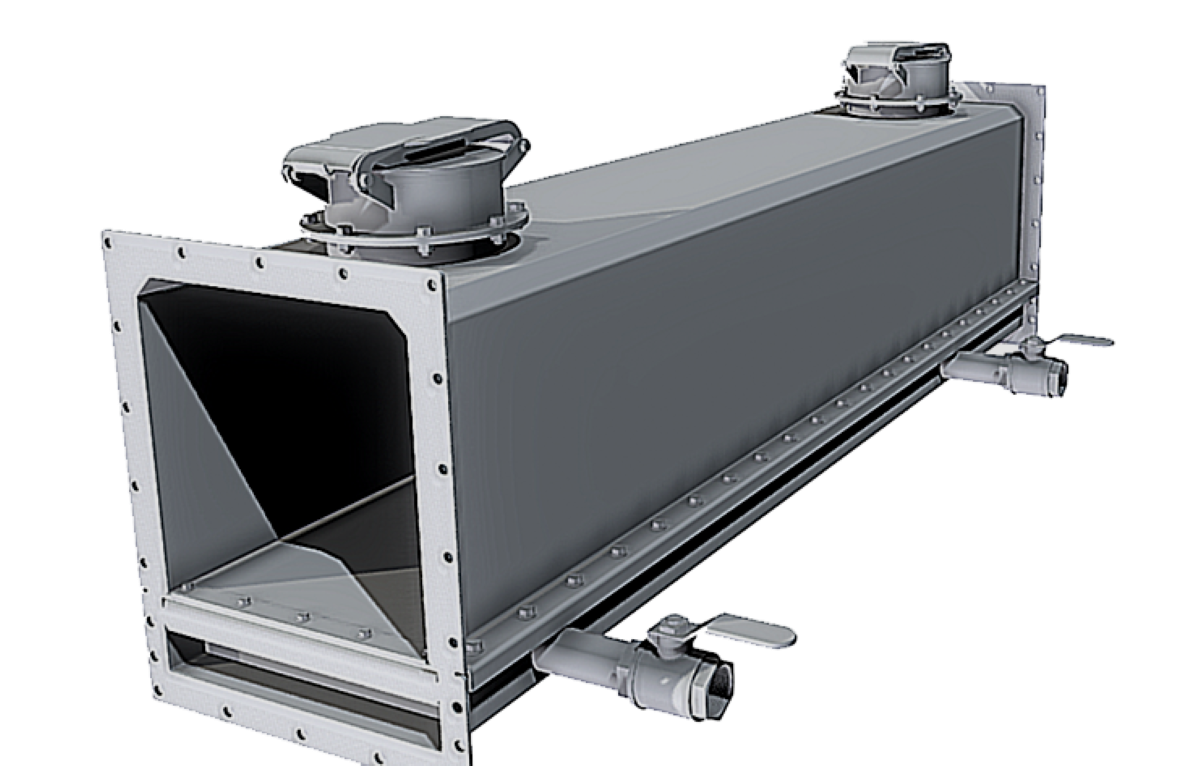
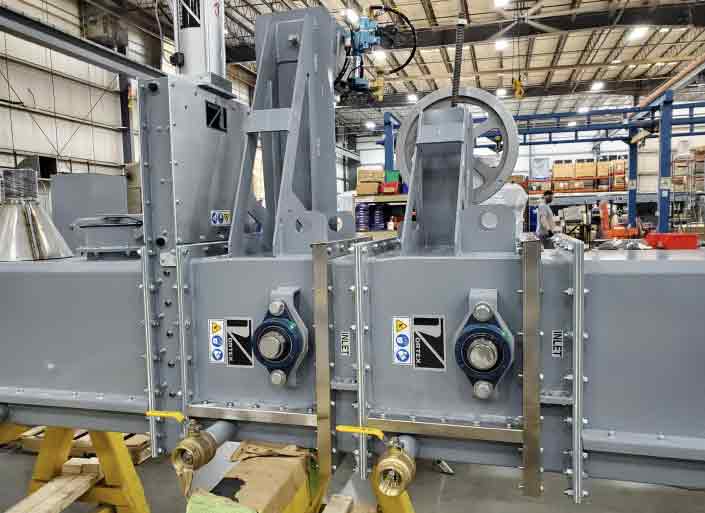
Vortex Aero-Slide Conveyors use low-pressure dry air beneath a porous conveying surface. Air passes into the powder bed while gravity encourages material to travel downstream.
Tell us what you handle, where the component fits, and what needs to improve.
Also referred to as: Air slide conveyors; Air-gravity conveyors; Fluidizing conveyors.
Air and gravity work together to move suitable fluidizable powders.
Viewports and lower-chamber cleanout ports provide access.
The conveyor channel has no moving conveying elements; the air supply uses a fan or blower.
Review the exact duty, material, temperature, connections, and control requirements with RTS before ordering. Published ranges cover a product family and vary by configuration.

A material name, a process sketch, and a description of the current problem are a useful starting point. Include throughput, bulk density, temperature, and operating conditions when available.
For replacements, send the existing model or serial number, opening dimensions, bolt pattern, available space, and photos.
Send the existing dimensions, connections, actuator details, and operating duty. RTS can review the installation and identify what needs to match before a replacement is selected.
Include abrasion, corrosion, cleaning, temperature, and product-contact requirements. Let us know any required documentation or hazardous-area classification.
Share the upstream and downstream equipment and the intended operating sequence. RTS can help review how the component fits your conveying, batching, or loading arrangement.