
Review physical closure
the barrier is part of an active detection and control system.


Protect Equipment | Improve Process Safety | Reduce Explosion Risk
We help identify and implement the right BS&B explosion protection solution to safeguard dust collectors, silos, bins, mills, dryers, conveyors, and process equipment from combustible dust hazards.
Get an Explosion Protection RecommendationCreate a physical barrier in a connected process route.
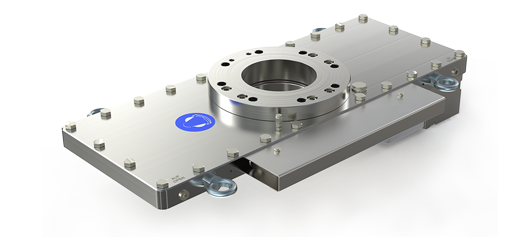
Create a physical barrier in a connected process route.
BS&B’s mechanical isolation information describes its IVE arrangement, which uses an actively deployed inflatable barrier. Review the exact device construction and approved application instead of assuming every product described as a knife-gate isolation device uses a conventional sliding metal blade.
Example: Assess active physical isolation in a duct connected to explosion-protected equipment.
Also known as: Mechanical isolation devices, active explosion isolation valves, IVE isolation.
the barrier is part of an active detection and control system.
duct dimensions, material flow and process conditions influence suitability.
installed access and post-activation service must be considered.
material loading and operating conditions matter.
isolation must coordinate with the vessel protection method.
review abrasion, buildup and maintenance access.
Dust test data, vessel strength and volume, connected ducts, operating conditions, personnel locations, equipment layout, and the project hazard assessment.
A process valve is not automatically an explosion-isolation device. The selected isolation equipment and its complete detection, response and installation arrangement must suit the hazard.
Dust test data, vessel strength and volume, connected ducts, operating conditions, personnel locations, equipment layout, and the project hazard assessment.
Confirm the complete quoted equipment, operating conditions and selected options for your application.
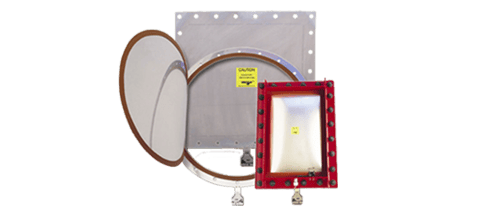
Relieve pressure
Relieve explosion pressure through a designed discharge path.
Example: Review venting on a dust collector with a discharge route to an appropriate safe area.
Also known as: Explosion relief panels, dust explosion vents, rupture vents.
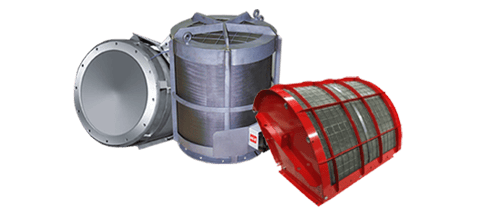
Quench vented flame
Manage vented flame where an open flame discharge is unsuitable.
Example: Review an indoor dust collector where a conventional outdoor vent route is impractical.
Also known as: Flameless vents, FlameFree venting, IQR systems.
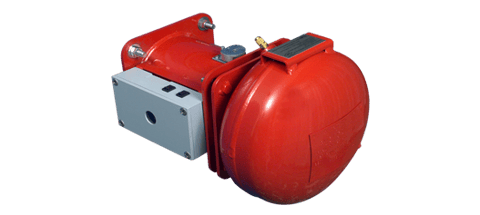
Suppress in a vessel
Detect a developing explosion and discharge suppressant into the protected volume.
Example: Assess suppression for a vessel where explosion venting is not the preferred protection method.
Also known as: Chemical explosion suppression, IPD suppression systems, active explosion protection.
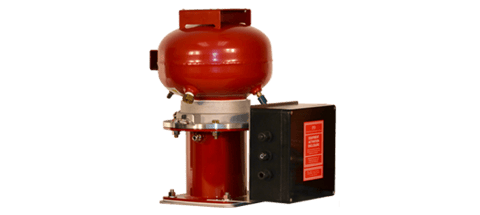
Isolate chemically
Limit flame propagation through a connected process duct.
Example: Assess the duct between a protected dust collector and connected process equipment.
Also known as: Chemical barriers, active explosion isolation, IPD chemical isolation.