
Act on an early signal
detector arrangement and response belong to the complete system design.


Protect Equipment | Improve Process Safety | Reduce Explosion Risk
We help identify and implement the right BS&B explosion protection solution to safeguard dust collectors, silos, bins, mills, dryers, conveyors, and process equipment from combustible dust hazards.
Get an Explosion Protection RecommendationDetect a developing explosion and discharge suppressant into the protected volume.
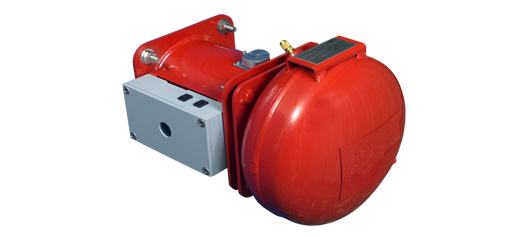
Detect a developing explosion and discharge suppressant into the protected volume.
BS&B industrial suppression systems use detection, controls and suppressant discharge devices to act during the early development of an explosion. The system is designed around the vessel, process, combustible material and the required protected pressure.
Example: Assess suppression for a vessel where explosion venting is not the preferred protection method.
Also known as: Chemical explosion suppression, IPD suppression systems, active explosion protection.
detector arrangement and response belong to the complete system design.
device number, position and agent are selected around the protected volume.
alarms, shutdowns, inspection and reinstatement procedures need planning.
internal geometry and dust conditions influence system design.
temperature and pressure conditions require review.
product compatibility and connected equipment must be considered.
BS&B introduces venting, flameless venting, chemical suppression and chemical isolation. This is an overview of protection roles, not a sizing demonstration or a project-specific design.
Dust test data, vessel strength and volume, connected ducts, operating conditions, personnel locations, equipment layout, and the project hazard assessment.
No. Vessel suppression and propagation isolation are separate protection functions. Review connections and isolation requirements as part of the complete hazard assessment.
Dust test data, vessel strength and volume, connected ducts, operating conditions, personnel locations, equipment layout, and the project hazard assessment.
Confirm the complete quoted equipment, operating conditions and selected options for your application.
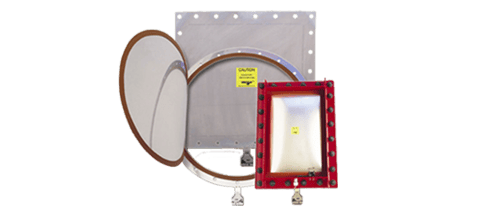
Relieve pressure
Relieve explosion pressure through a designed discharge path.
Example: Review venting on a dust collector with a discharge route to an appropriate safe area.
Also known as: Explosion relief panels, dust explosion vents, rupture vents.
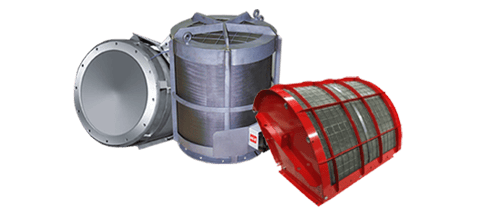
Quench vented flame
Manage vented flame where an open flame discharge is unsuitable.
Example: Review an indoor dust collector where a conventional outdoor vent route is impractical.
Also known as: Flameless vents, FlameFree venting, IQR systems.
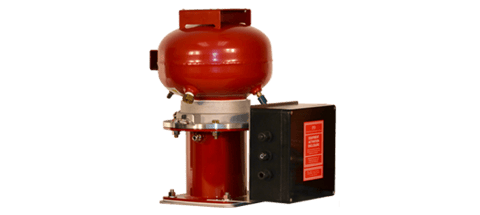
Isolate chemically
Limit flame propagation through a connected process duct.
Example: Assess the duct between a protected dust collector and connected process equipment.
Also known as: Chemical barriers, active explosion isolation, IPD chemical isolation.
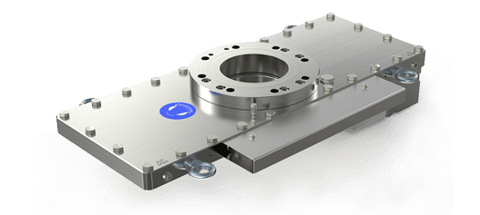
Isolate physically
Create a physical barrier in a connected process route.
Example: Assess active physical isolation in a duct connected to explosion-protected equipment.
Also known as: Mechanical isolation devices, active explosion isolation valves, IVE isolation.