
Inspection access
An opening supports viewing and reaching the hopper interior.


Improve Powder Discharge | Reduce Material Hang-Ups | Simplify Maintenance
Is material bridging over the outlet, forming a central flow channel, or clinging to the hopper walls? Rate Technology Systems helps review your material, vessel geometry and operating conditions to select an appropriate Solimar solution. Explore disk fluidizers, pneumatic air knockers, external installation kits, sanitary mounting options and aeration controls for dry bulk handling applications.
Get a Material RecommendationSolimar · Canadian application support from RTS
Provide a practical external opening for inspection and fluidizer access on compatible vessels.
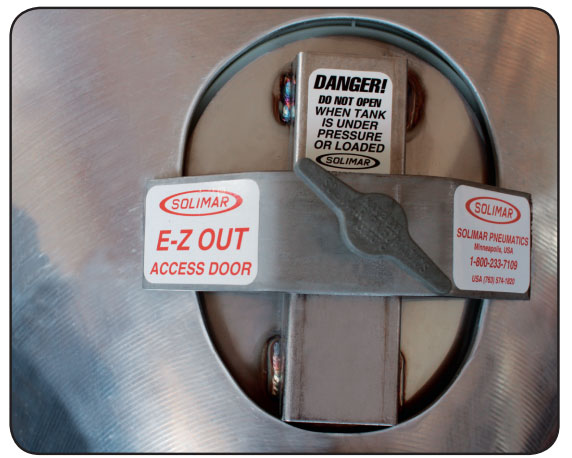
Your job: reach the hopper interior for inspection.
EZ-OUT is an access door, rather than a flow aid. Stainless-steel construction, a silicone gasket and a tee-handle closure provide a removable opening. RTS helps review location, surface shape and the work that needs to be performed through the door.
Example: Provide an inspection point near a hopper outlet to check the interior and reach aeration components.
Also known as: Hopper access doors, inspection doors, Easy-Out doors.
An opening supports viewing and reaching the hopper interior.
Select the door to match the vessel surface.
A tee handle secures the stainless assembly against its silicone gasket.
Select a location and model that match the hopper contour.
Install to the approved opening template and vessel requirements.
Use the door for inspection after the equipment has been isolated.
Review where operators need to see or reach the interior.
Check location, material build-up and maintenance access.
Coordinate the opening with nearby hoses, piping and the discharge outlet.
Suitability depends on the specific material and installation. RTS reviews flow behaviour, geometry, operating conditions and the process requirements together.
This video shows fluidizer installation through an existing opening. It helps explain the access task, but does not demonstrate the EZ-OUT door itself.
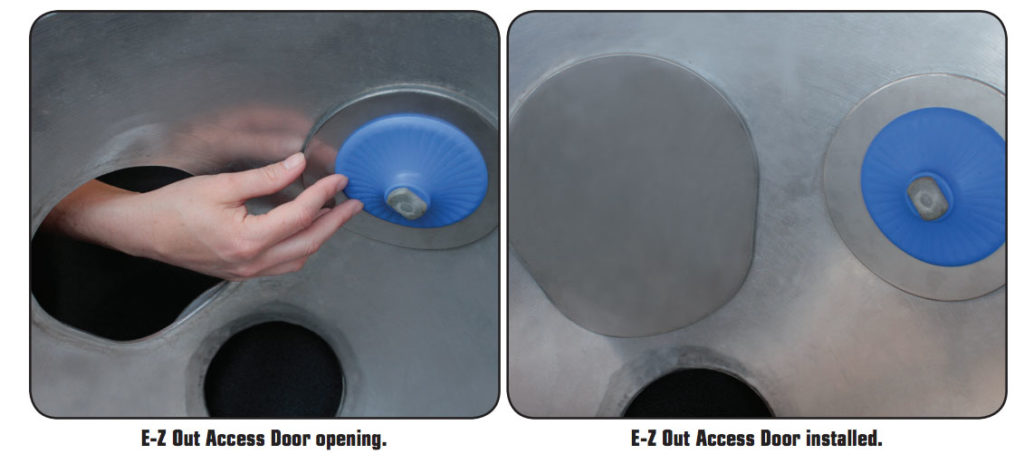
Start with the material and a hopper or vessel drawing. For ez-out access doors, RTS also needs to understand the specific duty: reach the hopper interior for inspection.
Is the mounting surface flat or curved, and what is its radius? What inspection or component replacement needs to be possible through the opening?
Send photographs and dimensions of the existing mounting and nearby equipment. RTS will coordinate a fit review before a replacement or new mounting arrangement is proposed.
Use the model-specific instructions for installation and maintenance. RTS can help confirm the selected assembly against the current application.
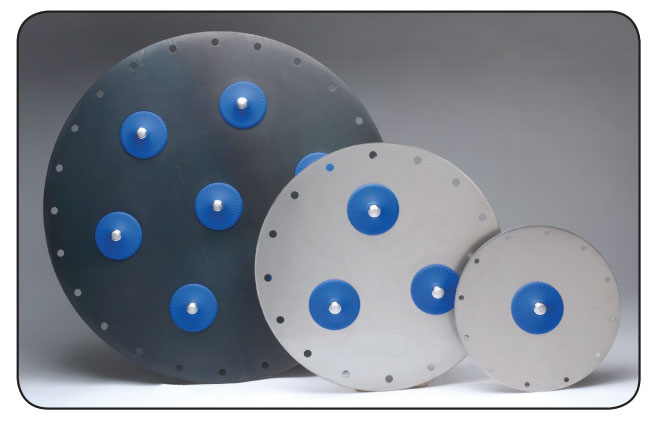
Replace a compatible fabric-pad plate assembly
Use disk fluidizers on a plate where the existing plenum and mounting arrangement support this retrofit.
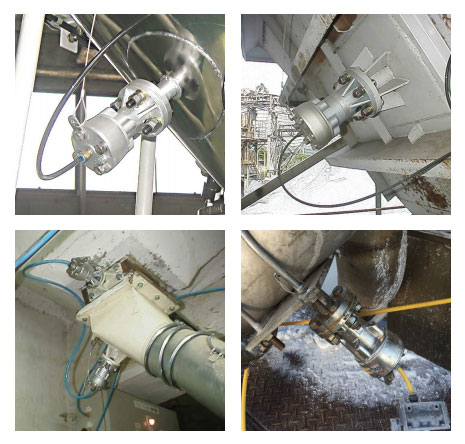
Release material clinging to the vessel wall
Apply intermittent pneumatic impact where sticky or compacted material needs help releasing.
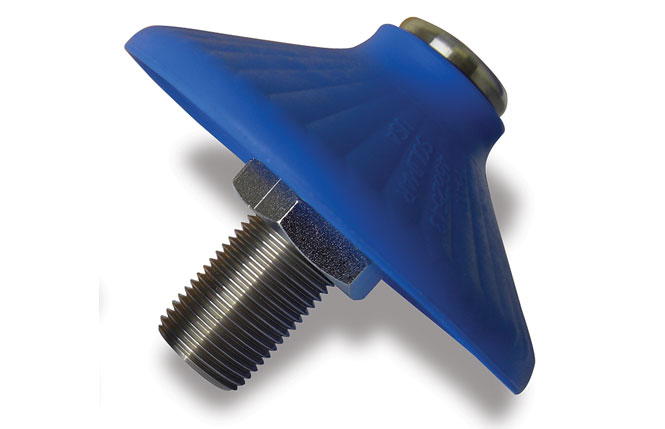
Keep dry powder moving toward the outlet
Aerate the material at the hopper wall to help reduce bridging, ratholing and retained product.
Send a photo or drawing and tell us what happens during discharge. RTS can help narrow the options and coordinate the application review with Solimar.