
Restore handling
Reduce troublesome lumps before conveying or feeding.


Improve Particle Size Consistency | Increase Throughput | Reduce Downtime
We help identify and implement the right Prater Industries solution for particle size reduction, grinding, milling, lump breaking, air classification, and material feeding applications. From food ingredients and chemicals to minerals, plastics, grains, agricultural products, and other dry bulk materials, Prater equipment helps manufacturers improve product consistency, production efficiency, and overall process performance.
Get a Prater Equipment RecommendationBreak up agglomerates so material can flow again.
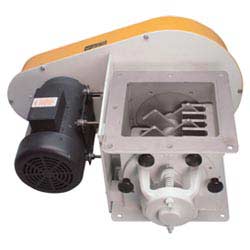
Are you breaking lumps rather than making a fine powder?
Prater lump breakers use rotating blades to break agglomerated material by impact and shear. Single- and dual-shaft arrangements can be reviewed around the feed and downstream handling requirement.
Typical application
Break storage or transport agglomerates before feeding the next process.
Also known as: Lump crushers, flake breakers, deagglomerators.
Reduce troublesome lumps before conveying or feeding.
Separate deagglomeration from primary fine grinding.
Review cleaning and wear-part access for your process.
Material enters the breaker under the agreed feed conditions.
Rotating blades act on lumps within the housing.
Material leaves for the next handling or processing step.

Compacted sugar, salt, cereals, or other suitable agglomerated ingredients before feeding or blending.
Resins, pigments, fertilizers, and filter cakes are among Prater’s listed applications. Describe whether lumps are friable or hard.
Single- or dual-shaft machines, Quick Clean designs, optional screens, wear-resistant components, and bag-dump or bulk-bag integration.
Prater introduces the FB12 Quick Clean flake and lump breaker. See the machine arrangement and access features, then discuss your lump size, cleaning frequency, and discharge requirement with RTS.
Prater application insight
The sugar system described by Prater includes an FB-8 lump breaker ahead of the grinding duty. This is a useful distinction: first break agglomerates that disrupt flow, then use the grinder to reduce the particles themselves. The image is Prater’s illustrated system, not a customer installation photograph.

Source: Prater Industries. See the sugar-system application >>
Send a representative material description, feed and target particle-size distributions, required rate, and a process sketch. Include any cleaning or temperature limits.
Start with what the material needs. Breaking soft agglomerates is a different duty from producing a fine particle-size distribution. Share both the incoming lumps and the required discharge.
Share the material, the current process, and measurable acceptance criteria. RTS can discuss the appropriate review and any testing requirements with Prater before a final recommendation.
Include the feeder, collection system, utilities, cleaning needs, and upstream and downstream equipment in the review. Final equipment and protection requirements depend on the complete application.
Manufacturer literature supports the application review. Confirm final performance, dimensions, construction, and options with the quotation.
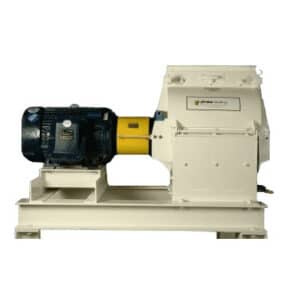
Reduce larger dry particles to a usable grind.
Example: Reduce dry ingredients before blending or further processing.
Also known as: Hammermills, impact mills, screened mills.
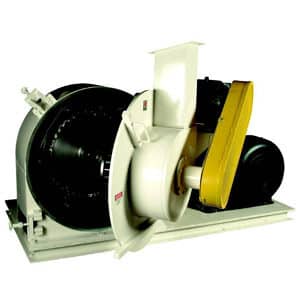
Grind fine powder and control the particle-size cut.
Example: Review a fine-powder application where the upper particle-size limit matters.
Also known as: Air classifying mills, ACMs, classifier mills.
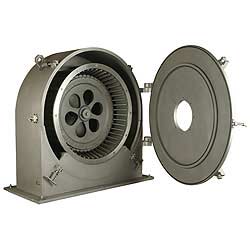
Produce a fine grind from dry, free-flowing material.
Example: Review fine grinding of dry food ingredients before blending.
Also known as: Fine grinding mills, high-speed impact grinders.
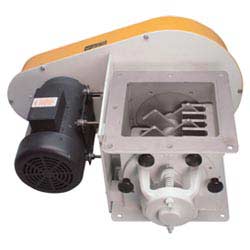
Break up agglomerates so material can flow again.
Example: Break storage or transport agglomerates before feeding the next process.
Also known as: Lump crushers, flake breakers, deagglomerators.
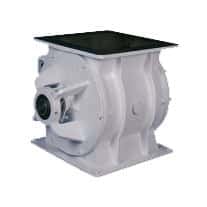
Feed bulk material while limiting air leakage between pressure zones.
Example: Discharge collected powder from a dust collector into downstream handling.
Also known as: Rotary valves, rotary feeders, airlocks, star valves.
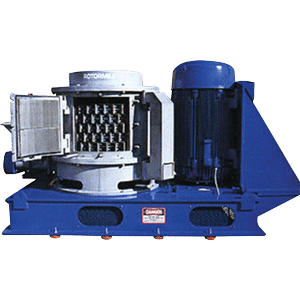
Explore screenless milling for a specific material challenge.
Example: Assess a difficult milling or deagglomeration duty through an application review.
Also known as: Rotormill, long-gap mills, screenless rotor mills.