Protect particle integrity
Describe the product and acceptable breakage before selecting speed, inlet geometry and circuit layout.


Review FLEXI-DISC® equipment around your material, installation and production requirements. Compare options and send an application request to RTS.
Request a QuoteDescribe the product and acceptable breakage before selecting speed, inlet geometry and circuit layout.
Plan the loaded and return legs, bends, inlets and controlled discharge points as one circuit.
Define dry cleaning or washdown, allergen limits and access to cable, discs, drive and tensioner.
A moving stainless steel cable carries polymer discs around an enclosed circuit. The discs move material through smooth tubing, while drive and tensioning assemblies keep the circuit moving at the selected speed.
FLEXI-DISC® systems suit review where particle integrity, enclosed transfer and several inlet or outlet points matter. Route geometry, product behaviour, inlet metering and cleanout determine the design; gentle handling must be checked with the actual product.
Also known as: Tubular drag conveyors, cable-and-disc conveyors, disc conveyors and enclosed cable conveyors.
Control feed into the available spaces between discs. Specify minimum and peak rates and avoid assuming the conveyor can accept an uncontrolled surge.
The drive moves the cable and discs through the conveying and return paths. Include supports and access around direction changes.
Selected outlets release product into the receiving equipment. Confirm residual material and the sequence for clearing the return circuit.
Select the components and options around the actual material and installation. Confirm the equipment included in the quotation; examples shown are not one standard package.
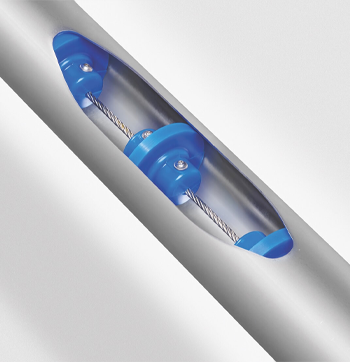
Polymer discs mounted on stainless steel cable move product along the tube. Match disc material, cable construction and wear limits to the duty.
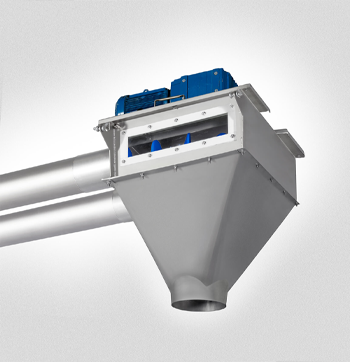
The drive wheel propels the circuit. Review access, monitoring and the published replaceable sprocket-tip design where applicable.
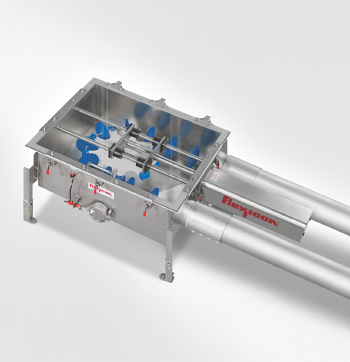
A tensioning assembly maintains cable tension. Confirm manual or automatic adjustment and the inspection and maintenance requirements.
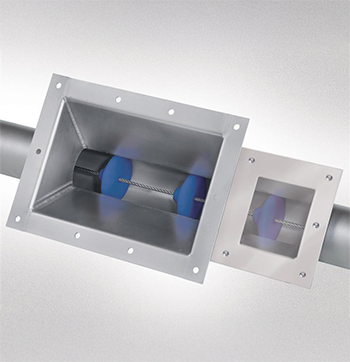
Inlet adapters accept a controlled product stream. Review pocket fill, feed consistency and anti-shear features for delicate particles.
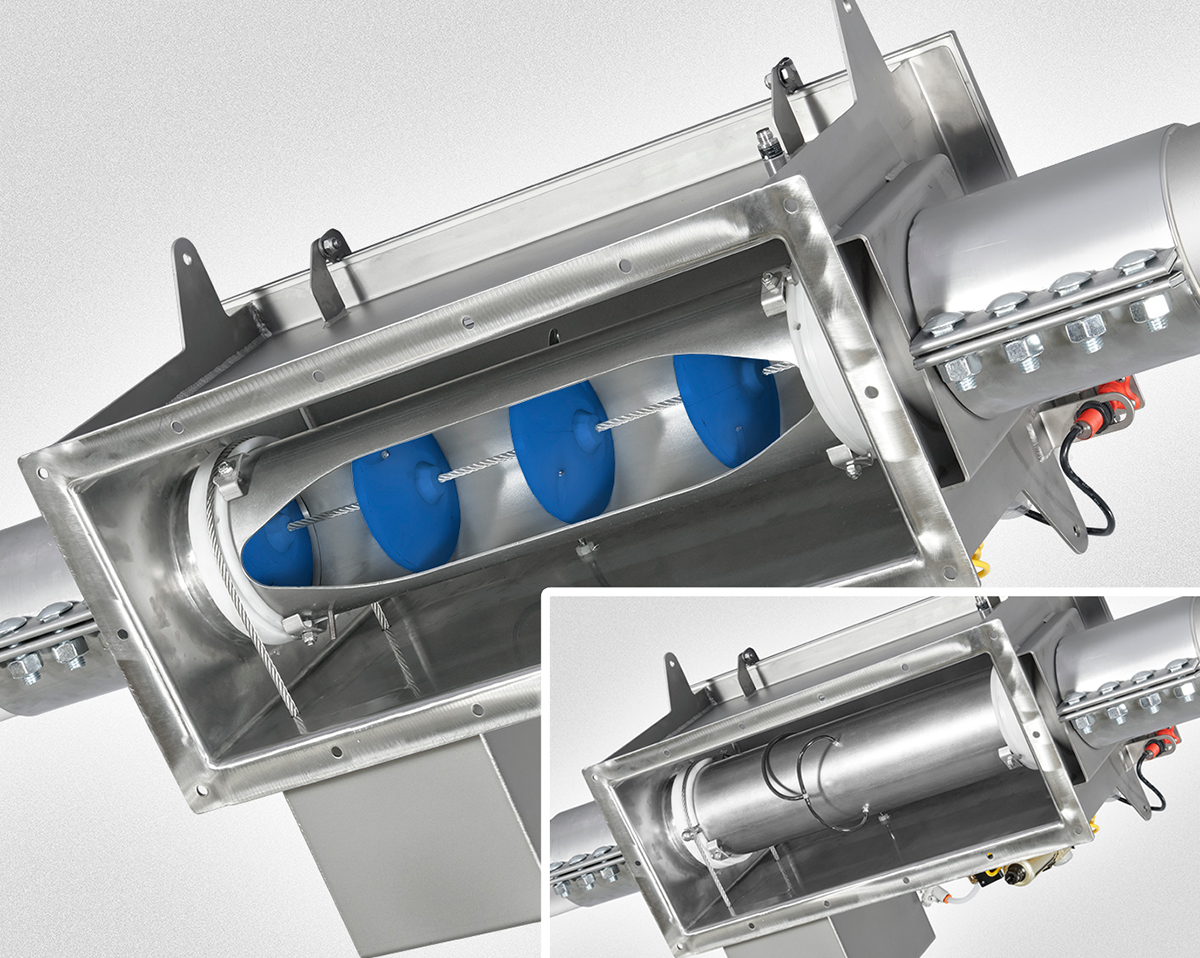
Inline discharge valves can direct material to selected destinations. Coordinate valve position, air supply and downstream readiness.
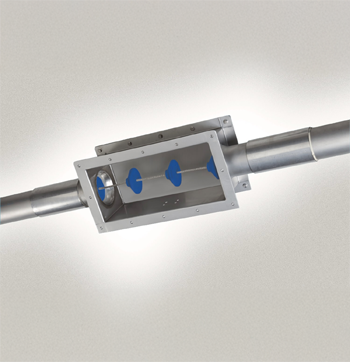
A full-flow outlet provides a final discharge point. Review inspection sections, residual product and any air-knife requirement.
Use these manufacturer examples to compare functions and installation choices. Confirm material suitability, construction and performance for the quoted system.
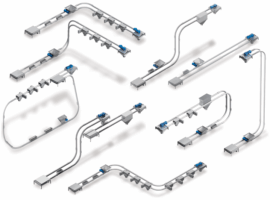
Route a circuit around the plant with one or more sources and use points. Define both the loaded path and return path.
Application idea: Connect storage, mixing and packaging equipment.
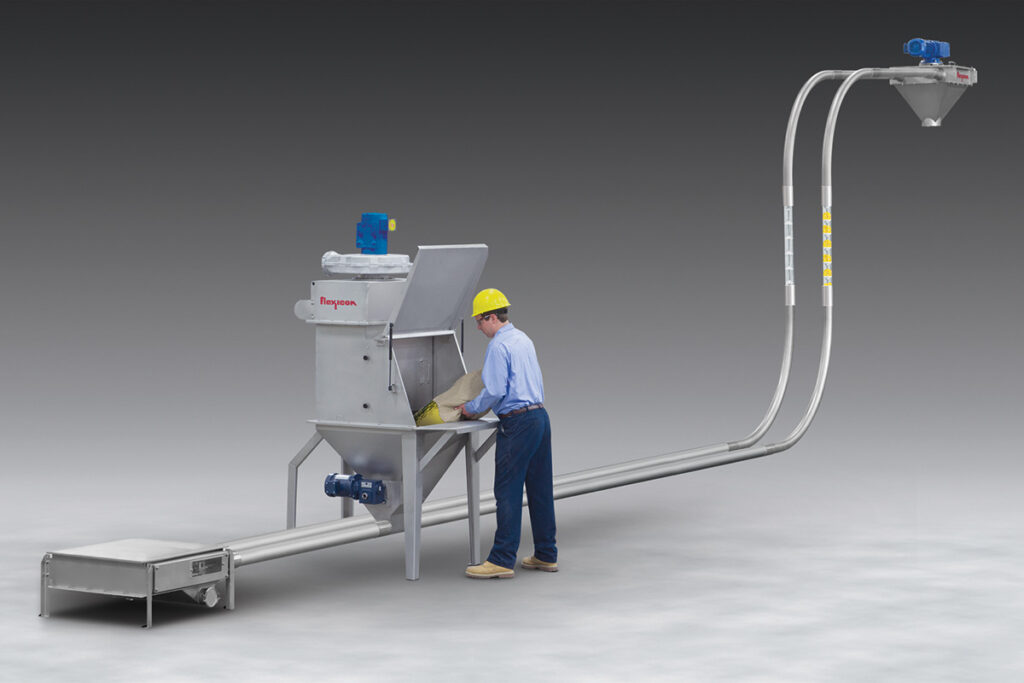
Combine manual loading and local dust capture with a metered inlet to the cable circuit.
Application idea: Transfer bagged, fragile ingredients to an elevated process.
Route a circuit around the plant with one or more sources and use points. Define both the loaded path and return path.
Send the material, layout and operating requirements so this arrangement can be reviewed for your process.
View configuration PDF →Combine manual loading and local dust capture with a metered inlet to the cable circuit.
Send the material, layout and operating requirements so this arrangement can be reviewed for your process.
View configuration PDF →Coordinate discharge to receiving hoppers and level signals while limiting product damage.
Select destinations and recipe sequences where one circuit serves several receiving points.
Review unloaders, dumpers and metering devices as part of the inlet arrangement.
Modular tubing allows layout changes to be reviewed; drive, tension and capacity must be rechecked after changes.
These examples are starting points for application review. Supply representative material information and the required result.
Pasta, cereals and similar particles need a defined breakage limit.
Review disc loading, abrasion and any static-sensitive requirements.
Check segregation and carryover with the actual blend.
Review flow, sealing, cleanout and suitability rather than assuming every powder fits.
Specify acceptable breakage, fines and blend change. Representative testing is useful for fragile pieces and mixed particle sizes.
Send distances, lifts, bends, clearances and every inlet and outlet. Include the return leg and service access.
Define the feeder, inlet height, flow condition and surge behaviour so the circuit can be loaded consistently.
Specify changeover frequency and the allowable residue. A moving cable circuit does not by itself establish sanitary cleanliness.
Define dry cleaning or washdown, cleaning chemicals, product-change frequency and the required access. Include drying and reassembly in the operating plan.
Send voltage, phase and frequency, including 575 V where applicable. Confirm the drive, extraction and controls, compressed-air needs and the required Canadian approval or inspection scope.
For spare parts, send model, serial number, dimensions and photographs. Start in the RTS Stock Room.
Tubing and couplings are offered in 304 or 316 stainless steel with industrial or sanitary finishes. Specify cable coating, polymer disc compatibility, seals and any inspection sections separately. Confirm the frame and drive-housing construction.
Tube grade, finish, circuit length, number of bends and outlets, controls and cleaning features affect cost. Select the sanitary specification and product-contact materials for the process.
Provide known material hazards and the plant protection requirements. Confirm guarding, dust handling and any applicable area classification for the complete installation.
Compare the equipment and accessories shown with the proposed scope for your application.
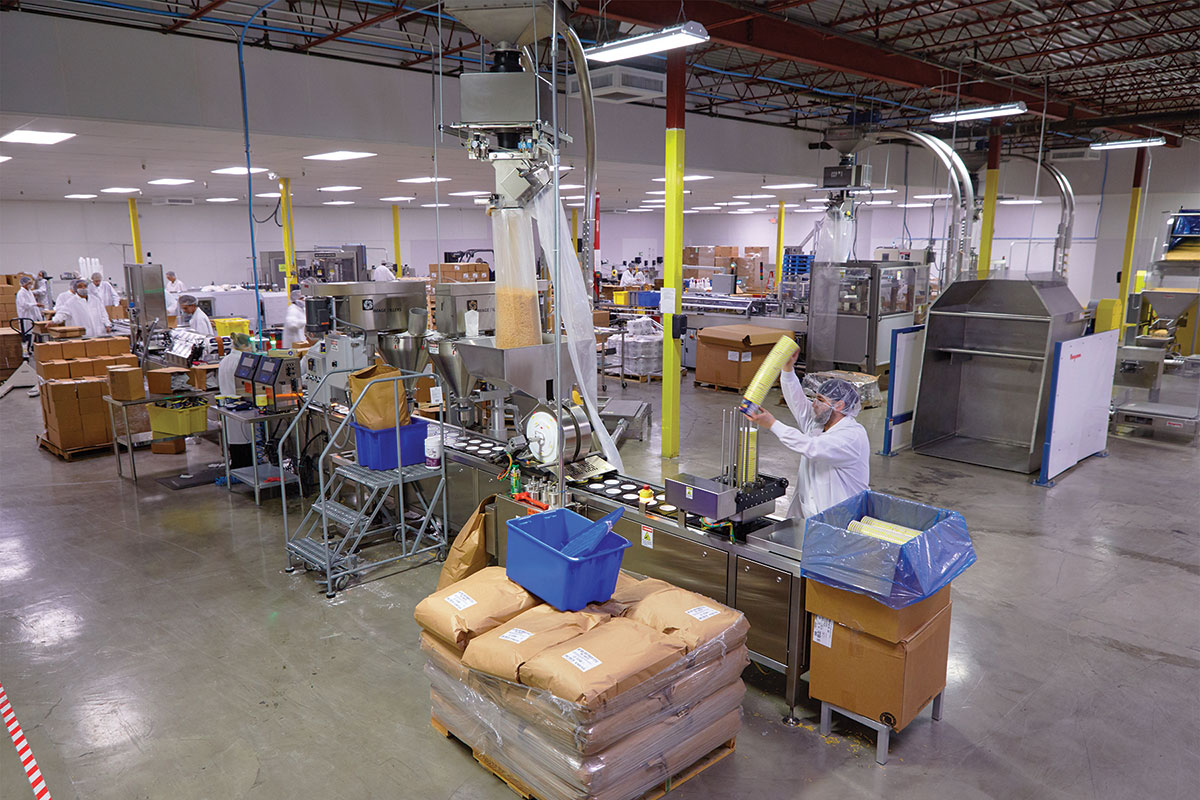
The installation combines box dumpers, metered hoppers and tubular cable circuits to supply packaging lines. It illustrates selection around brittle product and plant routing.
Read case study PDF →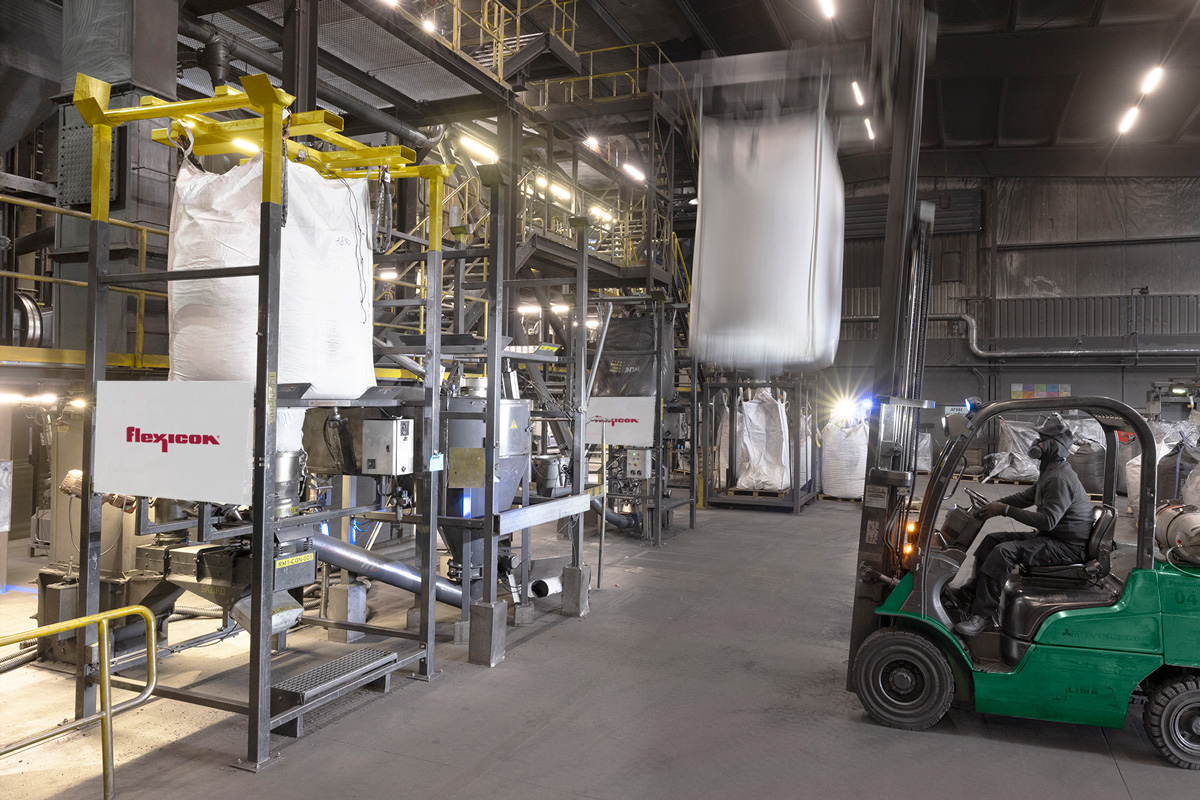
The published plant uses cable and screw conveying with unloading, milling and filling equipment. Review each transfer stage and its material requirements together.
Read case study PDF →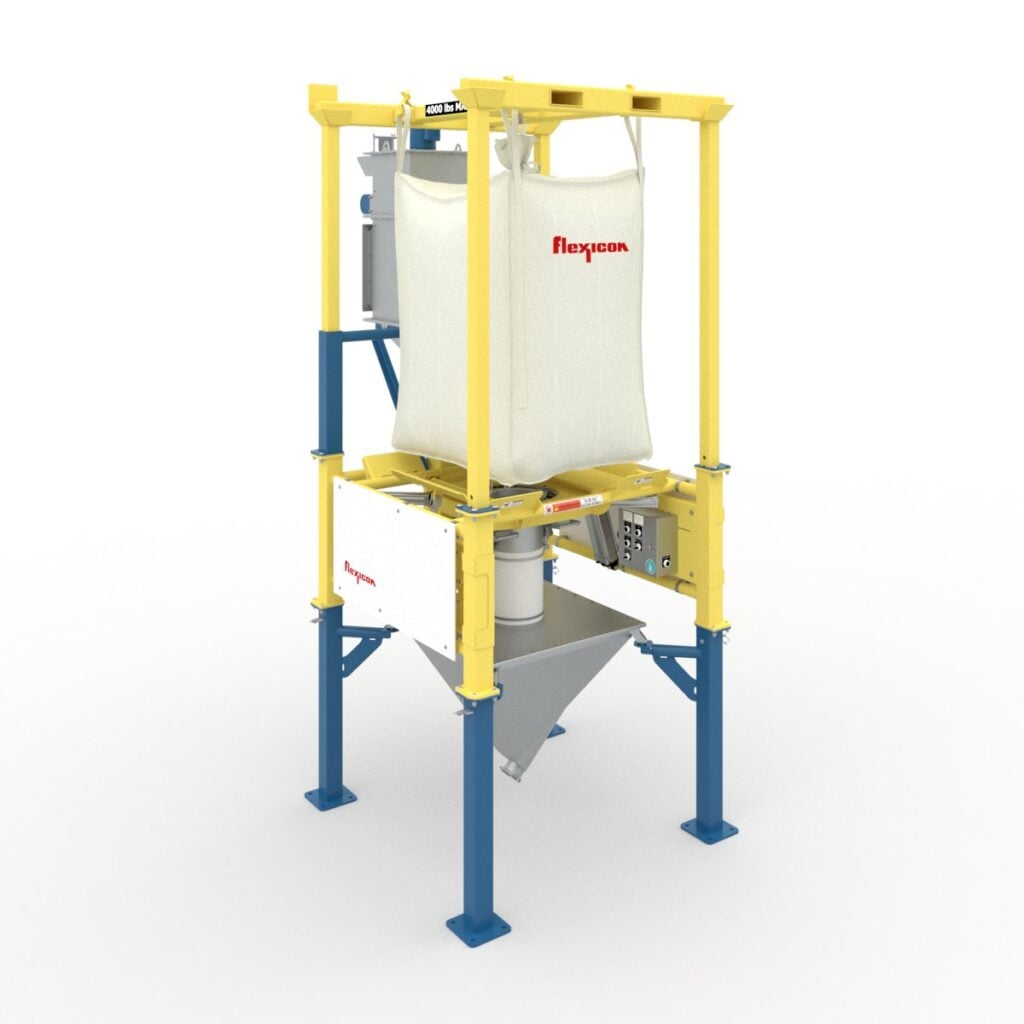
Review bag support, discharge, spout connection and the receiving process.
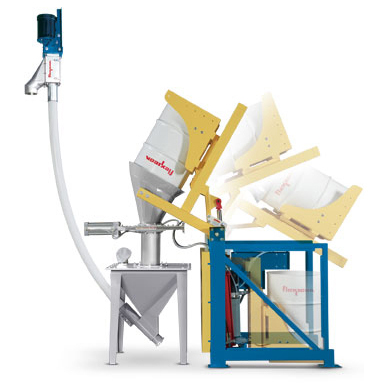
Review lifting, tipping and discharge of drums, boxes or bins.
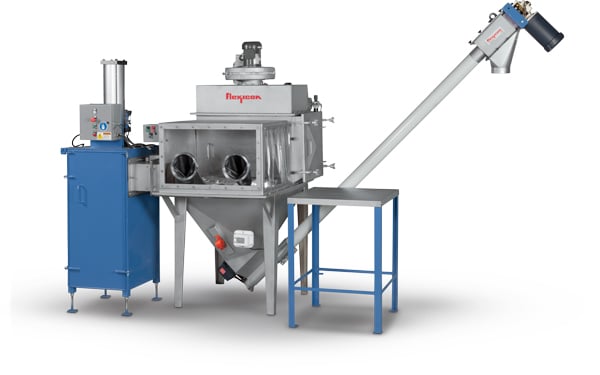
Receive handheld bags with a selected dust-capture and feeding arrangement.
The FLEXI-DISC design described here uses cable and discs. Identify any existing chain system separately when asking about replacements or comparisons.
Yes, published layouts include multiple outlets. Define the demand at each machine, simultaneous operation and the outlet-control sequence.
It is designed for gentle handling, but the result depends on the product, feed arrangement and route. Specify an acceptable result and review testing.
Review the required sanitary construction, cleaning method and drying procedure for the complete system. Confirm cable, discs, seals and access.
READY TO REVIEW YOUR APPLICATION?
Send the material, installation and operating requirements. Complete the guided request below.
Call 905-607-3240 or email sales@ratetechnology.com.
RATE TECHNOLOGY SYSTEMS
Fill in the details you know. Review your summary and submit the completed request at the last step.
Use the Attach a photo field in the secure form below to choose an image from your device. Wait for Upload complete before selecting Submit. You can leave this field empty and still send your request.