
Choose how bags are lifted, supported and positioned above the receiving equipment.

Bulk Bag Unloaders for Powders & Bulk Solids
Unload bulk bags into your process with the right bag support, dust containment and flow promotion. Review Flexicon BULK-OUT® configurations with RTS.
Request a QuoteHow will bulk bags feed your process?
Review the spout connection, partially empty bags, empty-bag collapse and receiving-vessel venting.
Match gravity discharge, a metering device or a conveyor to the process rate and batch requirements.
How a bulk bag unloader works
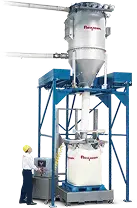
A bulk bag is lifted into position above a receiving hopper or process connection. The lifting arrangement supports the bag while the outlet spout is connected, untied and opened. Flow aids can help material leave the bag, and the receiving equipment carries it to the next process.
The frame, bag-spout interface, dust handling and downstream feed device work as a system. Start with the bags you receive, the material inside them and the rate your process needs.
Also known as: Bulk bag dischargers, FIBC unloaders, super sack unloaders, big bag unloaders and jumbo bag discharge systems.
Choose the bag-loading arrangement
BFC, BFF and BFH describe how the bag is handled. Select the frame around bag dimensions, maximum gross weight, headroom, lifting equipment and the receiving process.
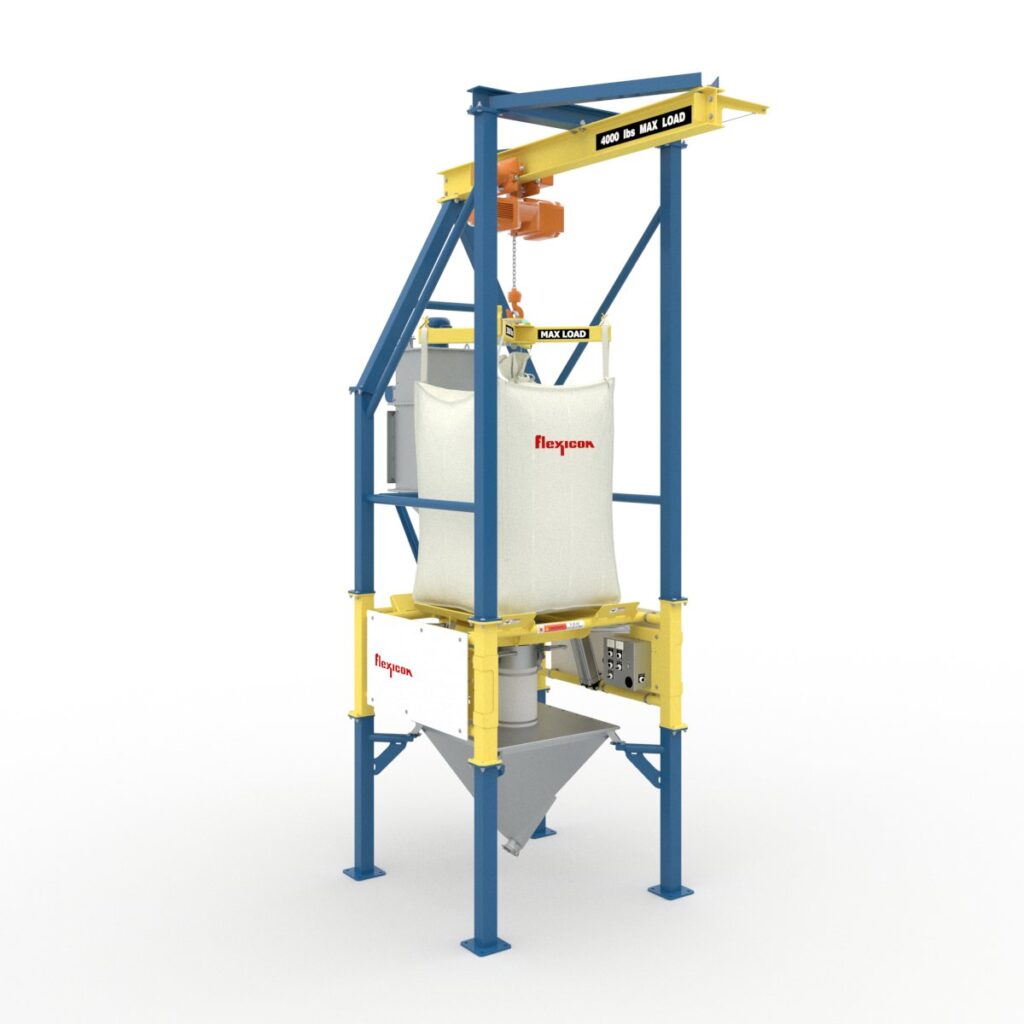
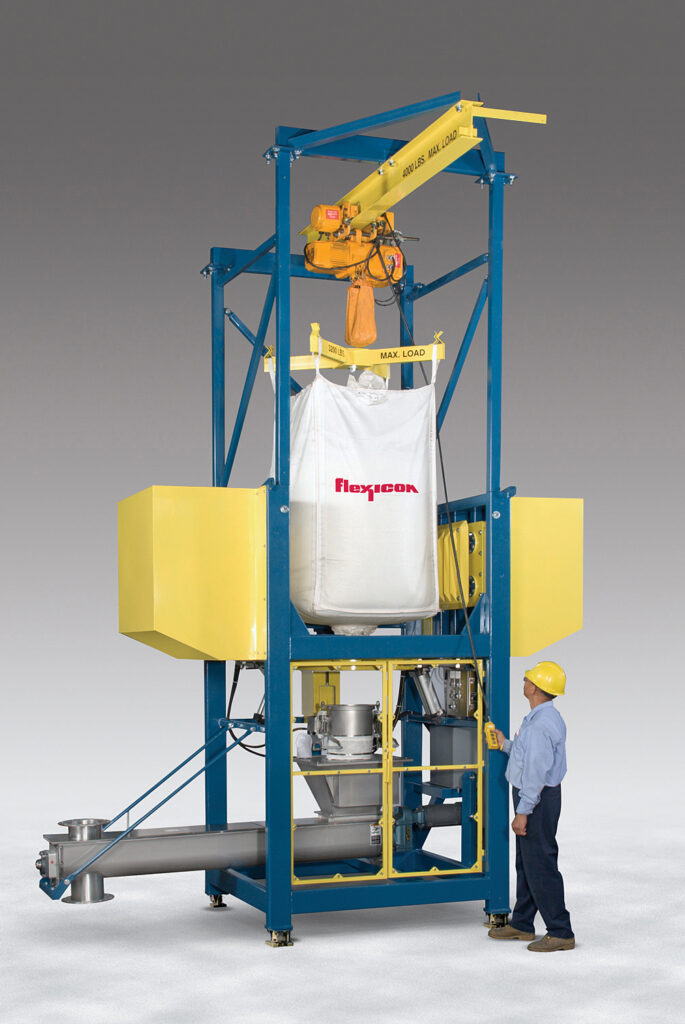
BFC hoist & trolley unloader
An integral cantilevered I-beam, electric hoist and trolley lift and position the bag. Review the bag pickup area, lifting height and operator access.
Application idea: A loading station where an integral hoist handles each bag.
Also known as: Hoist-loaded bulk bag discharger.

BFF forklift-loaded unloader
A detachable lifting frame holds the bag loops and is placed onto the unloader using a forklift. Review fork pockets, mast clearance and access to remove the empty bag.
Application idea: A fixed station served by an existing forklift.
Also known as: Forklift-loaded FIBC unloader.
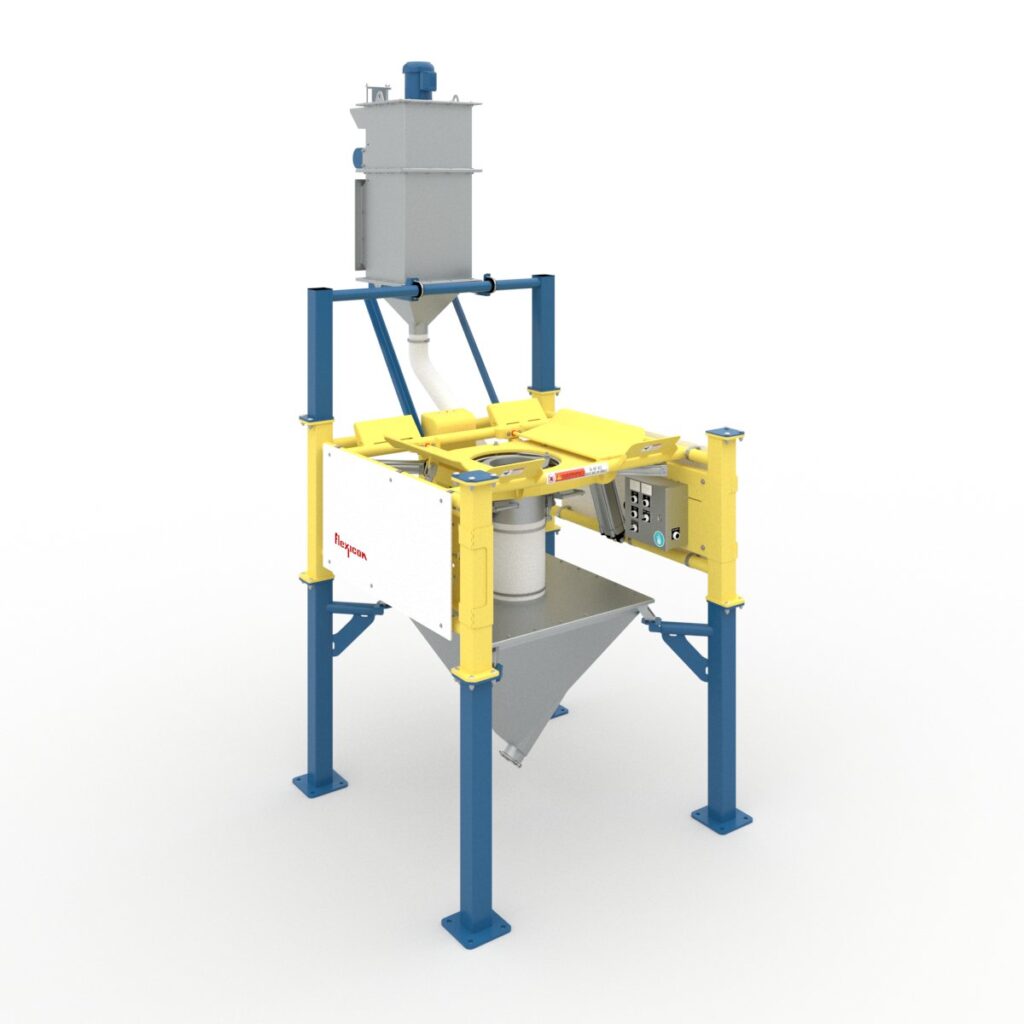
BFH half-frame unloader
Use an external lifting device to support the bag during discharge. The half frame provides the discharge interface; it does not replace the suspended-bag support arrangement.
Application idea: A process with a suitable existing plant hoist and a defined lifting procedure.
Also known as: Half-frame bulk bag discharger.
Build the spout interface and flow promotion around your material
These are selectable components, not a standard package on every unloader. Define which functions belong in your quotation: sealed connection, bag tensioning, flow assistance, partial-bag closure and dust extraction.
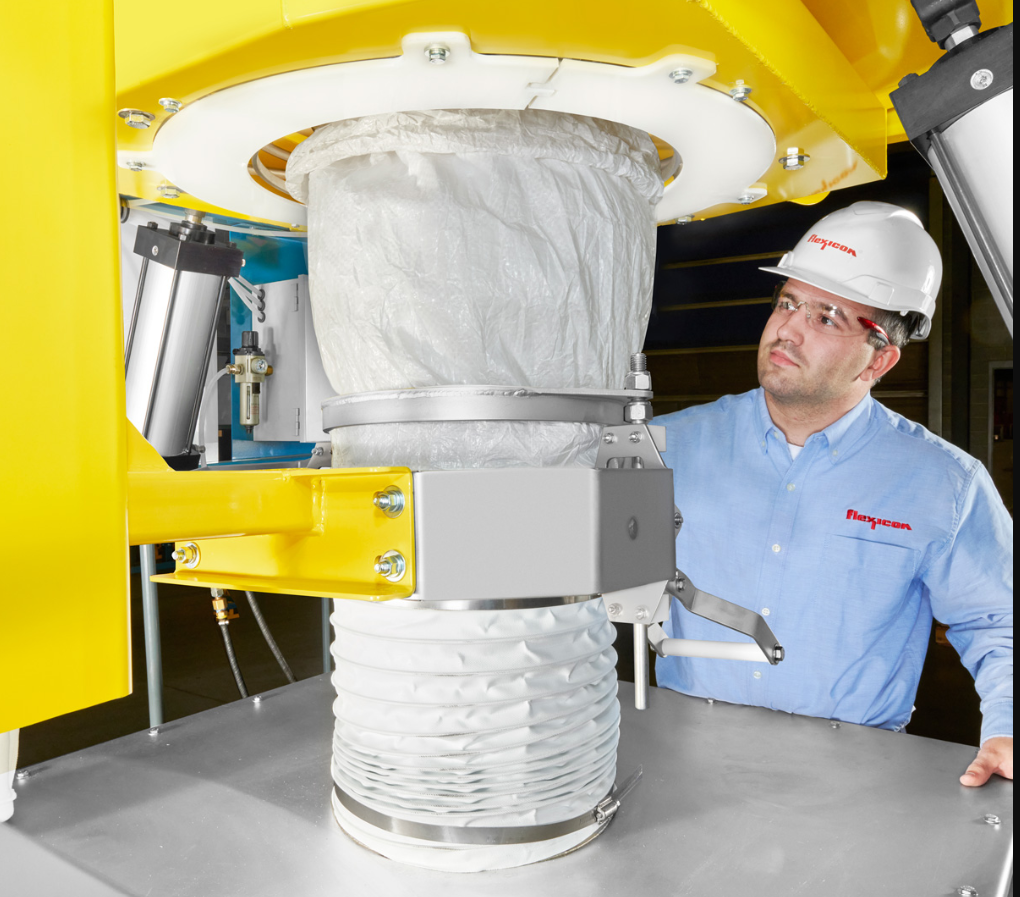
SPOUT-LOCK® clamp ring
Makes a sealed connection between the product side of the bag spout and the receiving tube. Review the actual spout diameter, liner and connection access.
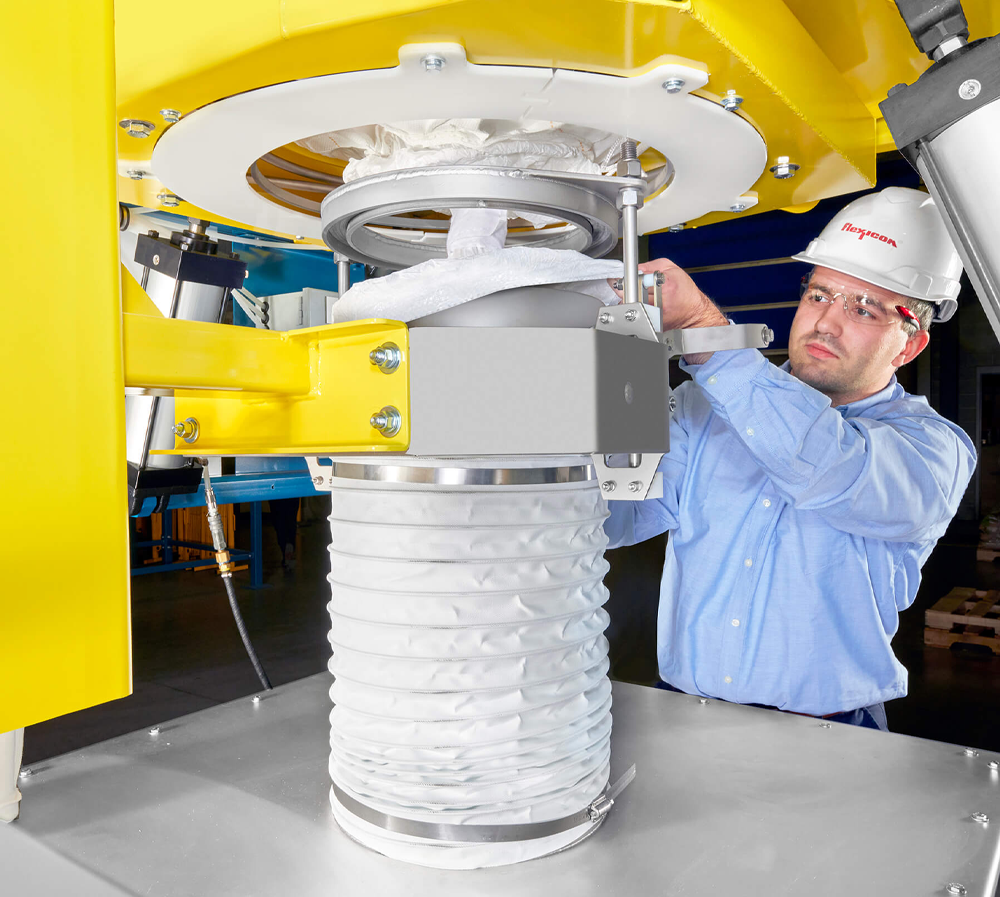
TELE-TUBE® telescoping tube
Raises for spout connection, then applies downward tension to keep the spout extended as the bag empties. This helps reduce folds and pockets that restrict discharge.

FLOW-FLEXER® bag activators
Pneumatic activators work the lower bag edges at timed intervals to encourage material toward the outlet. Select flow aids for the actual powder or granular material.
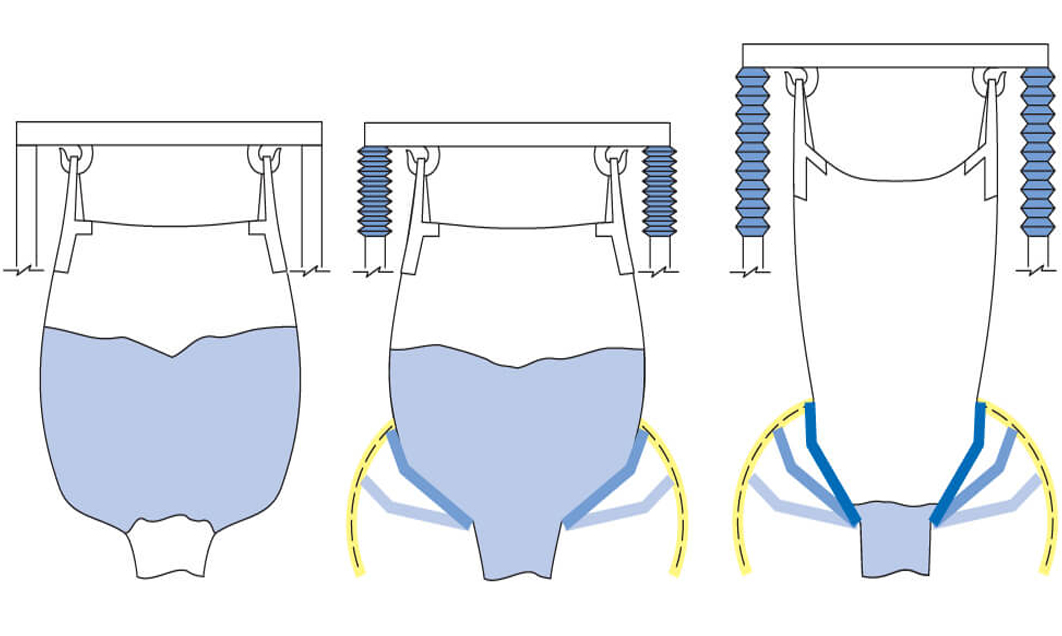
POP-TOP™ bag stretching
Available on BFF models, these devices lift the bag corners as its weight decreases. The changing bag shape helps direct remaining material to the discharge spout.
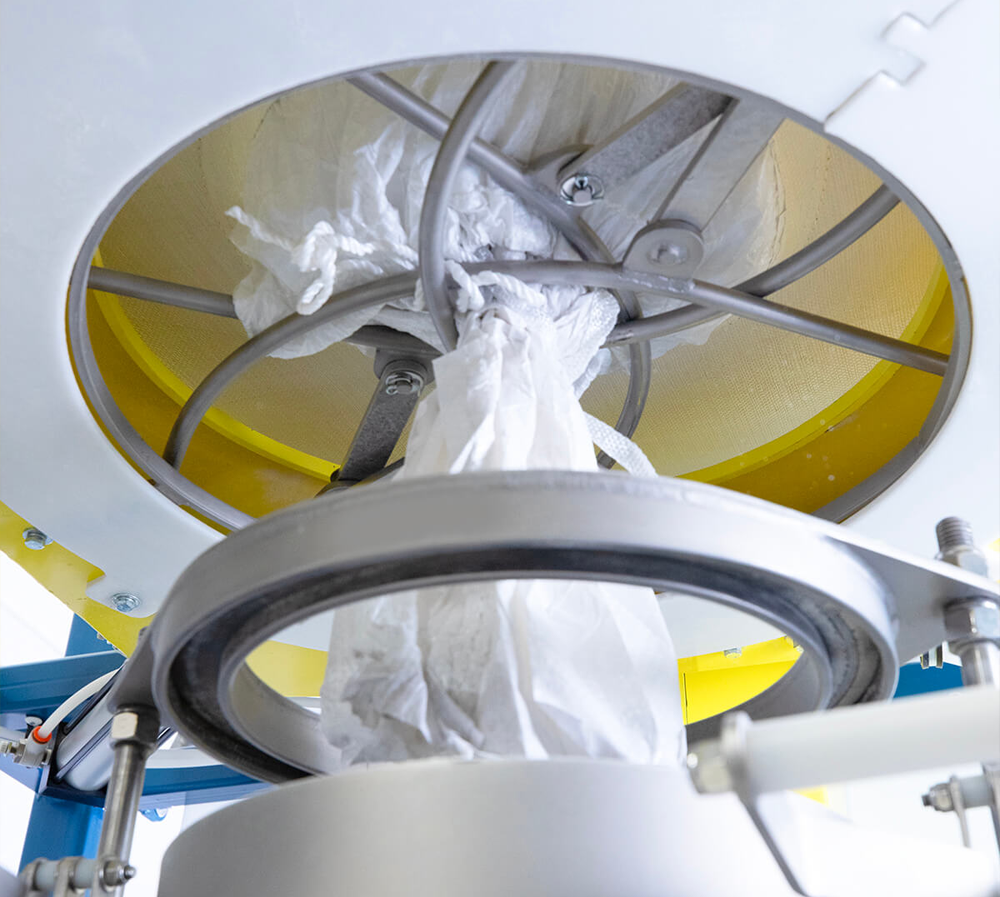
POWER-CINCHER® flow control
Closes around a flexible bag spout so a partially discharged bag can be retied and removed. Specify this duty when bags must be changed before they are empty.
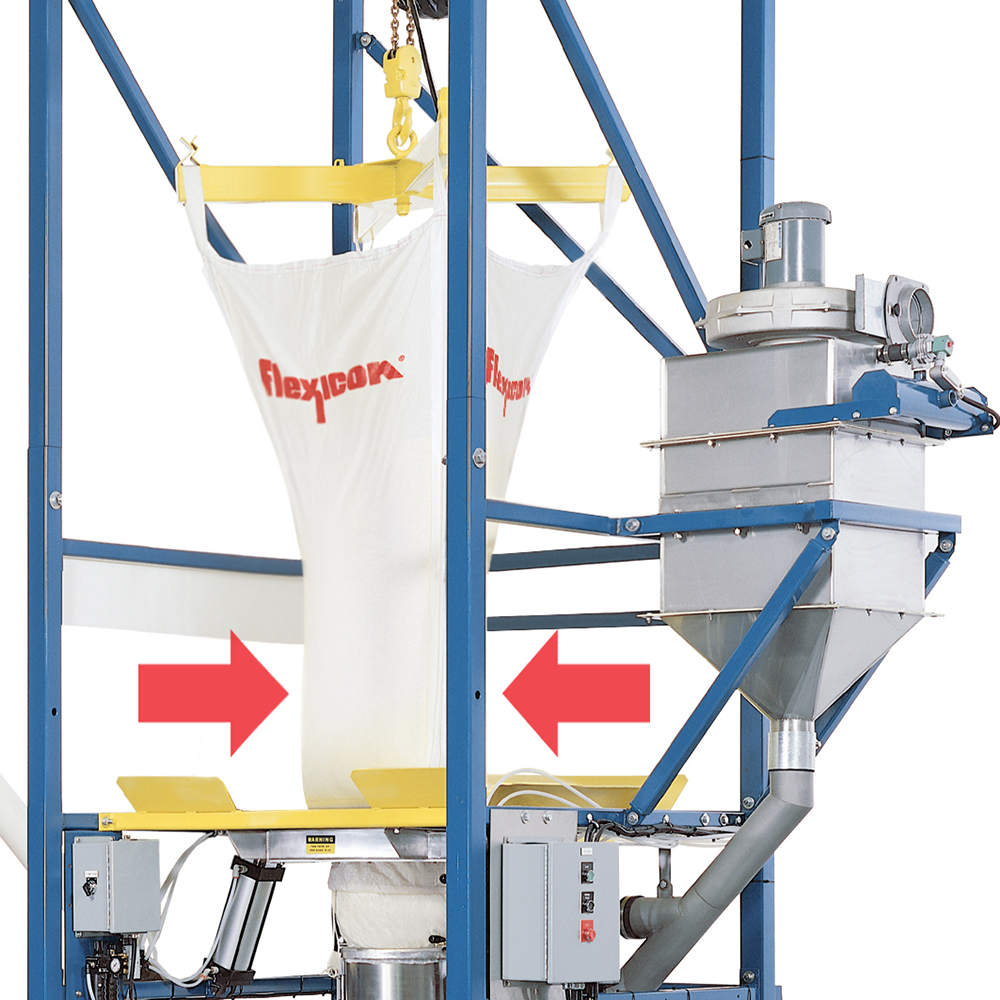
BAG-VAC® dust collection
Applies negative pressure to the connected bag to help collapse it before tie-off and capture residual dust during disconnect. Review filtration and the connection to the overall dust system.
Iris valve alternative: An iris valve can hold a bag spout closed while it is untied, then release it for discharge. Review containment expectations before choosing it; an iris valve alone does not provide the same sealed spout interface as SPOUT-LOCK® and TELE-TUBE®.
Plan the complete unloading cycle
1. Lift and connect
Check the bag and lifting arrangement, position it over the receiver and connect the outlet before opening the spout. Define safe operator access to the tie point.
2. Discharge and control
Use the selected flow aids and feed device to match the downstream demand. Include level signals or weight feedback where the process requires them.
3. Close and change bags
Define how partially full bags are isolated and how empty bags are collapsed, retied and removed. Include the bag-change time in the production cycle.
Configurations selected around the job
Start with the loading method, then add the construction and process functions you need. These manufacturer examples illustrate different options and are not identical to every quoted system.
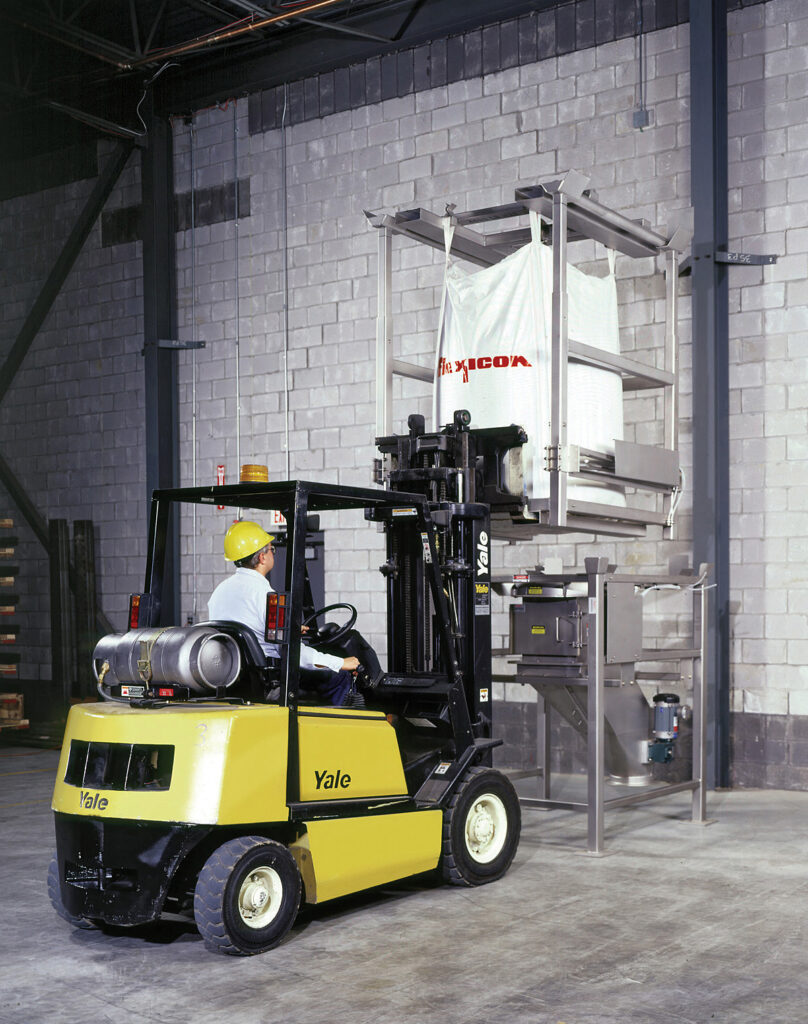
Low headroom & split frames
Separate upper and lower frame sections can help load bags in restricted-height locations. The documented split-frame example can also receive rigid bins with the appropriate adapter.
Application idea: Feed a vessel below a mezzanine.
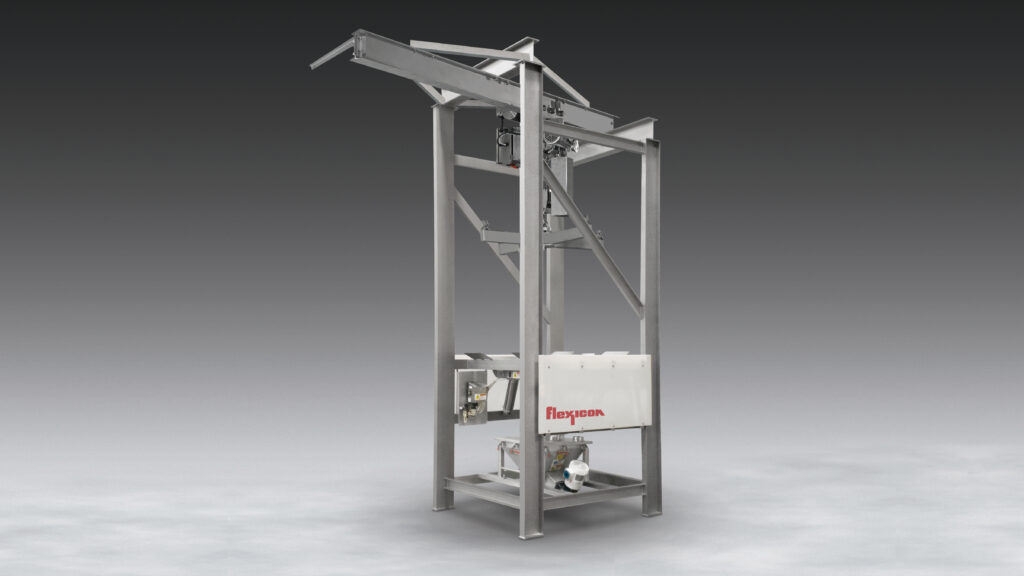
Sanitary open-channel construction
Open-channel framing gives access for inspection and cleaning. Review contact materials, weld finish, drainage, disassembly and the sanitary standard required for the project.
Application idea: Ingredient unloading with a defined washdown procedure.
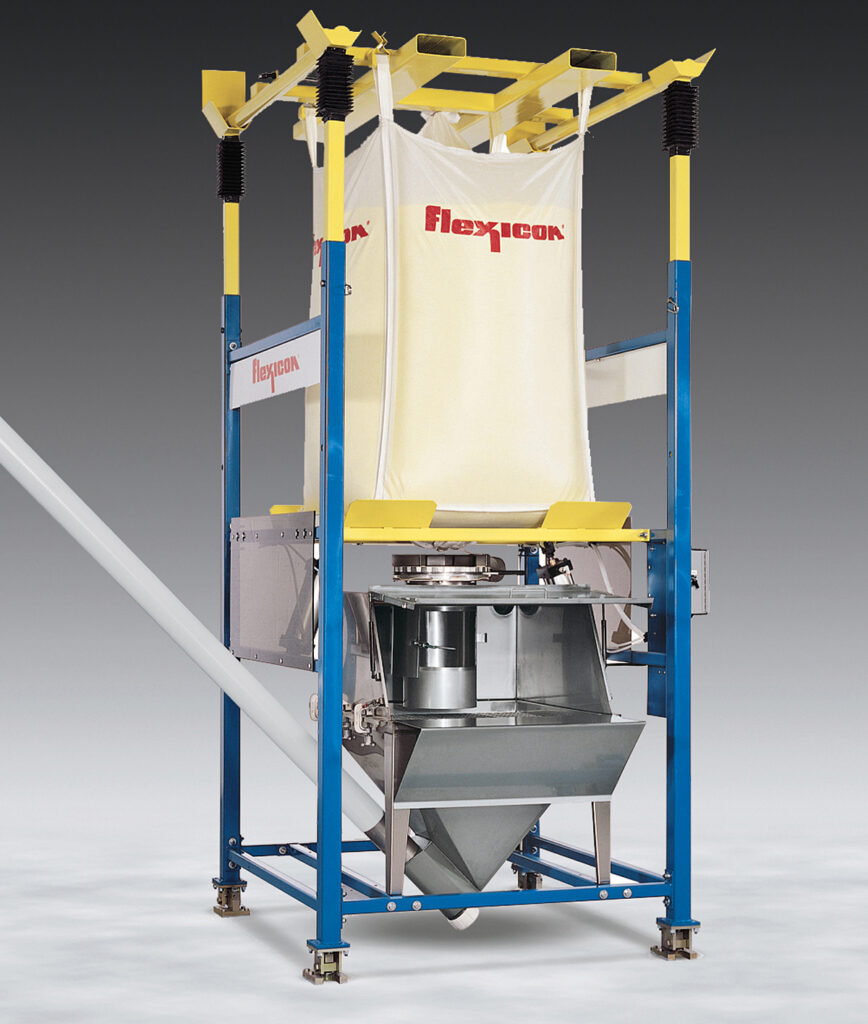
Bulk bags plus manual bag dumping
A multipurpose hood adds a manual loading opening so the same station can receive bulk bags and smaller sacks. Include dust extraction and a bag tray or screen as needed.
Application idea: Handle a major bulk ingredient and occasional minor additions.
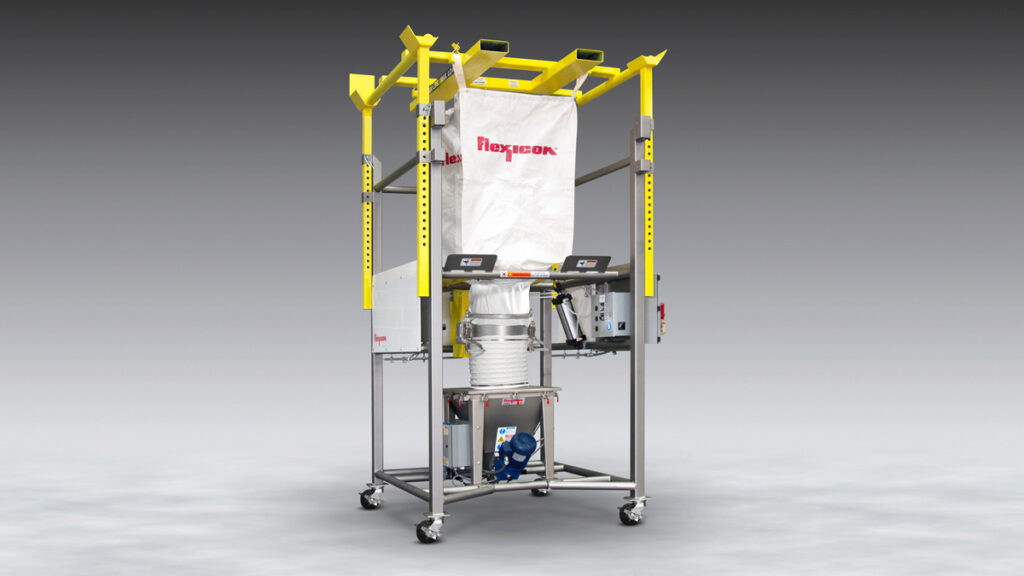
Mobile sanitary unloading
Caster-mounted designs can serve multiple process locations or move to a cleaning station. Confirm the travel envelope, floor conditions, connections and approved method of moving the unit.
Application idea: Share one unloading station between production areas.
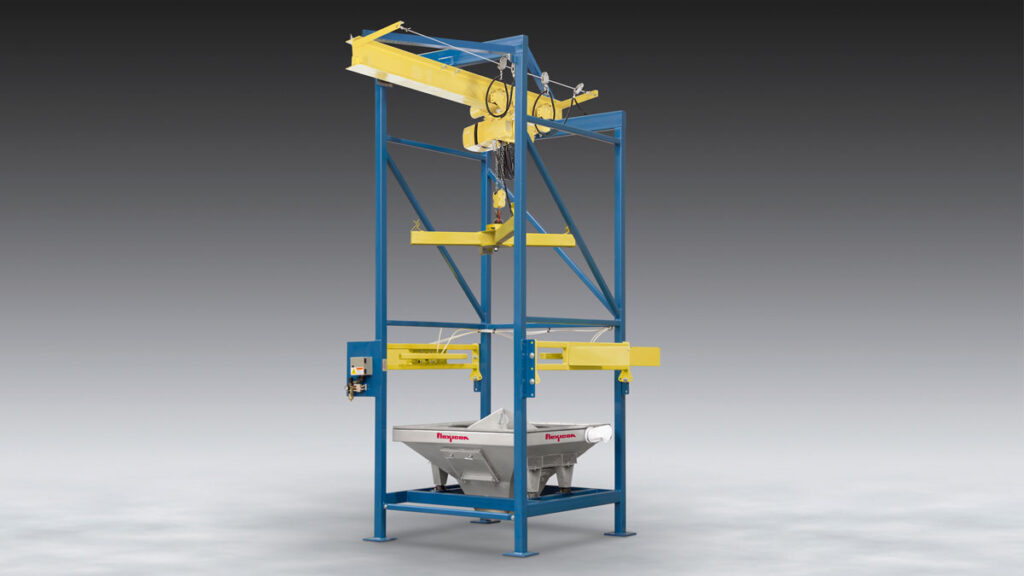
Single-use bag piercing
A receiving hopper with a cutting assembly opens compatible single-use bags. Review bag and liner construction, empty-bag disposal and prevention of packaging fragments entering the product.
Application idea: Unload suitable flat-bottom bags without a discharge spout.

Loss-of-weight batch unloading
Load cells and a controller measure the reduction in weight as material leaves the system. The downstream feeder and controls must suit the batch target and tolerance.
Application idea: Dispense a weighed ingredient addition to a mixer.
More options to build around your installation
Consolidated product, dust leakage and interruptions at bag change can call for additional equipment. Define the problem before choosing an accessory.
Loosen consolidated material before discharge
For bags that have hardened during storage or transport, normal bag activation may be insufficient. An integrated conditioner uses powered rams to break up the consolidated contents before discharge into the receiving hopper.
The published integrated example combines conditioning, a sealed spout connection and optional weighing and feeding. Send the material condition and a bag sample or photograph so RTS can review a separate conditioner or an integrated arrangement.
View configuration PDF →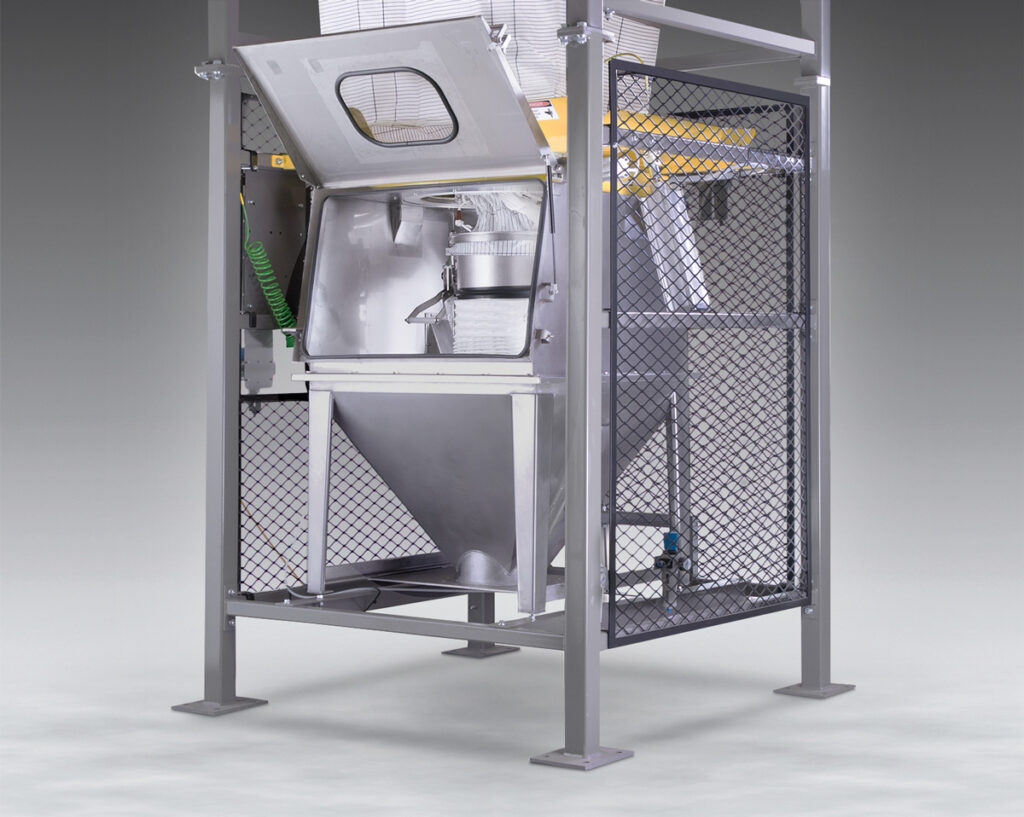
Contain leakage around the bag spout
A dust containment enclosure surrounds the spout connection area and captures incidental releases from seams or folds during bag changes. Its extraction port can connect to a suitable collector or plant dust system.
Review operator access, filter selection, airflow and how captured material is handled. Enclosure extraction complements the sealed spout connection.
View configuration PDF →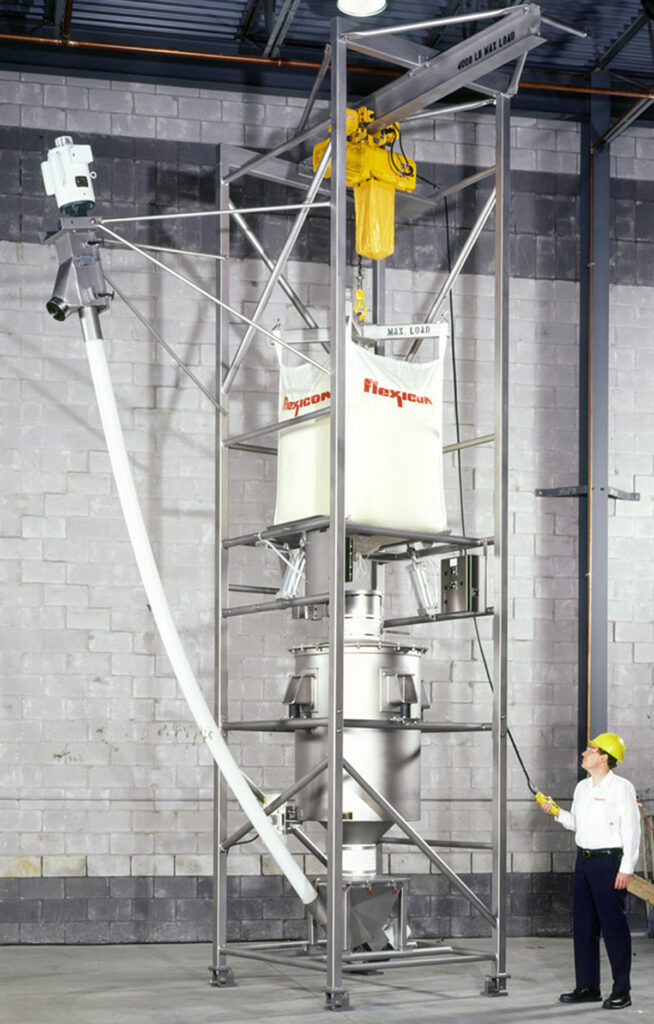
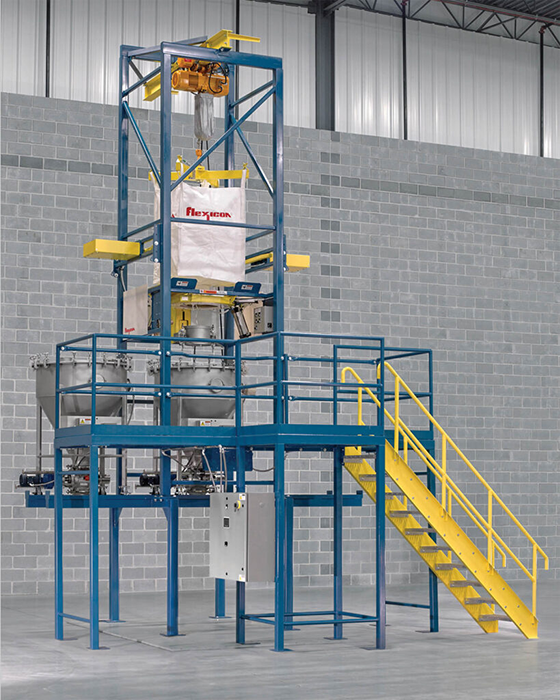
Keep the process supplied during bag changes
The documented continuous-feed arrangement empties bags into an activated surge bin and uses a weighed flexible screw conveyor to regulate discharge. Buffer storage separates the bag-change cycle from the downstream feed rate.
Specify the feed rate, allowable interruption, available height and usable buffer volume. Check whether the process needs volumetric feed, weighed batches or a controlled gravimetric rate.
View configuration PDF →Technical configuration details
BFC: lifting height and loading access
Send the maximum filled-bag height, loop dimensions and gross weight. Include the height of the receiving equipment and the area where the hoist picks up bags. Confirm the full hoist, trolley and beam envelope.
BFF: forklift access and frame clearance
Check approach direction, available aisle width, fork dimensions and the raised mast height. Verify the lifting frame, bag-loop arrangement and clearances before assuming an existing forklift can service the station.
BFH: external support throughout discharge
Identify the device that suspends the bag, its rated capacity and the approved arrangement for the entire discharge period. Provide a layout showing the bag, support and receiving interface.
Low headroom & split frames
Separate upper and lower frame sections can help load bags in restricted-height locations. The documented split-frame example can also receive rigid bins with the appropriate adapter.
Send the lowest obstruction height, forklift mast envelope and discharge elevation. A split frame and a low-profile frame solve different layout constraints.
View configuration PDF →Sanitary open-channel construction
Open-channel framing gives access for inspection and cleaning. Review contact materials, weld finish, drainage, disassembly and the sanitary standard required for the project.
Confirm the written construction and surface-finish specification. Stainless steel grade alone does not establish sanitary compliance.
View configuration PDF →Bulk bags plus manual bag dumping
A multipurpose hood adds a manual loading opening so the same station can receive bulk bags and smaller sacks. Include dust extraction and a bag tray or screen as needed.
Specify sack weights, additions per batch, operator access and whether material is loaded while a bulk bag is connected.
View configuration PDF →Mobile sanitary unloading
Caster-mounted designs can serve multiple process locations or move to a cleaning station. Confirm the travel envelope, floor conditions, connections and approved method of moving the unit.
Confirm transport height, width, travel path and utilities. Do not assume the unit can be moved with a suspended loaded bag.
View configuration PDF →Single-use bag piercing
A receiving hopper with a cutting assembly opens compatible single-use bags. Review bag and liner construction, empty-bag disposal and prevention of packaging fragments entering the product.
State whether bags are reusable, spouted or flat-bottom, and describe any liner. Bag piercing is a dedicated single-use duty.
View configuration PDF →Loss-of-weight batch unloading
Load cells and a controller measure the reduction in weight as material leaves the system. The downstream feeder and controls must suit the batch target and tolerance.
Send batch weight, tolerance, feed time and refill sequence. The illustrated seismic-braced frame is a specific structural option that requires site review.
View configuration PDF →Applications: connect unloading to the next process
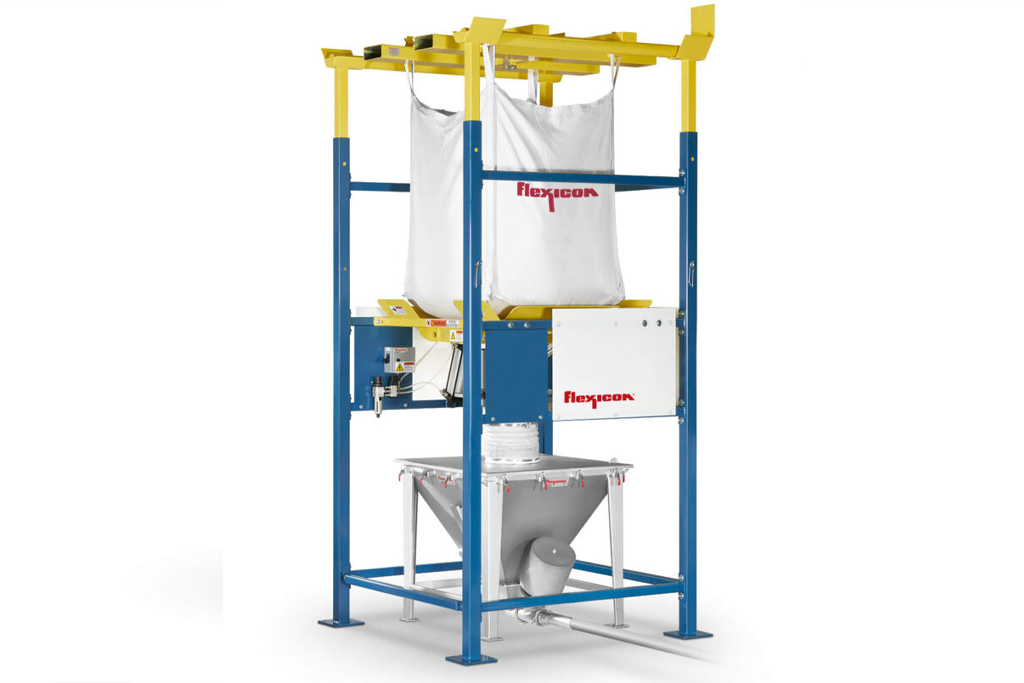
Gravity discharge
A receiving hopper, mixer or process inlet sits below the bag. Confirm interface height, venting, level control and whether an independent metering device is needed.
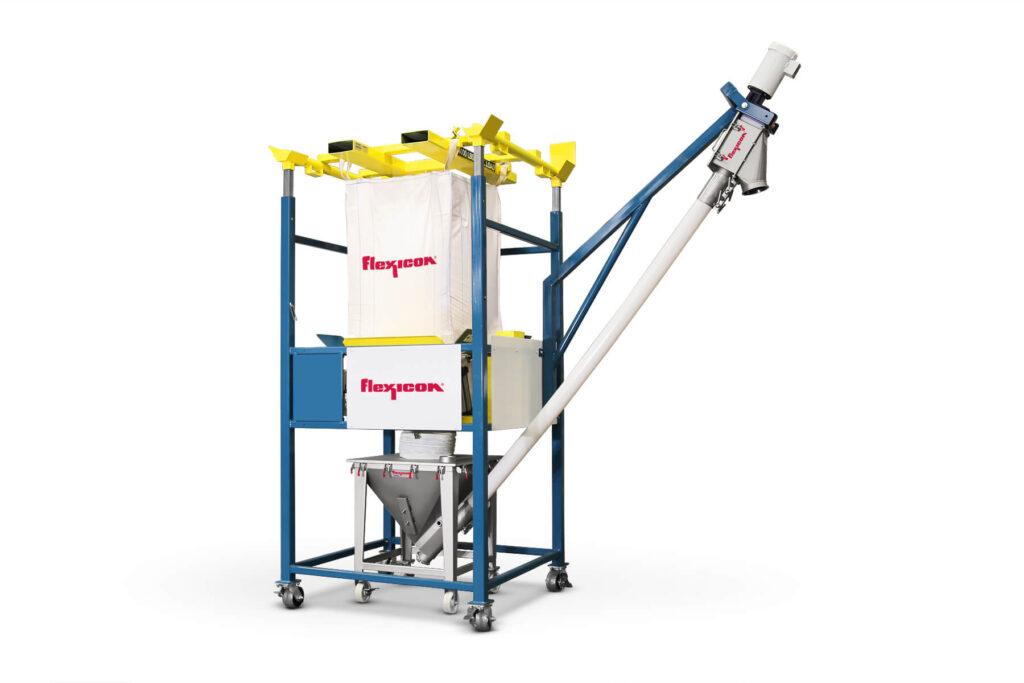
Flexible screw conveyor feed
Connect the unloader to a conveying hopper for transfer to a mixer, feeder or packaging line. Coordinate the bag flow aids and conveyor inlet to avoid starvation or flooding.
Pneumatic or vacuum conveying
Review the pickup adapter or rotary valve, air balance, filtration and available utilities. The unloader and conveying system need compatible pressure and venting arrangements.
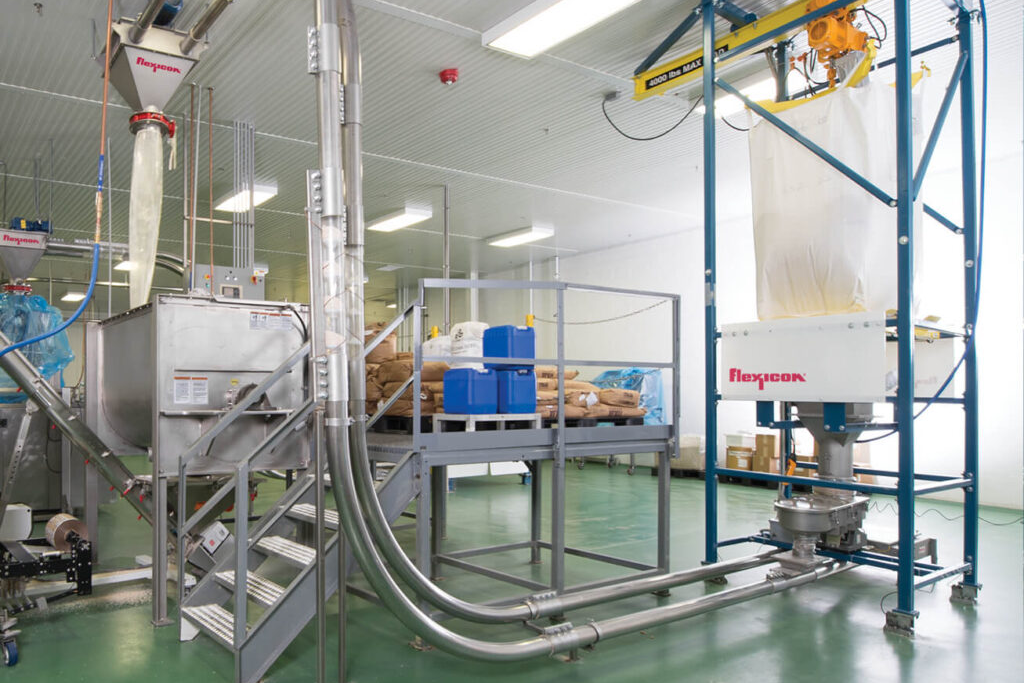
Tubular cable conveyor feed
Feed a cable-and-disc system where product handling, route or multiple discharge points make it suitable. Review the inlet transition, feed rate and particle integrity.
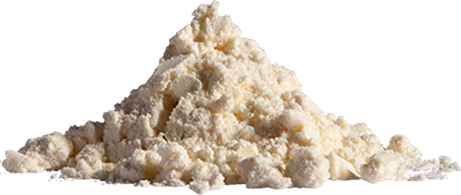
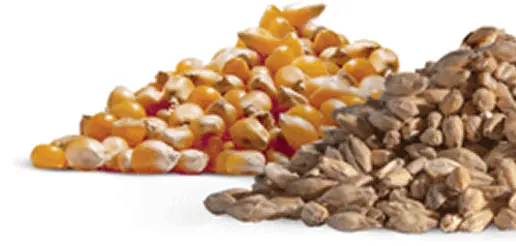
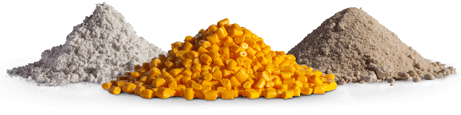
Common bulk material examples
Powders, grains, pellets and minerals call for different flow aids and product-contact materials. Review each grade, bag construction and storage condition individually.



What should drive the selection?
Bag and liner details
Bag footprint, filled height, lifting loops, gross weight, spout diameter and liner attachment affect the frame and discharge interface. Send a bag drawing or clear photographs.
Actual flow condition
Describe bridging, caking, compaction and changes after storage. Distinguish a product that needs gentle bag activation from a solidified bag that may need conditioning.
Process rate and bag changes
Send bags per hour or shift, required feed rate and any batch target. Include the allowable interruption while the next bag is connected.
Containment and cleaning
Define dust exposure concerns, cleaning method, product changes and contact construction. Review the receiving vessel and extraction system as part of the same process.
Cleaning, electrical requirements and service
Plan access and cleanout
Define dry cleaning or washdown, changeover frequency and any allergen restrictions. Review access to the spout, hopper, flow aids and downstream connection.
Review Canadian site requirements
Send voltage, phase and frequency, including 575 V where applicable. Confirm the hoist, motor, control panel and required approval or inspection scope in the quotation.
Identify replacement components
For clamp rings, seals, telescoping tubes, flow aids, hoists or other service parts, send the model, serial number and photographs. Start in the RTS Stock Room.
Choose the materials of construction
Common product-contact choices to review include carbon steel, 304 stainless steel industrial, 304 stainless steel sanitary, 316 stainless steel industrial, and 316 stainless steel sanitary, with other materials and finishes on special request. Specify frame construction separately from contact parts; a carbon-steel frame can be paired with stainless product-contact components.
Material grade, weld treatment, surface finish and sanitary detailing affect system cost. Stainless and sanitary construction generally add cost compared with a comparable industrial carbon-steel design. Select the construction for the material, cleaning procedure and required standard.
Confirm the available construction for each component. Sanitary suitability depends on design and finish as well as the alloy.
For combustible or hazardous dust, send available material test data, area classification and the plant protection requirements. Review the whole unloading and dust-handling system; an electrical rating alone does not determine the complete protection strategy.
See bulk bag unloading in operation
Watch the product video, then compare the bag-loading method and accessories shown with your required installation.
Application case studies
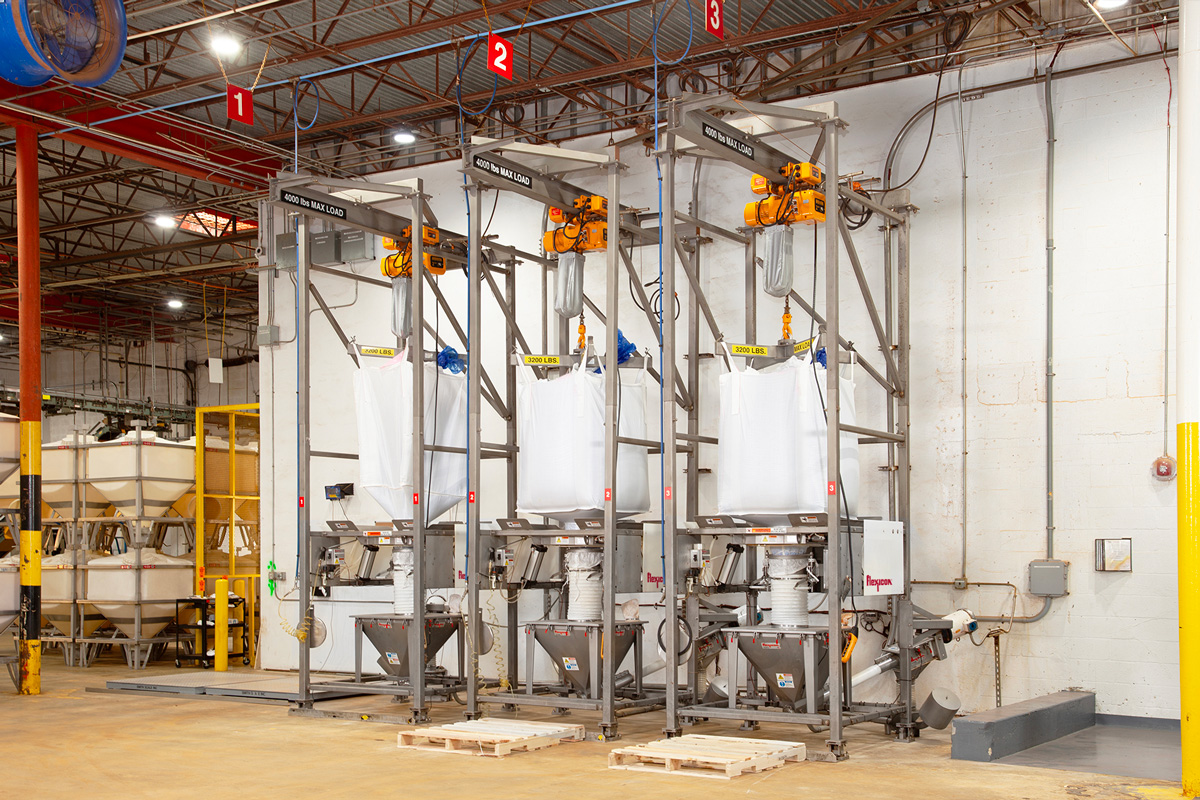
Goya: weighed seasoning additions
Five unloading and batching systems supply major ingredients to blenders. Each combines a bulk bag discharger on load cells with a screw conveyor feeding a pneumatic transfer line.
Application idea: Review weighed bulk ingredients and manual handling reduction together.
Read case study PDF →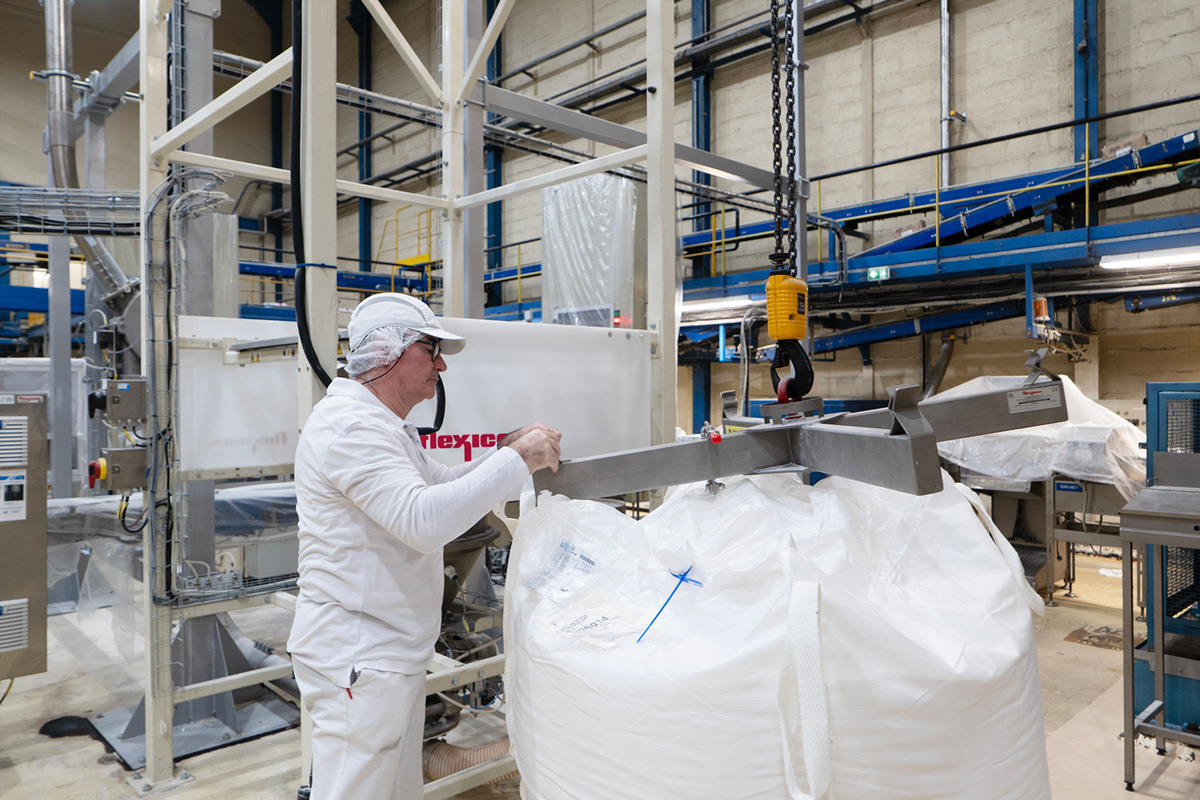
Tereos: sugar to two destinations
A BFC hoist-loaded unloader supplies a pneumatic system that routes extra-fine sugar to either a process or a packaging line. The example illustrates bulk-bag receiving combined with downstream distribution.
Application idea: Review the bag station, receiving points and conveying route as one installation.
Read case study PDF →Connect with the rest of your Flexicon system
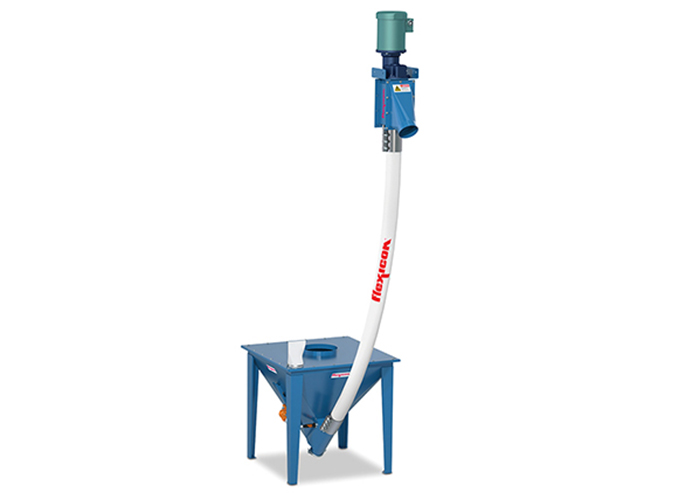
Flexible screw conveyors
Transfer discharged material to the next process.
Also known as: Flexible augers, spiral conveyors.
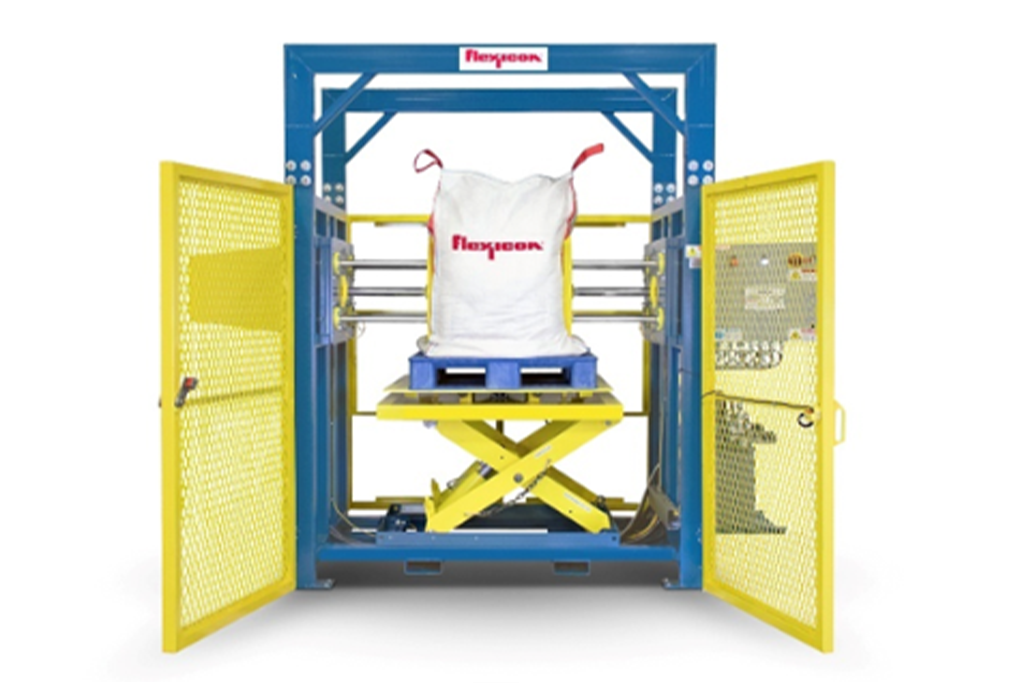
Bulk bag conditioners
Loosen consolidated contents before unloading.
Also known as: Bag massagers, bulk bag conditioning systems.
Pneumatic conveying systems
Transfer discharged powders and bulk solids through an enclosed pneumatic or vacuum conveying line.
Also known as: Pneumatic conveyors, vacuum conveying systems.
Literature and technical resources
Brochures and application worksheets
Configuration/Application Ideas
- Low headroom & split frames (PDF)
- Sanitary open-channel construction (PDF)
- Bulk bags plus manual bag dumping (PDF)
- Mobile sanitary unloading (PDF)
- Single-use bag piercing (PDF)
- Loss-of-weight batch unloading (PDF)
- Loosen consolidated material before discharge (PDF)
- Contain leakage around the bag spout (PDF)
- Keep the process supplied during bag changes (PDF)
- Goya: weighed seasoning additions (PDF)
- Tereos: sugar to two destinations (PDF)
Questions to help plan your bulk bag unloader
Which model should I start with?
Start with how bags will be lifted and supported: BFC with its own hoist and trolley, BFF loaded by forklift, or BFH using external support. Then review bag size, gross weight, headroom and process connection.
Can I remove a partially empty bag?
Yes, with an appropriate spout closure and retying arrangement. Tell RTS how often this is needed so the POWER-CINCHER® option and operating procedure can be reviewed.
Will bag activators empty a hardened bag?
Bag activators can promote flow, but a heavily consolidated mass may need conditioning first. Send details of storage time, moisture, temperature and how hard the contents have become.
Can it handle liners or bags without an outlet spout?
Send the bag and liner drawing. Liners require suitable retention and connection details; compatible flat-bottom single-use bags can be reviewed for a dedicated bag-piercing hopper.
Can the system weigh a batch or feed continuously?
Yes, with the appropriate scales, feed device and controls. Send the batch weight, tolerance or continuous mass-flow requirement, plus the bag-change interruption the process can accept.
Are sanitary and low-headroom designs available?
Published examples include open-channel sanitary frames, mobile sanitary units, split frames and low-profile designs. A drawing of the installation helps identify which arrangement fits.
Can I order a quick-ship unloader?
Ask RTS to check current stock and lead time for the required model, construction, electrical scope and options. The published programme applies to selected configurations; delivery must be confirmed in the quotation.
What information should I send for a quote?
Send material characteristics, bag dimensions and weight, spout and liner details, required rate, loading method, downstream equipment and available height. Add cleaning, electrical, dust and weighing requirements if known.
READY TO REVIEW YOUR BULK BAG APPLICATION?
Request a bulk bag unloader recommendation
Send the material, bag details and unloading duty. Download the worksheet or complete the guided request below.
Call 905-607-3240 or email sales@ratetechnology.com.
RATE TECHNOLOGY SYSTEMS
Bulk Bag Unloader Quote Request
Fill in the details you know. Review your summary and submit the completed request at the last step.
Optional: attach a photo
Use the Attach a photo field in the secure form below to choose an image from your device. Wait for Upload complete before selecting Submit. You can leave this field empty and still send your request.