Loosen a consolidated bag
Describe the hardened material, storage history and required condition at discharge.


Review BLOCK-BUSTER® equipment around your material, installation and production requirements. Compare options and send an application request to RTS.
Request a QuoteDescribe the hardened material, storage history and required condition at discharge.
Compare a separate conditioning station with hoist-loaded or integrated unloading arrangements.
Review ram settings, bag positioning, guarding and the required bags per shift.
Hydraulic rams with shaped plates press opposing sides of a bulk bag to loosen material consolidated during transport or storage. A selected lift and turntable, or a hoist arrangement, positions different areas of the bag for conditioning.
Conditioning takes place before or as part of bag unloading. It addresses consolidated contents that ordinary pneumatic flow aids may not loosen; it is not a guarantee of a particular final particle size or a replacement for a downstream size-reduction process.
Also known as: FIBC conditioners, bulk bag massagers, big bag conditioners and jumbo bag conditioning systems.
Place the compatible bag using the selected handling method and complete the specified guarding sequence.
Ram actuations, lift height and rotation are selected to loosen the contents. Confirm settings with representative material and packaging.
Move the conditioned bag to a discharger or discharge in an integrated system. Check the resulting flow and downstream needs.
Select the components and options around the actual material and installation. Confirm the equipment included in the quotation; examples shown are not one standard package.

Contoured plates apply force to opposing sides of the bag. Review material response and bag/liner compatibility.

Selected units position the bag at different heights and orientations so conditioning covers its contents.
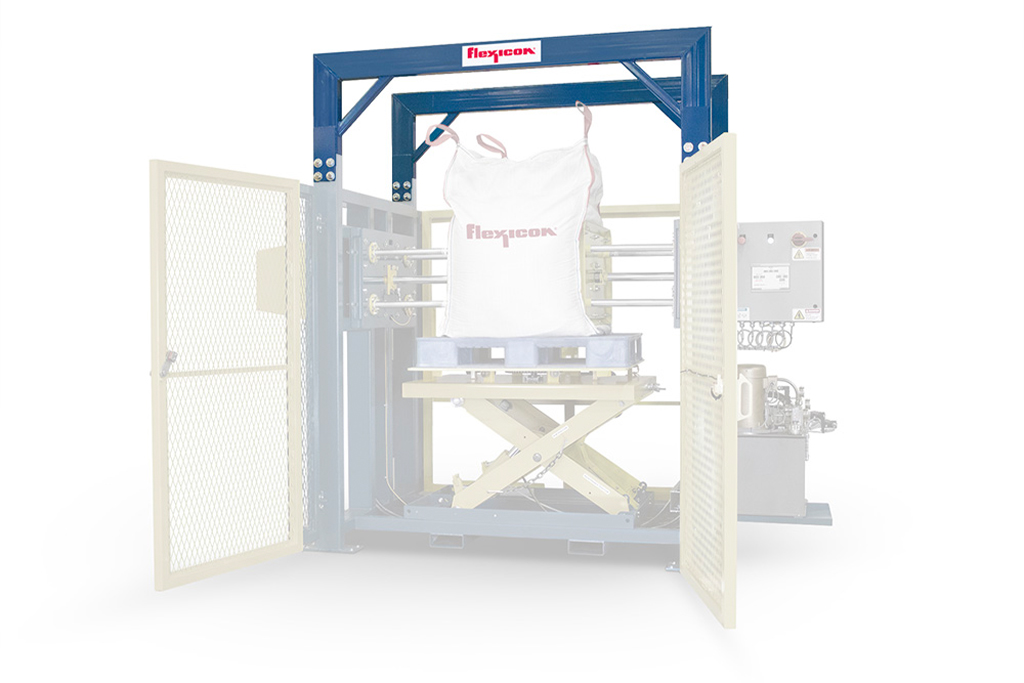
Frame geometry affects forklift or hoist access. Check filled dimensions, pallet sizes and travel clearances.
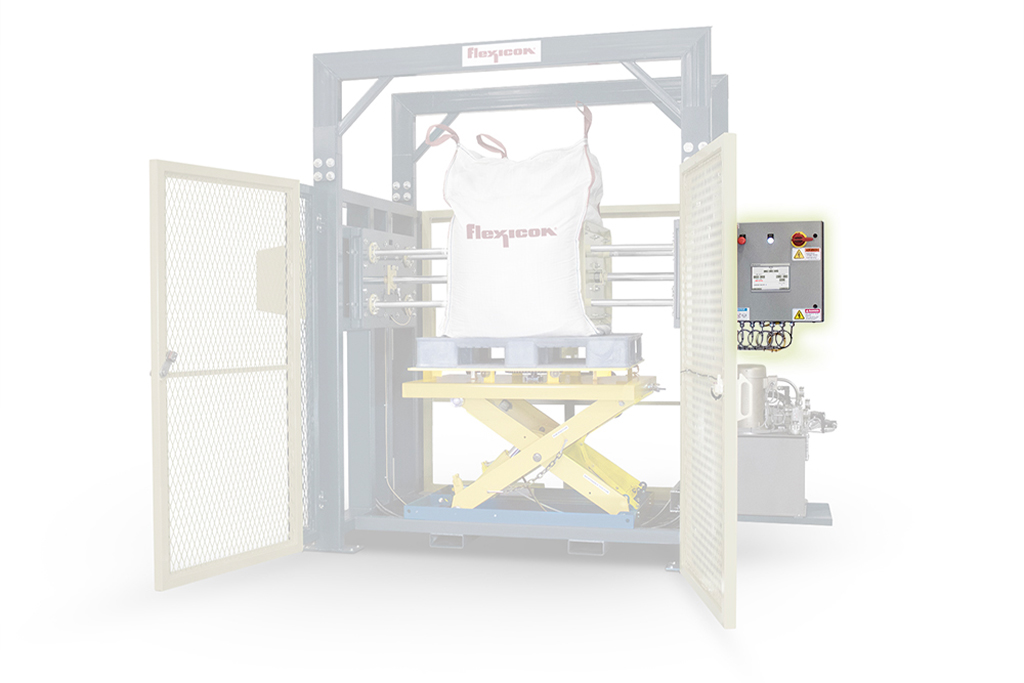
Recipe settings can define ram cycles and positioning. Establish the required settings and operating sequence for each product.
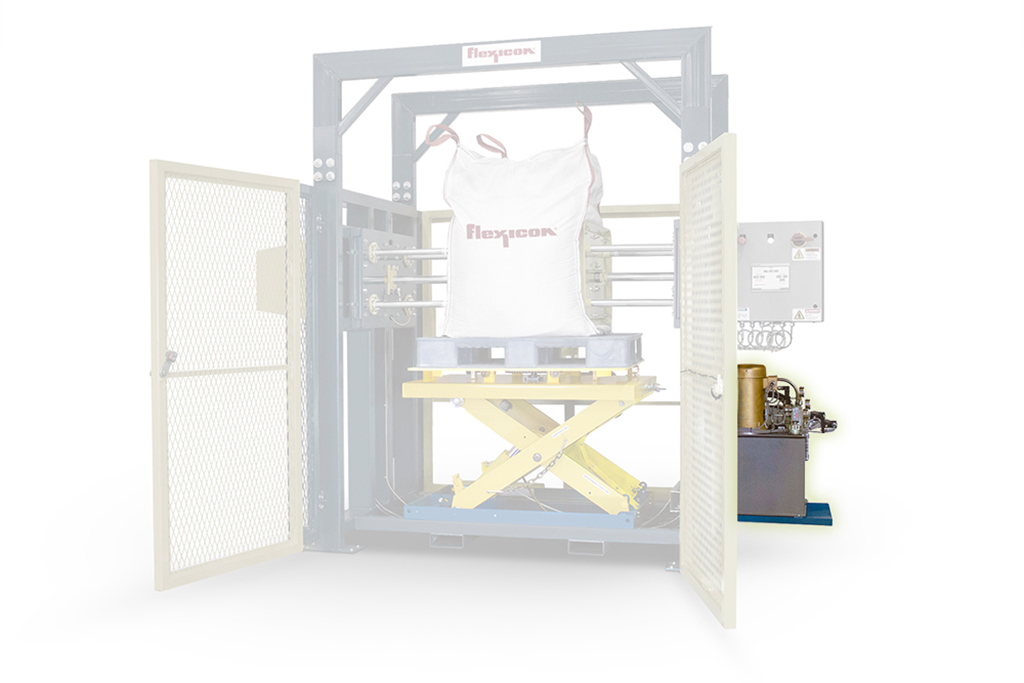
Select the hydraulic package and installation around the force, cycle and environment. Confirm service access.
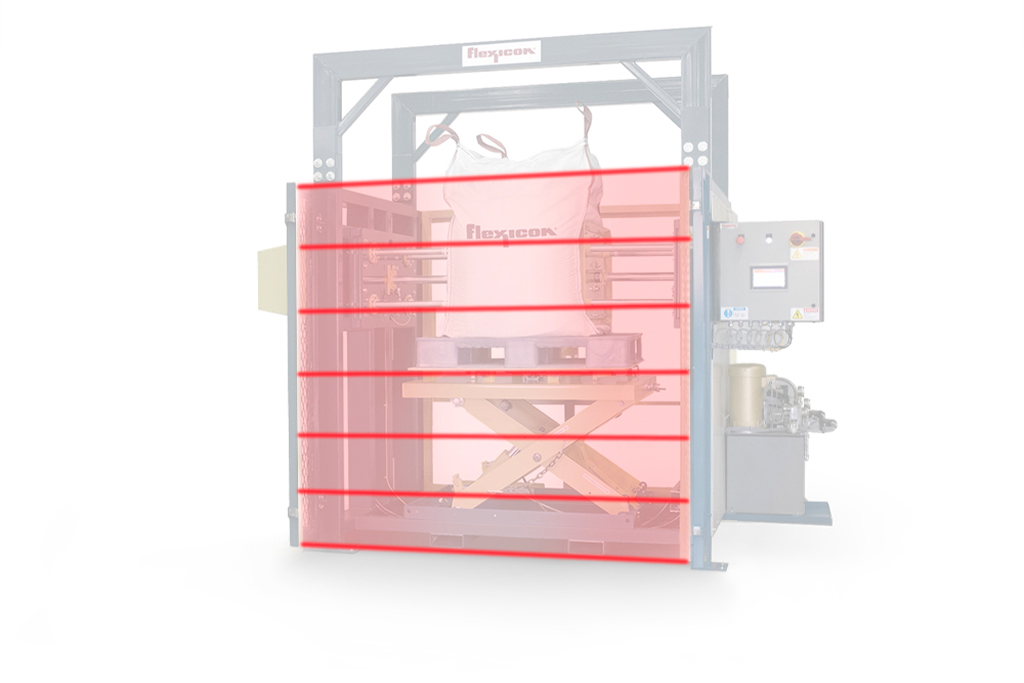
Published arrangements use interlocked doors or a light-curtain design. Confirm the complete guarding and control scope for the installation.
Use these manufacturer examples to compare functions and installation choices. Confirm material suitability, construction and performance for the quoted system.
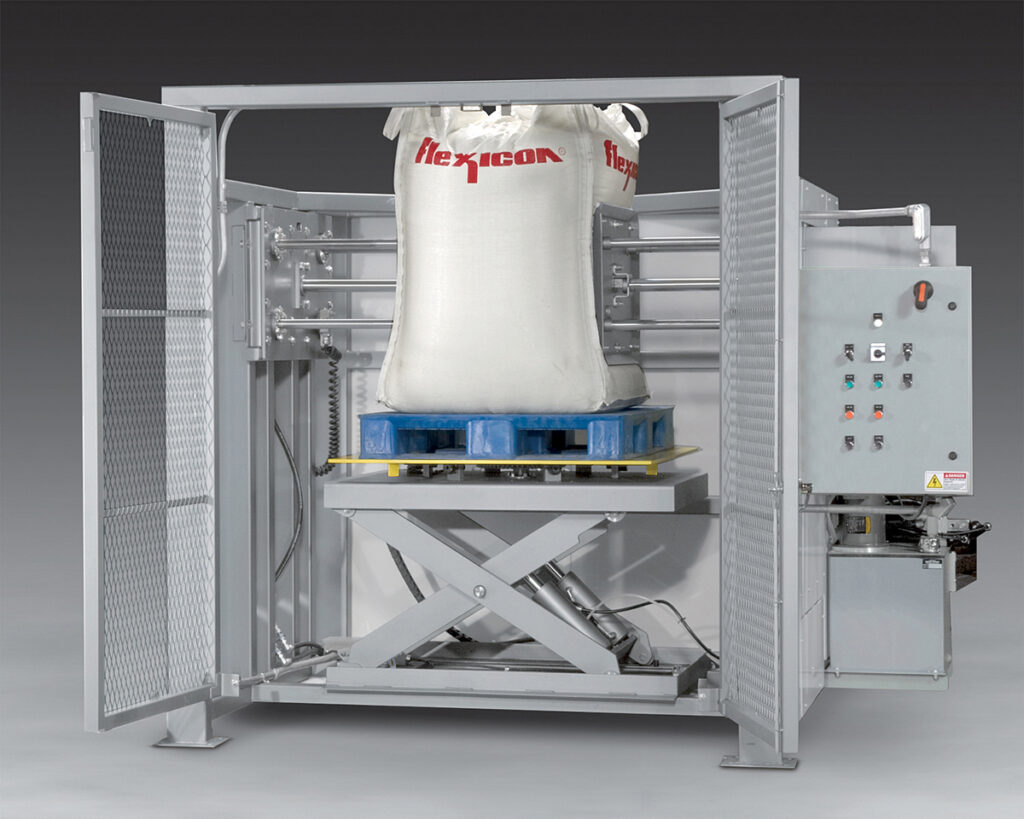
A stainless design provides a conditioning option for contamination-sensitive service. Confirm the finish, bag contact and cleaning access.
Application idea: Condition consolidated food or sensitive raw materials.
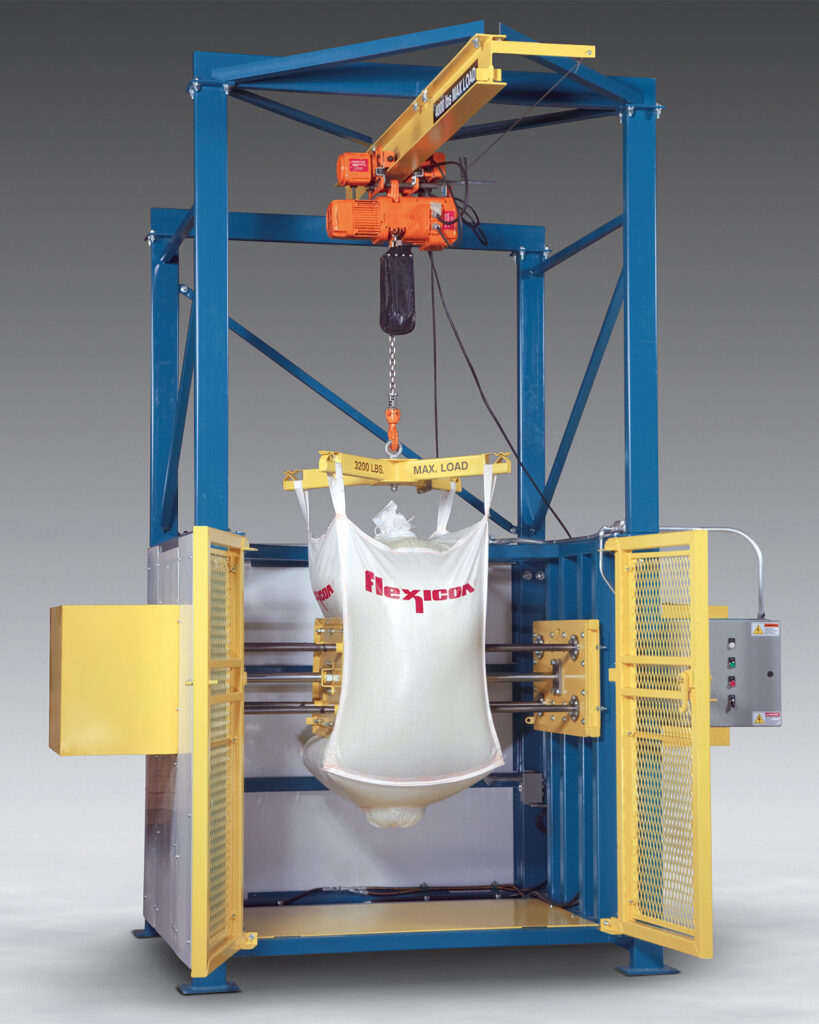
An overhead handling arrangement can load and position bags without relying on a forklift at the station.
Application idea: Review bag conditioning with existing plant access constraints.
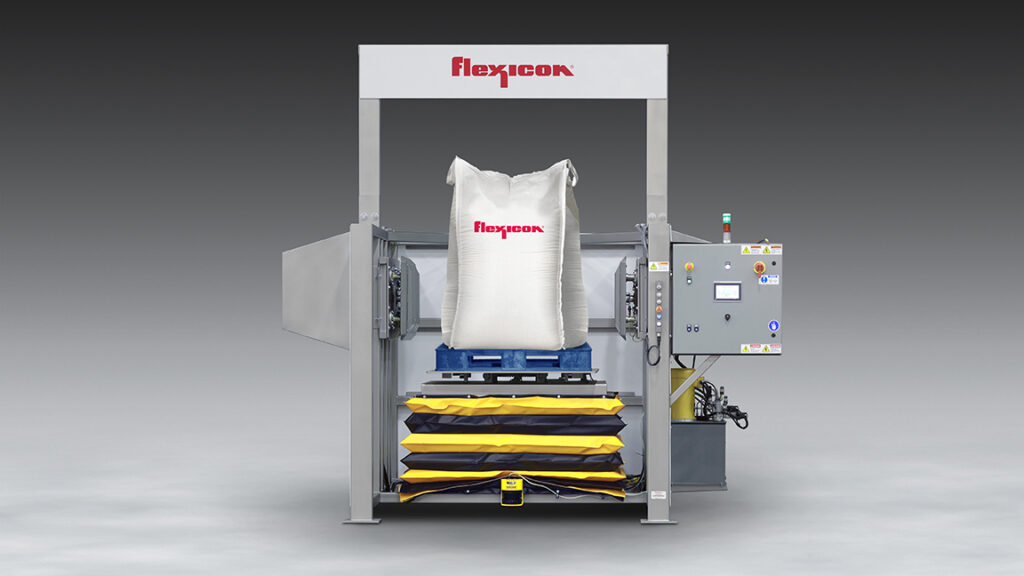
The illustrated conditioner uses a light curtain with the ram, lift and rotation controls. Review the complete access and guarding arrangement.
Application idea: Define an accessible loading station with controlled operation.
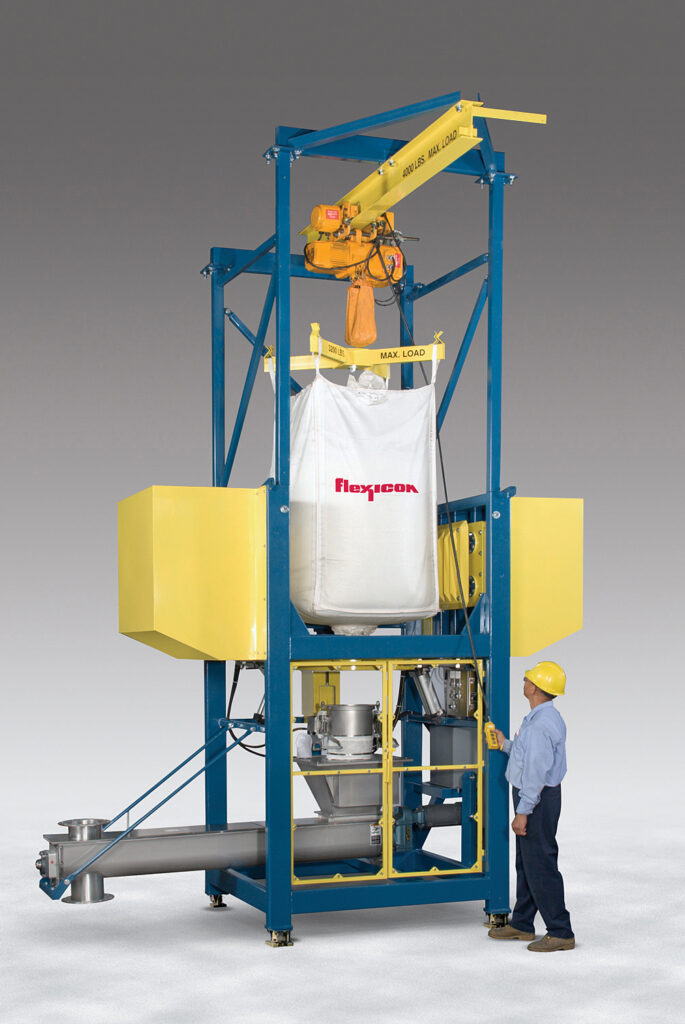
Condition the bag in an unloading frame to reduce a separate bag-transfer step.
Application idea: Feed a process from consolidated bulk-bag contents.
A stainless design provides a conditioning option for contamination-sensitive service. Confirm the finish, bag contact and cleaning access.
Send the material, layout and operating requirements so this arrangement can be reviewed for your process.
View configuration PDF →An overhead handling arrangement can load and position bags without relying on a forklift at the station.
Send the material, layout and operating requirements so this arrangement can be reviewed for your process.
View configuration PDF →The illustrated conditioner uses a light curtain with the ram, lift and rotation controls. Review the complete access and guarding arrangement.
Send the material, layout and operating requirements so this arrangement can be reviewed for your process.
View configuration PDF →Condition the bag in an unloading frame to reduce a separate bag-transfer step.
Send the material, layout and operating requirements so this arrangement can be reviewed for your process.
View configuration PDF →Restore discharge capability before the bag moves to a separate unloading station.
Combine conditioning with spout connection and discharge where the integrated arrangement suits.
Coordinate bag conditioning, dry metering and the subsequent powder-to-liquid process.
Review recipes for different materials and storage conditions rather than applying one setting to every bag.
Suitability depends on how the material has hardened, the bag construction and the required discharge result. Representative material or bag testing may be recommended.
Describe whether contents are compacted, crusted or one solid mass; include storage time, moisture and temperature.
Provide bag and liner details and their condition. Define the permitted handling and the bag supplier requirements.
State whether loosened material must pass a spout or meet a particle-size limit. Review additional de-agglomeration if needed.
Include loading, conditioning, removal and unloading in the required bag-throughput cycle.
Define dry cleaning or washdown, cleaning chemicals, product-change frequency and the required access. Include drying and reassembly in the operating plan.
Send voltage, phase and frequency, including 575 V where applicable. Confirm the hydraulic power unit, pump and controls, compressed-air needs and the required Canadian approval or inspection scope.
For spare parts, send model, serial number, dimensions and photographs. Start in the RTS Stock Room.
The conditioner frame and ram assemblies are available in industrial carbon steel or stainless construction. Sanitary options should be reviewed for the required finish and access. These parts act on the bag exterior; specify the product-contact parts of any integrated unloader separately.
Frame material, lift/turntable, hoist, controls, guarding and integration with an unloader affect cost. Confirm any 304/316 grade or special finish rather than assuming it is standard.
Provide known material hazards and the plant protection requirements. Confirm guarding, dust handling and any applicable area classification for the complete installation.
Compare the equipment and accessories shown with the proposed scope for your application.
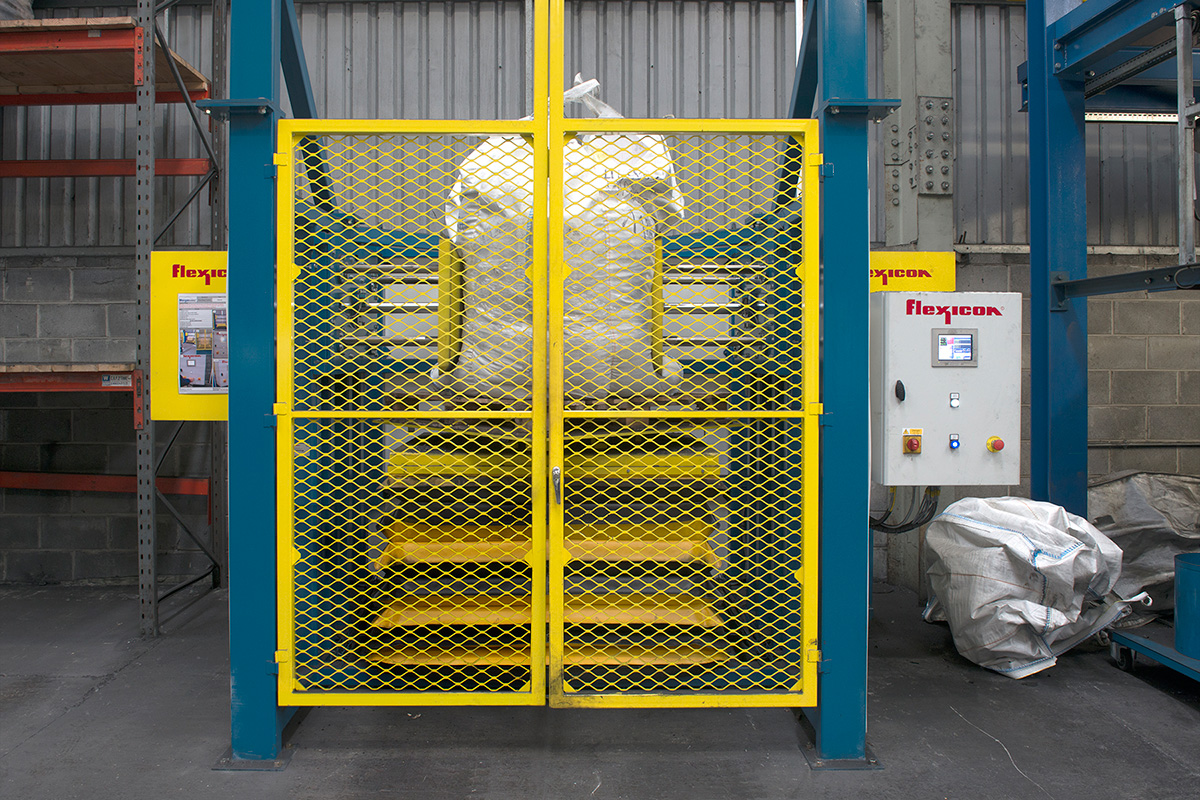
A conditioner loosens pitch that solidifies during shipment before the material enters the next production stage.
Read case study PDF →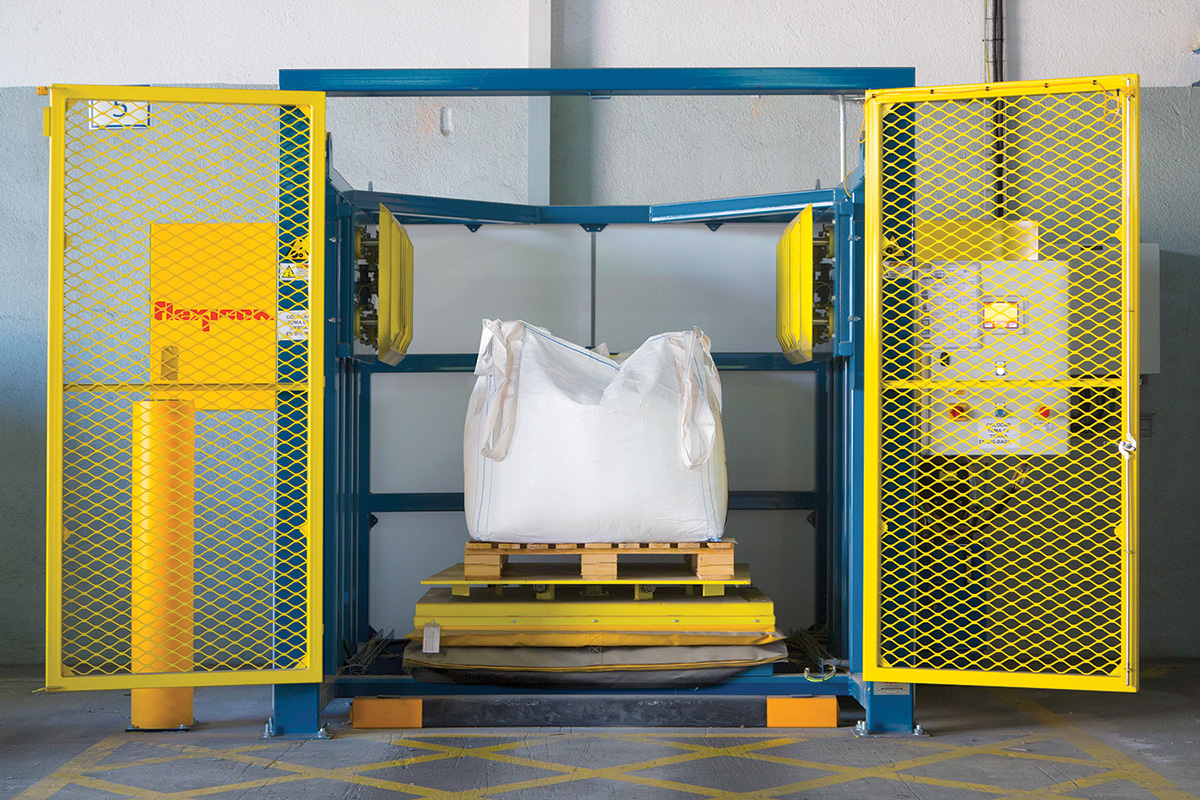
The installation uses ram conditioning with lift and rotation to prepare consolidated chemical powders for reactor loading.
Read case study PDF →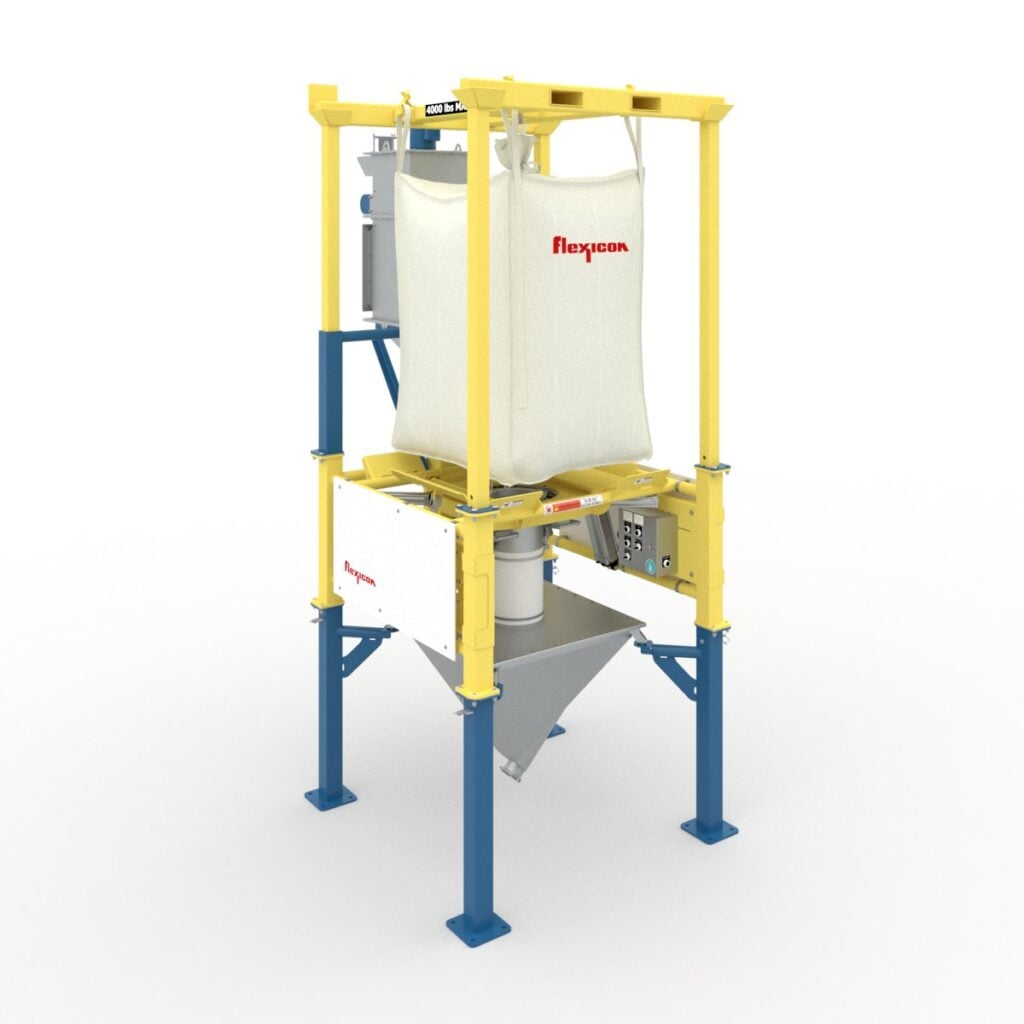
Review bag support, discharge, spout connection and the receiving process.
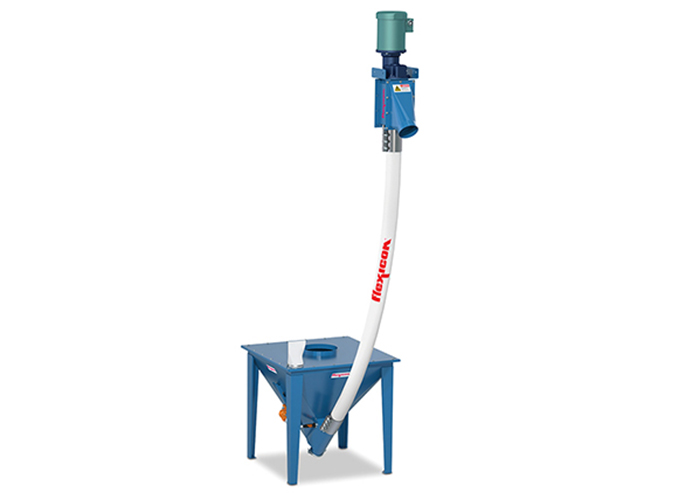
Transfer material from a hopper to the next process with a reviewed inlet and route.
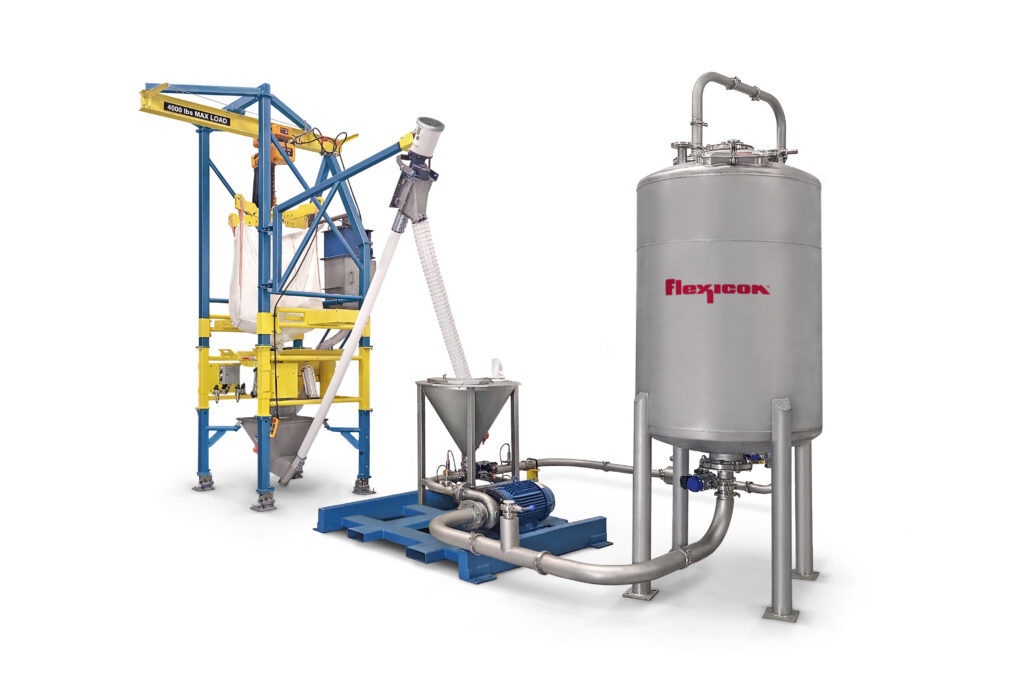
Introduce suitable powders into a pumped liquid stream.
No. A hydraulic conditioner works on consolidated contents. Pneumatic activators on an unloader assist discharge and may not loosen a hardened mass.
Conditioning is intended to loosen the bag contents. If particle size is critical, state the acceptance range and review testing and any downstream equipment.
Settings depend on the material, consolidation, bag construction and required result. Review recipes for representative bags.
Yes. The published integrated configuration combines conditioning and unloading. Compare layout, handling and maintenance access with separate units.
READY TO REVIEW YOUR APPLICATION?
Send the material, installation and operating requirements. Complete the guided request below.
Call 905-607-3240 or email sales@ratetechnology.com.
RATE TECHNOLOGY SYSTEMS
Fill in the details you know. Review your summary and submit the completed request at the last step.
Use the Attach a photo field in the secure form below to choose an image from your device. Wait for Upload complete before selecting Submit. You can leave this field empty and still send your request.