Receive manually handled bags
Define bag weights, additions per batch and the operator work area.


Review Flexicon equipment around your material, installation and production requirements. Compare options and send an application request to RTS.
Request a QuoteDefine bag weights, additions per batch and the operator work area.
Match the hood, filters, extraction and bag-disposal route to the product.
Review a gravity outlet, screw conveyor, pneumatic pickup or cable-conveyor inlet.
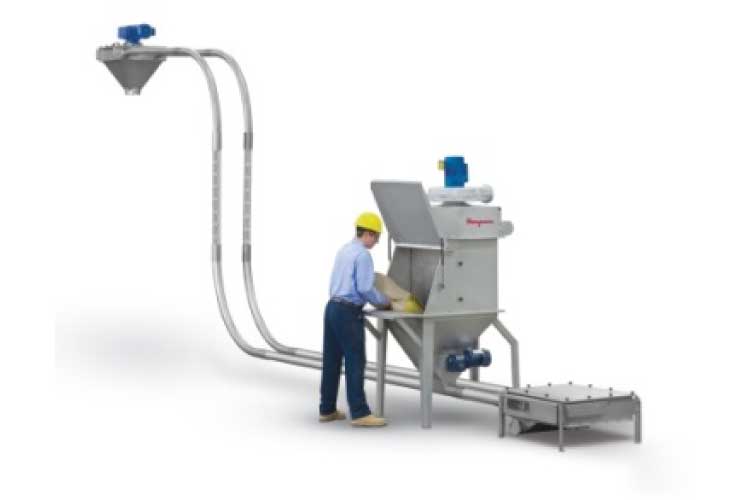
An operator opens and empties a handheld bag through a hopper screen while local extraction draws released dust toward cartridge filters. Reverse-pulse cleaning returns collected material to the hopper in the documented arrangement.
The station is one part of the process: bag staging, operator access, empty-bag disposal, hopper flow and downstream feeding all affect performance. Select the dust-control and cleanout scope for the actual material.
Also known as: Sack tip stations, manual bag dumping stations, bag break stations and sack emptying systems.
Use the selected tray and opening arrangement to load material through the hopper screen.
Airflow draws released dust to filters; the selected pulse-cleaning cycle dislodges collected material.
Move the empty bag through the chosen disposal route and meter hopper contents to the process.
Select the components and options around the actual material and installation. Confirm the equipment included in the quotation; examples shown are not one standard package.
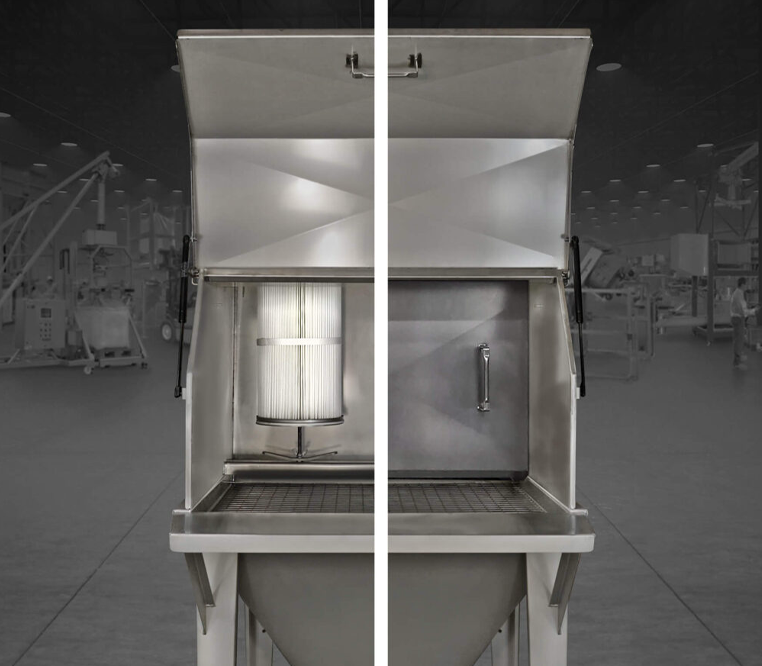
Select the extraction arrangement and hood for the loading duty. Performance depends on the station and operating environment.

Filter selection and access should match the dust, product changes and cleaning requirements.
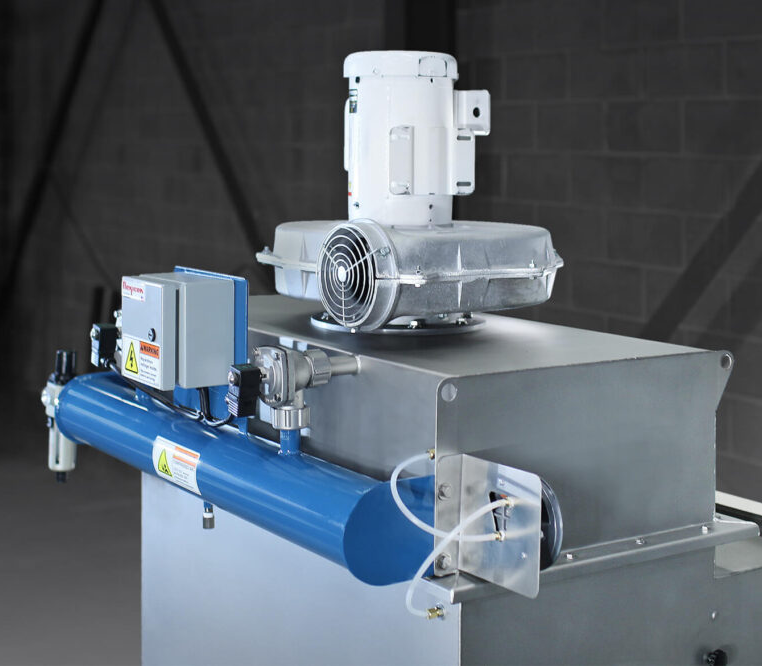
Compressed-air pulses clean selected filter cartridges and return material to the hopper. Define the air supply and cleaning sequence.

A screen helps retain the bag and large foreign objects. It is not a substitute for a specified sieve or contamination-control stage.

A support surface assists bag handling at the inlet. Review bag dimensions, reach and work height.
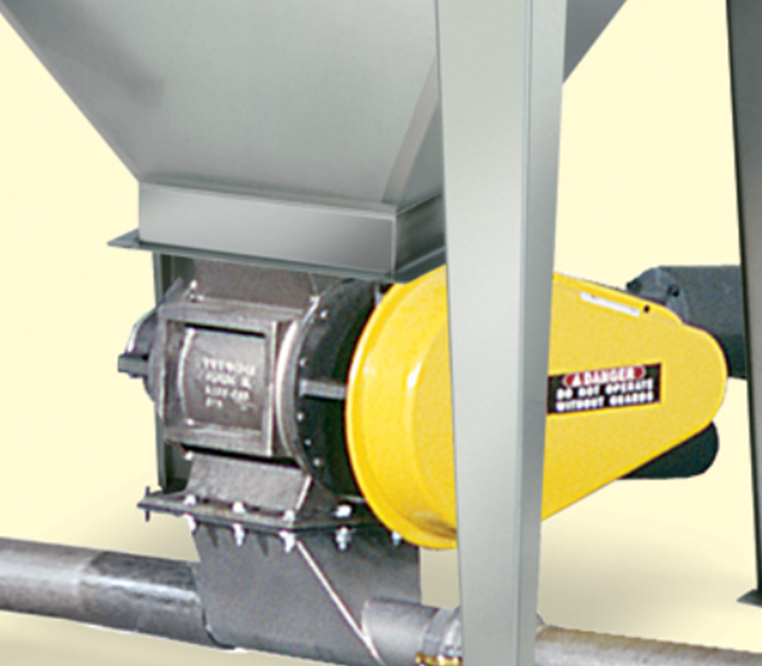
Select an outlet for direct discharge or metered conveying. Match hopper flow and feeder capacity to the process.
Use these manufacturer examples to compare functions and installation choices. Confirm material suitability, construction and performance for the quoted system.
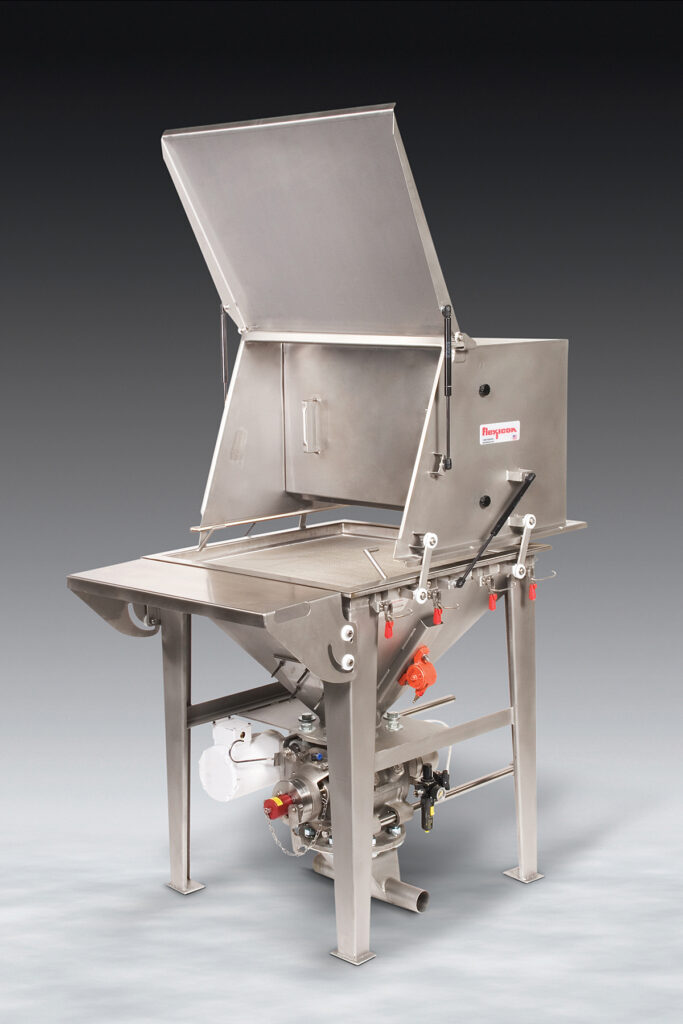
The documented hood and valve arrangement provides access for washdown and inspection.
Application idea: Review frequent ingredient changeovers.
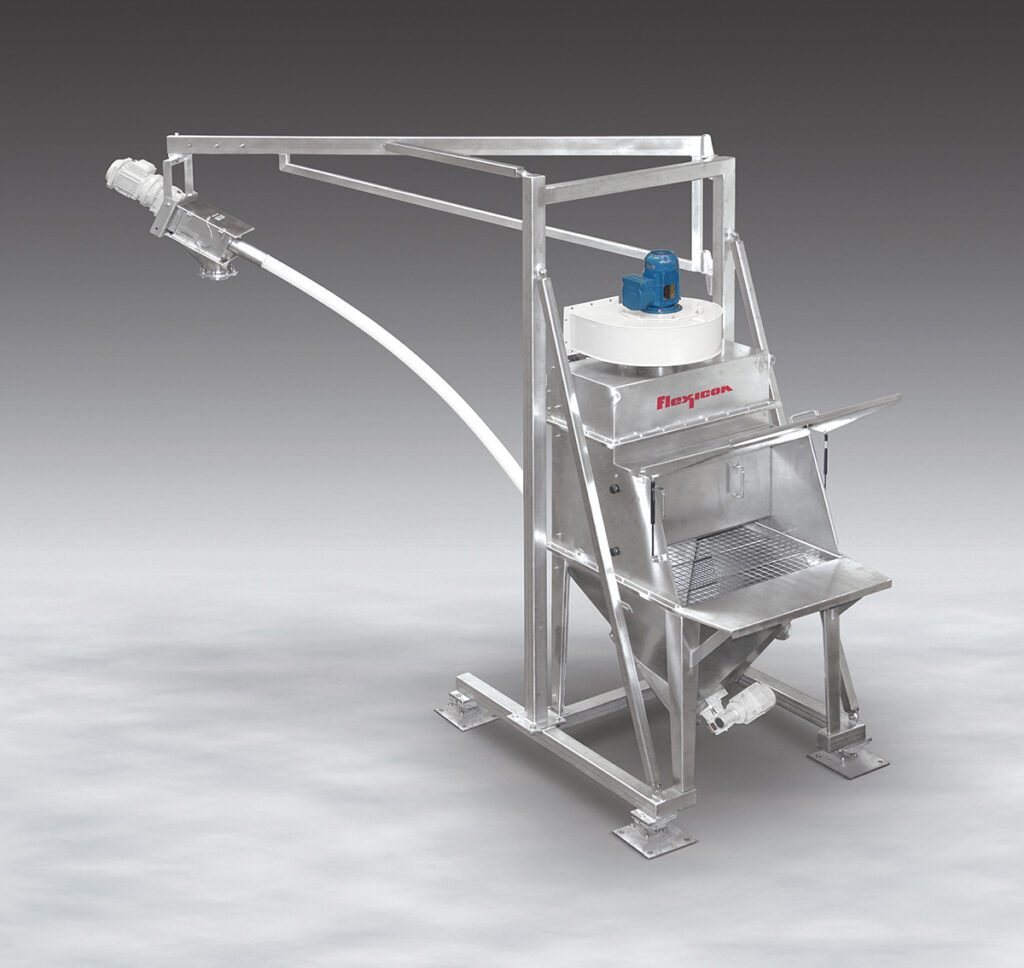
Load cells measure material leaving a station and its integral conveying equipment.
Application idea: Prepare controlled ingredient additions.
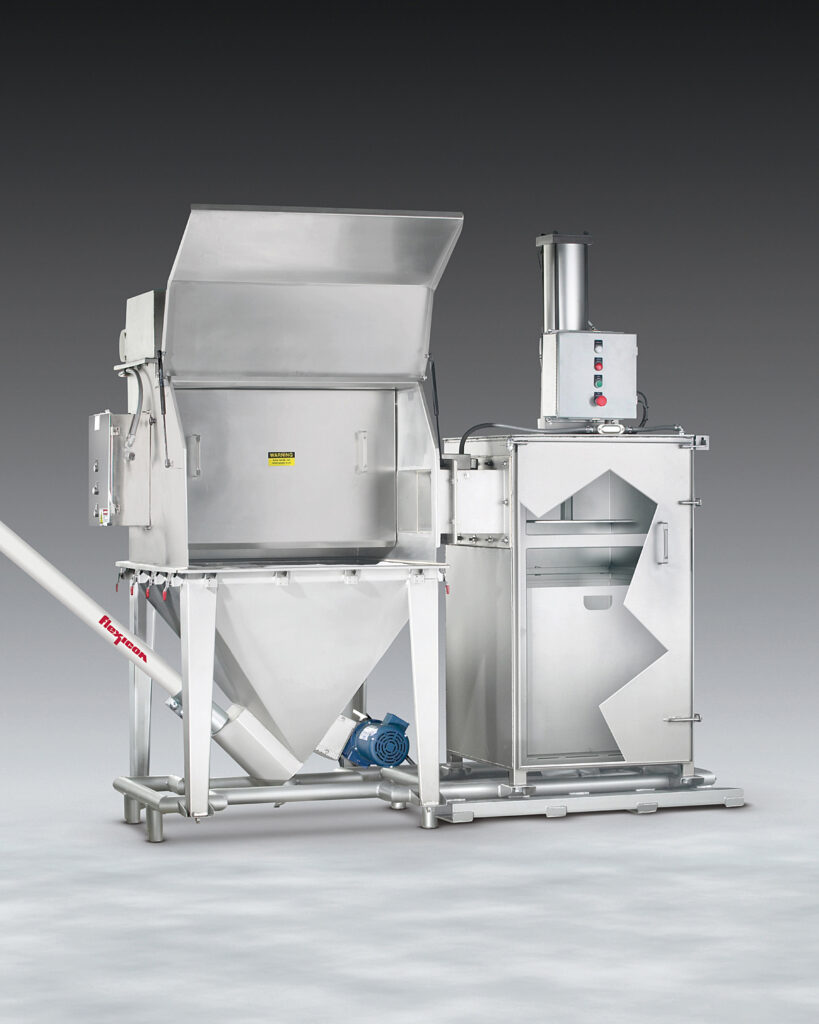
Combine dumping, dust capture, empty-bag compaction and conveying in one arrangement.
Application idea: Manage powder addition and spent bags together.

The enclosed example combines bag opening, disposal and conveying with a glove-box interface.
Application idea: Review added containment for sensitive or hazardous products.
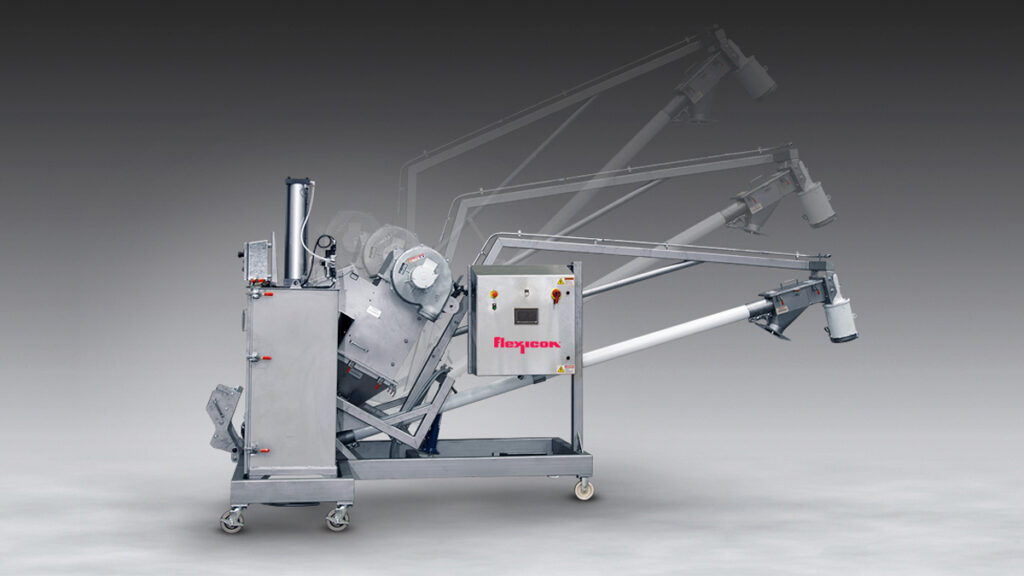
A mobile bag station and tilt-down screw conveyor serve selected production locations.
Application idea: Move between a process and cleaning area.
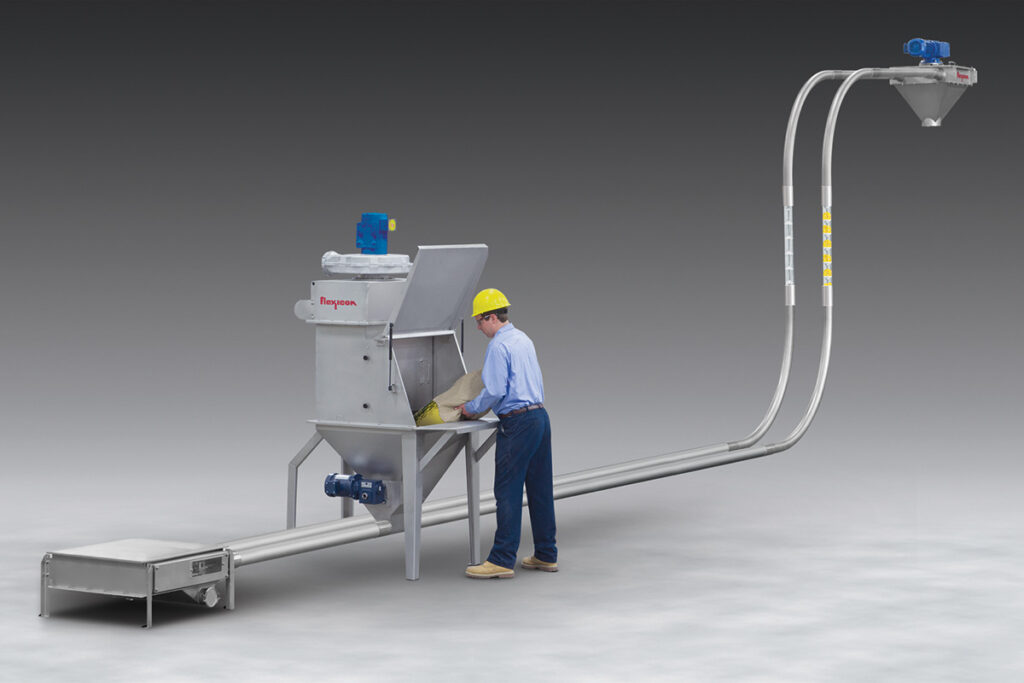
Meter manually loaded material to an enclosed cable-and-disc circuit.
Application idea: Handle fragile ingredients with a reviewed inlet arrangement.
The documented hood and valve arrangement provides access for washdown and inspection.
Send the material, layout and operating requirements so this arrangement can be reviewed for your process.
View configuration PDF →Load cells measure material leaving a station and its integral conveying equipment.
Send the material, layout and operating requirements so this arrangement can be reviewed for your process.
View configuration PDF →Combine dumping, dust capture, empty-bag compaction and conveying in one arrangement.
Send the material, layout and operating requirements so this arrangement can be reviewed for your process.
View configuration PDF →The enclosed example combines bag opening, disposal and conveying with a glove-box interface.
Send the material, layout and operating requirements so this arrangement can be reviewed for your process.
View configuration PDF →A mobile bag station and tilt-down screw conveyor serve selected production locations.
Send the material, layout and operating requirements so this arrangement can be reviewed for your process.
View configuration PDF →Meter manually loaded material to an enclosed cable-and-disc circuit.
Send the material, layout and operating requirements so this arrangement can be reviewed for your process.
View configuration PDF →Receive minor ingredients with a defined loading and batching sequence.
Connect the receiving hopper to a suitable conveyor charging adapter.
Select the intake adapter and metering device for the conveying method.
Review an integrated unloading arrangement where the process uses several package sizes.
These examples are starting points for application review. Supply representative material information and the required result.
Provide dust and filter information.
Define allergens, cleaning and contamination control.
Specify the screen and downstream handling limits.
Review containment and disposal requirements for the whole loading cycle.
Send bag weights, bag dimensions, additions per batch and loading frequency.
Provide product and dust information, exposure requirements and the surrounding airflow conditions.
Define the path for dusty bags and whether compaction or a separate enclosed route is required.
Specify hopper buffer volume, flow aids, feed rate and the required transfer method.
Define dry cleaning or washdown, cleaning chemicals, product-change frequency and the required access. Include drying and reassembly in the operating plan.
Send voltage, phase and frequency, including 575 V where applicable. Confirm the drive, extraction and controls, compressed-air needs and the required Canadian approval or inspection scope.
For spare parts, send model, serial number, dimensions and photographs. Start in the RTS Stock Room.
Review carbon steel or stainless construction, including 304SS industrial, 304SS sanitary, 316SS industrial or 316SS sanitary where required and available. Specify contact finishes, filters, seals and cleaning access separately.
Construction and finish, extraction/filter scope, hopper geometry, glove box, compactor, weighing and the downstream conveyor affect cost. Match options to the loading duty.
Provide known material hazards and the plant protection requirements. Confirm guarding, dust handling and any applicable area classification for the complete installation.
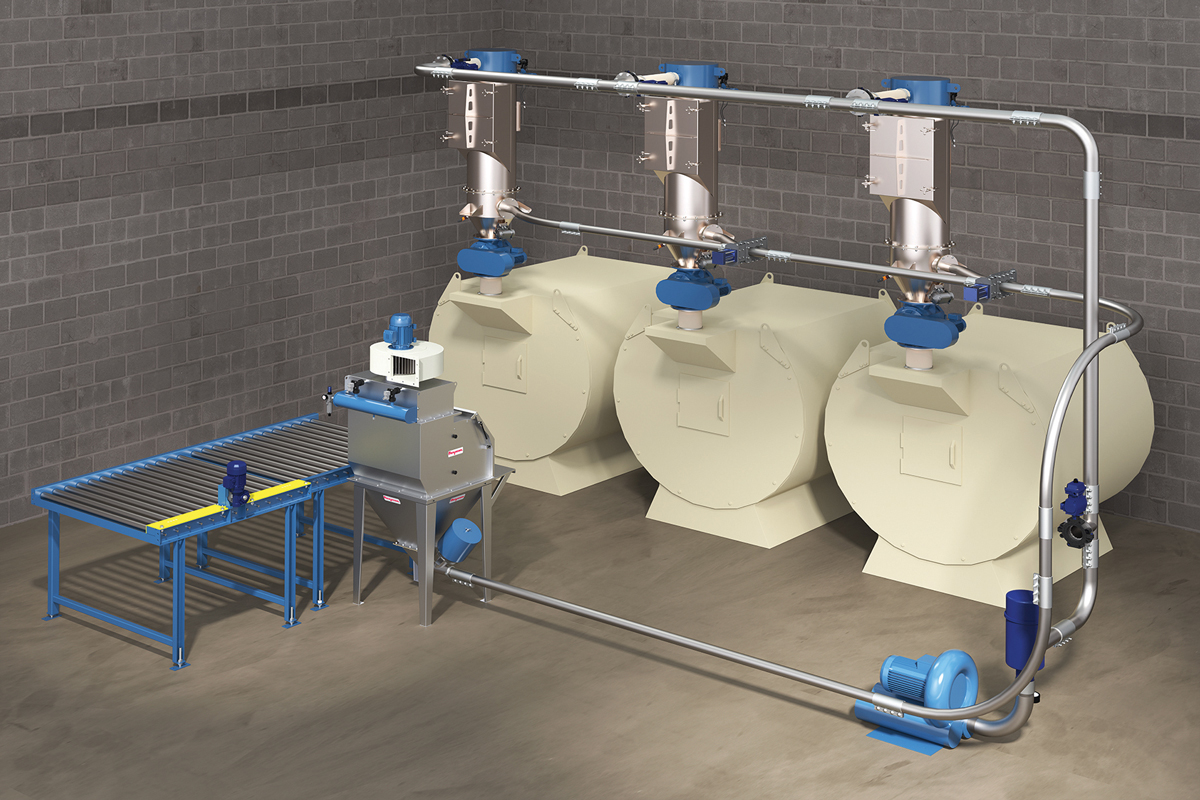
A bag dump station and pneumatic system deliver ingredients to mixing tanks, with bag handling considered alongside the transfer route.
Read case study PDF →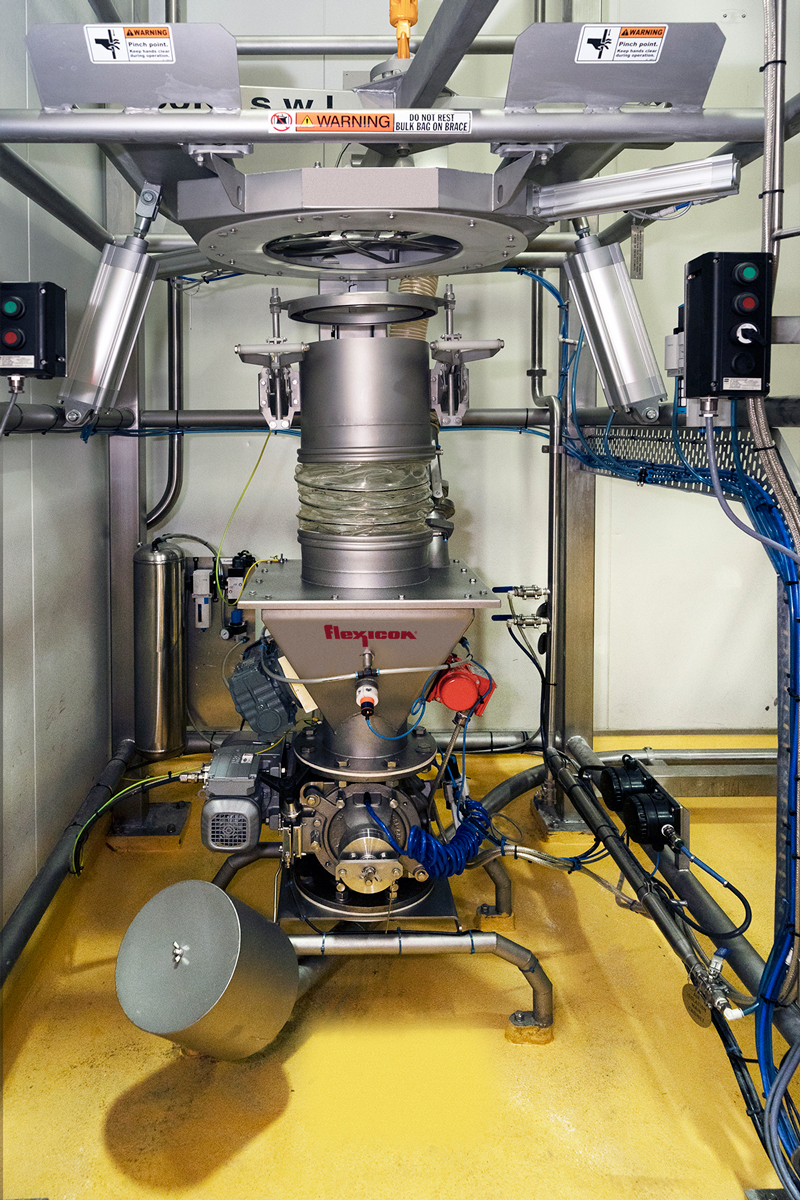
Small-bag additions form part of an integrated weighing, conveying and blending installation.
Read case study PDF →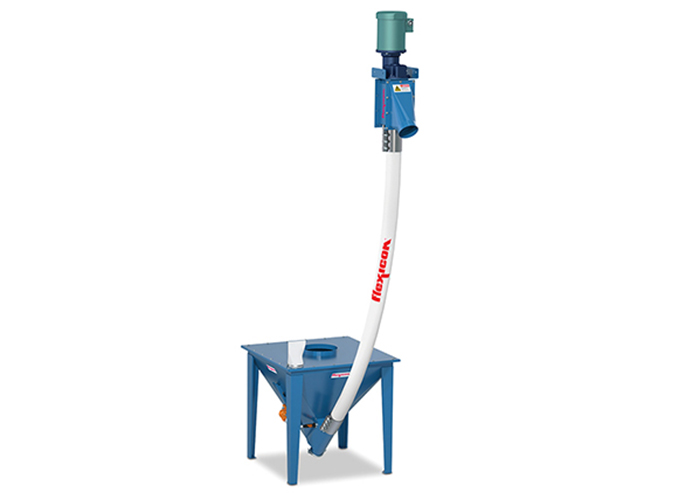
Transfer material from a hopper to the next process with a reviewed inlet and route.
Review vacuum or pressure transfer between source and receiving equipment.
Review a cable-and-disc circuit for enclosed material transfer.
No. It retains bags and selected large objects. Specify screening or metal control separately if the process requires it.
The documented pulse-cleaned arrangement returns collected product. Confirm whether that recovery is appropriate for the material and process.
It depends on containment requirements. Provide material and exposure information so the complete loading and disposal arrangement can be reviewed.
Published examples use load cells and controlled feeding. Define the batch weight, tolerance, feeding time and refill sequence.
READY TO REVIEW YOUR APPLICATION?
Send the material, installation and operating requirements. Complete the guided request below.
Call 905-607-3240 or email sales@ratetechnology.com.
RATE TECHNOLOGY SYSTEMS
Fill in the details you know. Review your summary and submit the completed request at the last step.
Use the Attach a photo field in the secure form below to choose an image from your device. Wait for Upload complete before selecting Submit. You can leave this field empty and still send your request.