
Review horizontal transfer, incline or vertical lift around the space you have.

KWS Conveying, Feeding & Elevating Equipment
Move bulk solids, meter discharge from storage, or heat and cool material in transit. RTS reviews the material, duty and layout with you.
Request a QuoteAre you moving material, controlling the feed, or changing its temperature?
Define how material enters storage and how it should discharge to the next process.
Review inlet and outlet temperatures together with the conveying rate.
Conveying and feeding solve different jobs
A screw conveyor typically receives material at a controlled rate and moves it to the next operation. A screw feeder withdraws material from a hopper, bin or silo and controls the rate entering the process. If you need both functions, share the layout and intended rate range for each stage.
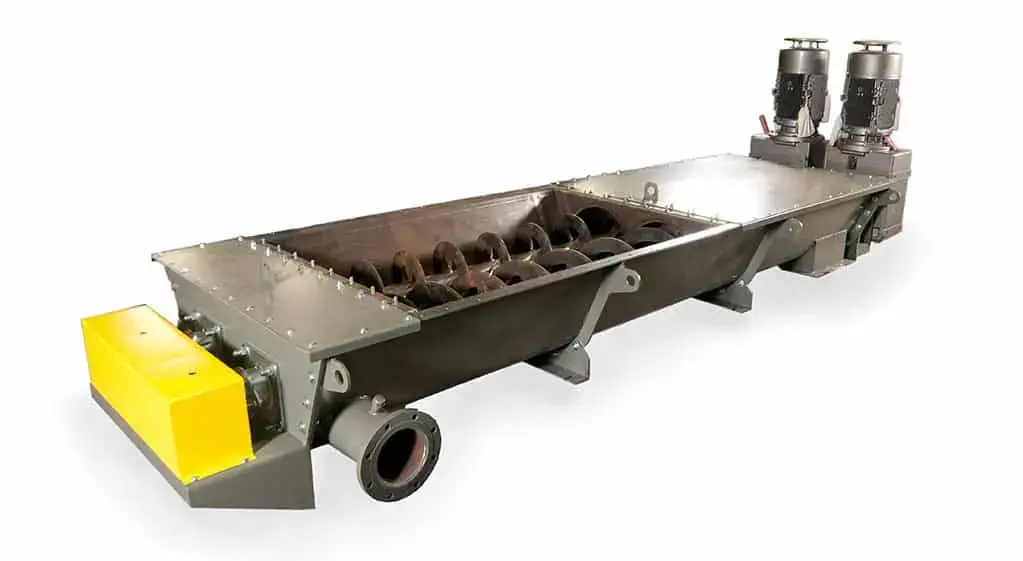
Choose the equipment for your job
Open a product for details, or use the guided RFQ to review your application with RTS.
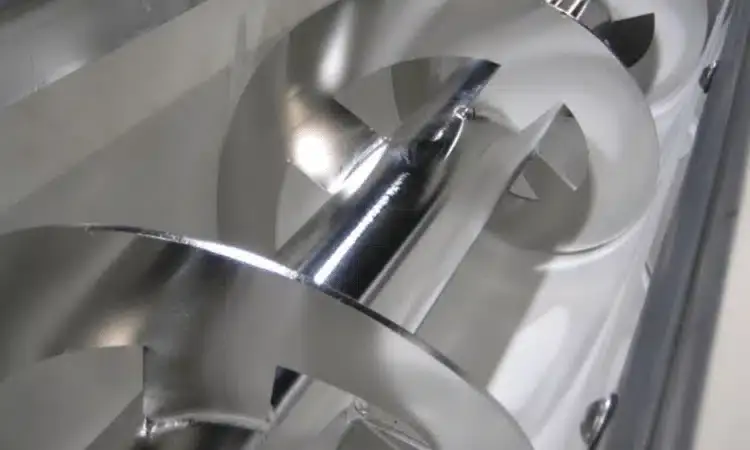
Screw Conveyors
Move bulk material between process points.
Review material characteristics, feed rate, transfer distance, incline and connection sizes.
Also known as: Shafted screw conveyors, auger conveyors, screw augers.
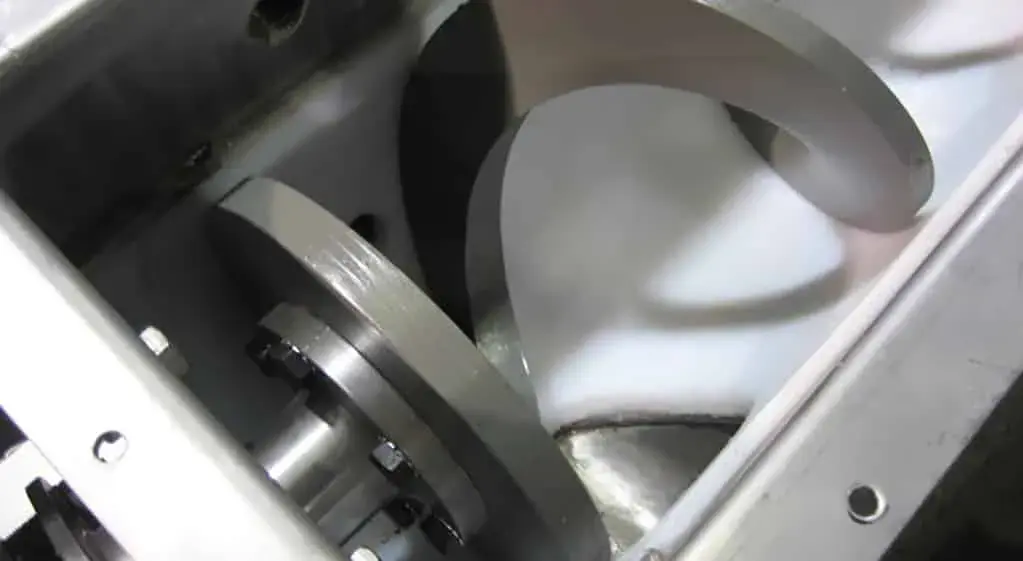
Shaftless Screw Conveyors
Move sticky, wet or difficult bulk material.
Review a shaftless spiral for screenings, wet byproducts or material that tends to wrap around a centre shaft.
Also known as: Shaftless spirals, shaftless augers, spiral conveyors.
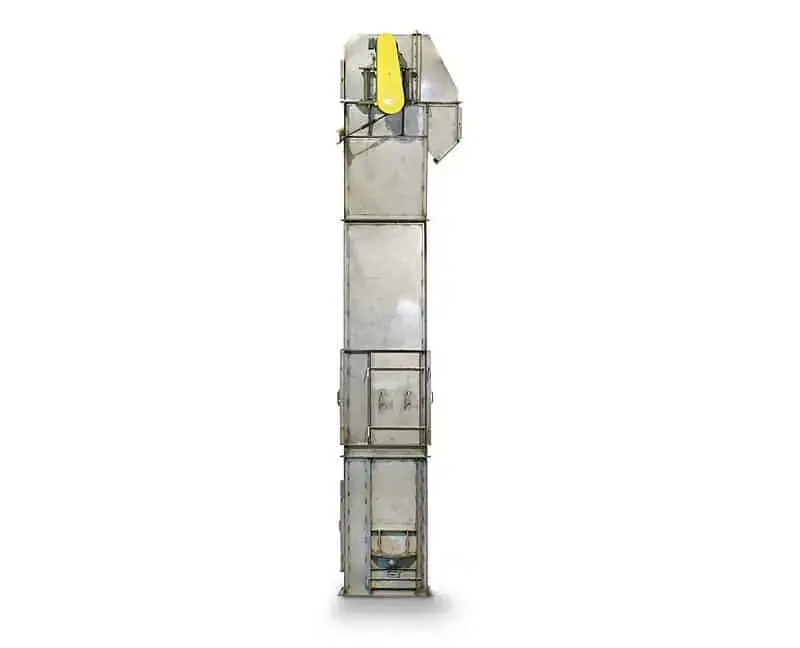
Bucket Elevators
Lift bulk solids vertically.
Use lift height, capacity and material characteristics to review the elevator and feed arrangement.
Also known as: Bucket lifts, vertical bucket conveyors, bucket legs.
Screw Feeders & Live Bottoms
Meter withdrawal from a hopper, bin or silo.
Review rate range, inlet geometry and whether a single screw or multiple live-bottom screws suit the outlet.
Also known as: Metering screws, screw feeders, live-bottom feeders.
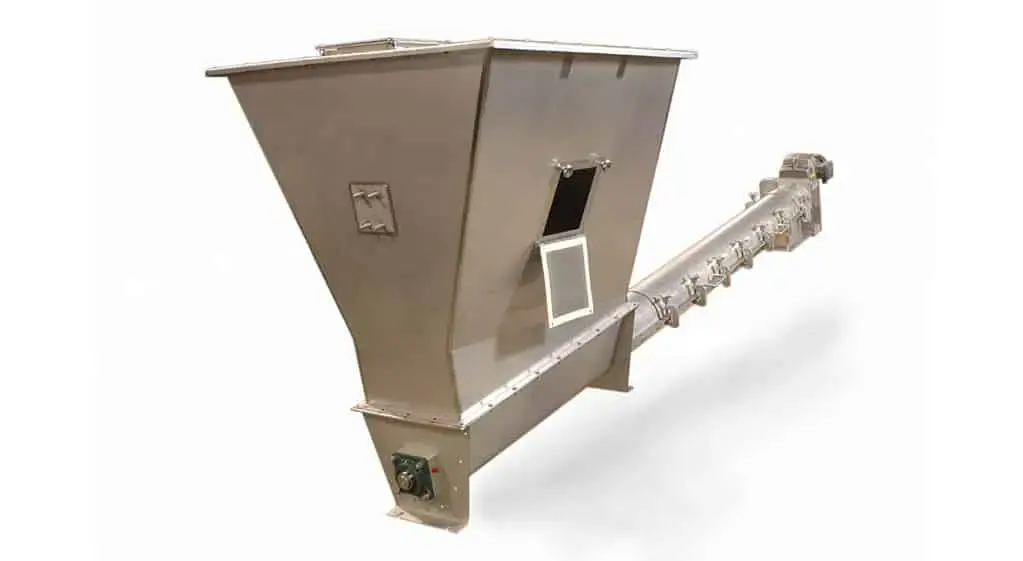
Hoppers, Bins & Silos
Store bulk material and deliver it to the next operation.
Review usable capacity, fill method, wall geometry and how the material flows through the outlet.
Also known as: Bulk storage hoppers, storage bins, silos, surge bins.
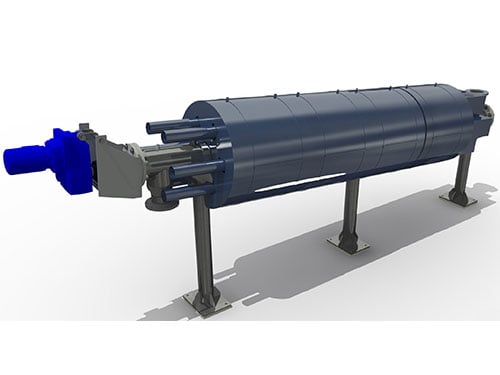
Thermal Screw Conveyors
Heat or cool bulk material as it moves.
Share inlet and target outlet temperatures, duty and the heating or cooling medium available.
Also known as: Thermal screw processors, heat-transfer screws, jacketed screw conveyors.
See KWS Manufacturing equipment in action
The KWS Advantage
An introduction to KWS engineering, manufacturing and the range of bulk handling equipment.
Screw conveyor or screw feeder?
KWS explains how a controlled inlet differs from a flood-fed inlet and why it matters for equipment selection.
How the equipment fits into your process
Under a storage bin
Meter into a process from a loaded vessel. Include the outlet size, head of material and required minimum and maximum feed rates.
Between process elevations
Compare an inclined screw with a bucket elevator using the available footprint, lift and required throughput.
After a hot process
Review cooling during transfer where downstream handling has a temperature limit. Include available utilities and the material inlet and discharge temperatures.
Application examples

An inclined screw feeds the bucket elevator where the installation needs vertical lift in limited floor space.

KWS paired a hopper with a screw feeder to improve withdrawal of plastic fluff.

The KWS application combines shaftless transfer and indirect cooling before downstream handling.
Literature and application resources
Screw Conveyor Engineering Guide
Review capacity, construction and selection considerations.
Open PDFApplication worksheets
Choose the KWS PDF for the equipment you want to review. For hoppers, bins and silos, use the guided RFQ below to describe storage and discharge.
View worksheetsQuestions to help plan your application
Do I need a screw conveyor or a screw feeder?
Tell us what controls the rate. A conveyor takes an incoming controlled flow. A feeder establishes the rate of withdrawal from a vessel. Some projects use both.
What should I send for an application review?
Include material, bulk density, moisture, required rate, equipment elevations and the inlet and discharge geometry. For replacements, include the nameplate and any drawings you have.
What should I send for a thermal screw application?
Include the product inlet and desired outlet temperatures, throughput, and the heating or cooling medium available. Share any limits on product degradation or residence time.
READY TO DISCUSS YOUR APPLICATION?
Request a bulk material handling review
Use a worksheet to gather details with your team, or work through the guided online RFQ.
Choose your RFQ worksheet
Choose the KWS PDF for the equipment you want to review. For hoppers, bins and silos, use the guided RFQ below to describe storage and discharge.
RATE TECHNOLOGY SYSTEMS
KWS Manufacturing Quote Request
Tell RTS what you are handling and what you need the equipment to do. Fill in the details you know.
Prefer to speak directly? Email Sales or call 905-607-3240.