
Open spiral centre
Review a conveying path without a central shaft.


Improve Material Flow | Increase Reliability | Reduce Downtime
We help identify and implement the right KWS Manufacturing solution for bulk material conveying, screw feeding, bucket elevating, drag conveying, slide gates, live bottoms, hoppers, bins, and custom engineered material handling systems. From food ingredients and chemicals to cement, aggregates, agriculture, mining, wastewater, recycling, and other dry bulk materials, KWS equipment helps manufacturers improve material flow, increase production efficiency, and maximize process reliability.
Get a KWS Equipment RecommendationConvey sticky, wet, or difficult bulk material.
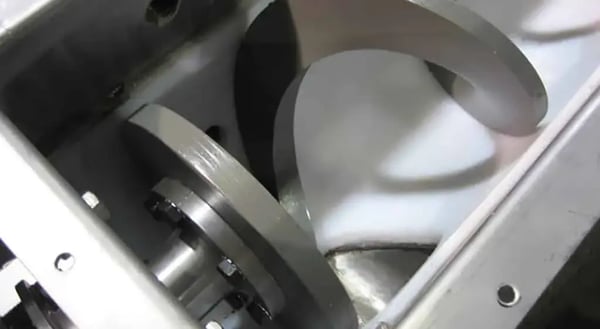
Is your material wrapping, sticking, or struggling to move through conventional equipment?
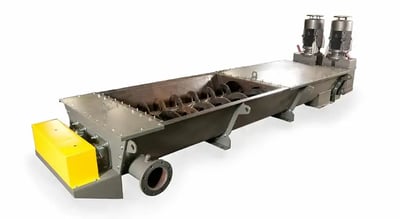
A shaftless spiral removes the central shaft and internal hanger bearings from the conveying path. KWS designs these conveyors for difficult materials such as dewatered biosolids and sticky process byproducts.
Typical application
Move dewatered cake from a centrifuge or filter press to collection.
Also known as: Shaftless augers, spiral conveyors, sludge conveyors.
Wet, sticky and sluggish materials from centrifuges, filter presses and mixers. Applications include dewatered biosolids, food byproducts and selected chemical or mineral duties.
KWS application example
KWS supplied shaftless conveyors for a biomass gasification project. The equipment handles the feedstock and connects with a thermal processor used to cool the resulting char.


Application photos: KWS Manufacturing. Read the full KWS case study >>
Review a conveying path without a central shaft.
Assess sticky or high-moisture feeds.
Match the wear liner and spiral to the operating conditions.
Define discharge conditions from the upstream process.
The shaftless spiral conveys material along the lined housing.
Route material to storage, a container, or the next process.
Share your material, moisture, consistency, throughput, conveyor route, and upstream equipment. Include a drawing or photos when available.
Selection depends on the material and duty. Share the actual handling problem so RTS can compare the two designs instead of assuming one is the better fit.
Start with the material, operating conditions, capacity, installation dimensions, and the problem you want to solve. RTS will review the requirements with KWS and identify missing information before a final selection.
Send the equipment model or serial number, photos, drawings, and a description of the issue. We can discuss replacement equipment, parts, or an application review.
Manufacturer resources support the review; final dimensions, materials, and options are confirmed with the quotation.
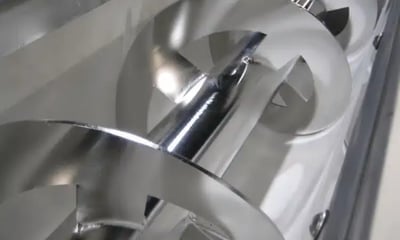
Move bulk material from one process to the next.
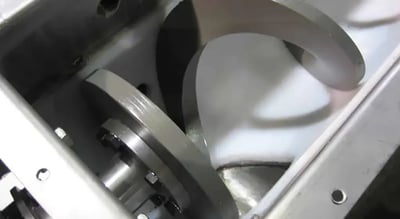
Convey sticky, wet, or difficult bulk material.
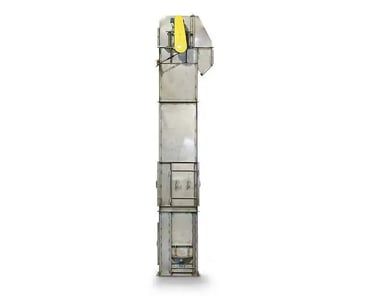
Lift bulk material to the next level of your process.
Control withdrawal and feed rate from a hopper, bin, or silo.
Store material and deliver it reliably to the next process.
Heat or cool bulk material while conveying it.