
Use a physical measuring cycle
the sensing weight contacts the surface during measurement.


Tell us your material, vessel and measurement goal. RTS will help identify a suitable UWT solution for your application.
Measure bulk-solid level with an automatically lowered sensing weight.
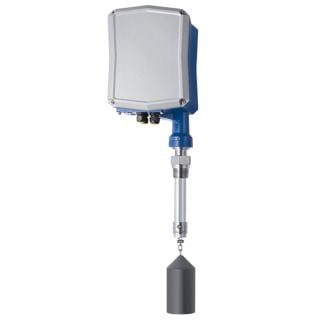
Measure bulk-solid level with an automatically lowered sensing weight.
UWT NivoBob lowers a sensing weight toward the material surface, determines the travelled distance and retracts the weight. It provides repeated level measurements on a measuring cycle, rather than an uninterrupted non-contact reading. Model, weight and mounting are selected for the material and vessel.
Example: Take scheduled level measurements in a bulk storage silo.
Also known as: Plumb-bob level systems, electromechanical level measurement, NivoBob NB 3000.
the sensing weight contacts the surface during measurement.
material and any interface duty require a suitable configuration.
filling streams, internal structures and the measuring schedule need review.
choose weight and mounting for the stored product.
review the surface behaviour and filling pattern.
dust, temperature and mechanical conditions influence selection.
UWT explains the electromechanical lowering and retraction principle. The family includes different duties; select the sensing weight and model for your application.
Bulk solid or liquid, vessel dimensions, minimum and maximum level, density or dielectric properties, temperature, buildup, filling pattern, output signal, and hazardous-area requirements.

The system is classified within continuous level measurement, but it measures through repeated lowering and retraction cycles. Review the update interval and filling conditions against the process needs.
Bulk solid or liquid, vessel dimensions, minimum and maximum level, density or dielectric properties, temperature, buildup, filling pattern, output signal, and hazardous-area requirements.
Confirm the complete quoted equipment, operating conditions and selected options for your application.

Switch at a point
Signal when bulk material reaches a selected point.
Example: Provide a high- or low-level signal in a grain bin.
Also known as: Paddle level switches, bin level switches, Rotonivo RN 3000/6000.

Sense with vibration
Detect whether bulk solids cover a vibrating sensing element.
Example: Detect a low or high level of a suitable granular ingredient.
Also known as: Vibrating fork switches, vibrating level switches, Vibranivo VN 4000.
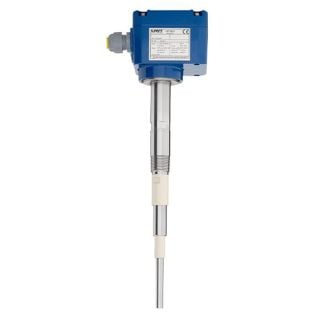
Switch capacitively
Detect material at a selected location using a capacitive probe.
Example: Provide a level-limit signal for a powder bin.
Also known as: Capacitive level switches, RF admittance switches, RFnivo RF 3000.

Measure without contact
Measure a changing level without a probe touching the material.
Example: Monitor a tank or suitable bulk-solids vessel without a mechanical sensing weight.
Also known as: Non-contact radar sensors, NivoRadar NR 7100, continuous radar level.
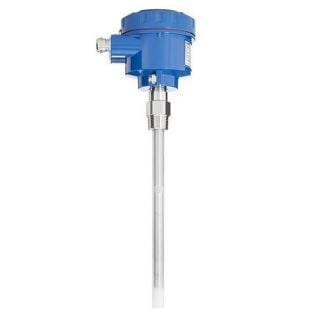
Measure capacitively
Measure changing liquid level or a suitable interface with a contact probe.
Example: Monitor the level of a suitable process liquid in a vessel.
Also known as: Continuous capacitive level sensors, NivoCapa NC 8000, interface measurement.